Keyword Author: electrochemistry

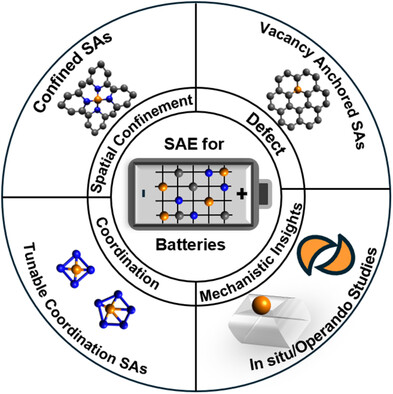
Single-Atom Engineering for Next Generation Rechargeable Batteries

Single-atom engineering (SAE) is a promising approach for next-generation rechargeable batteries due to its maximal atom utilization, high catalytic activity, and tunable selectivity. However, the incomplete understanding of the microenvironment of single atoms and their electrochemical behavior limits their practical application in rechargeable batteries. Most existing review articles either discuss battery chemistry or characterization techniques …

Single-Atom Engineering for Next Generation Rechargeable Batteries Read More »
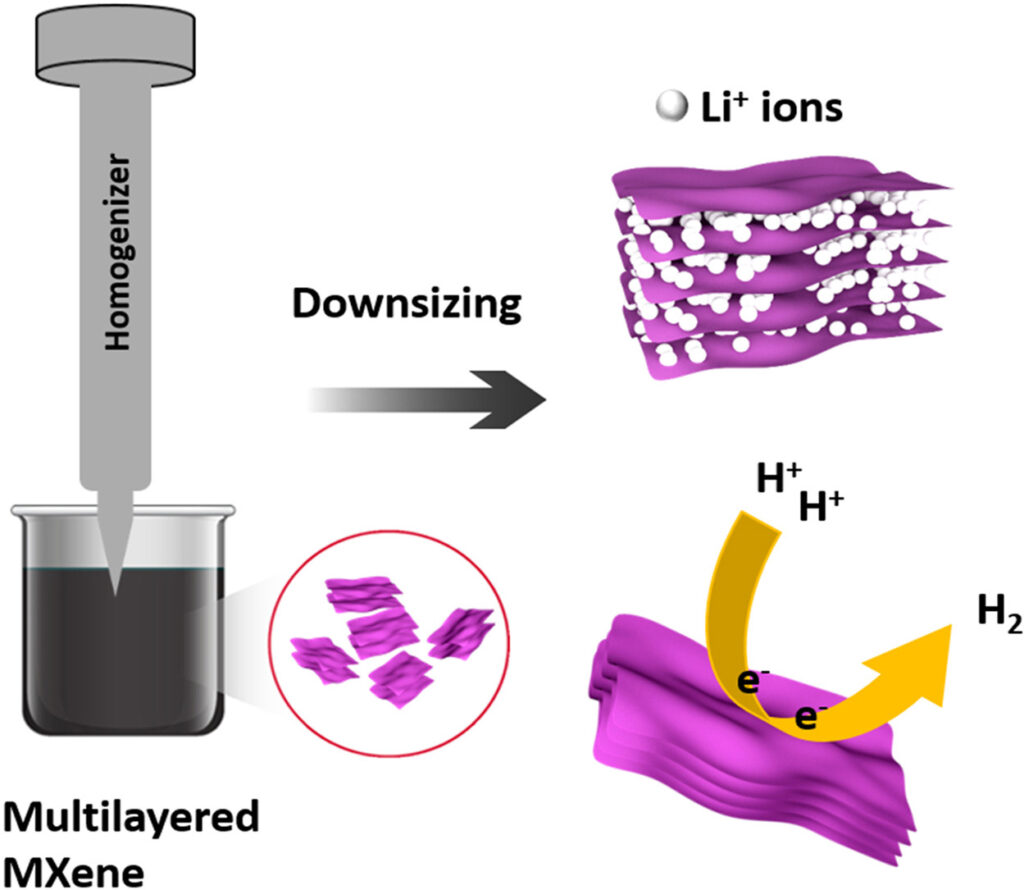
Downsizing nanoarchitectonics of multilayered MXenes electrocatalysts towards real time ion tracking via EQCM and electrocatalytic applications

Since their discovery, engineering two-dimensional (2D) MXene materials have attracted rapid interest in both energy storage and conversion applications. Among the several techniques being introduced for enhancing material properties, downsizing is one among the interesting approaches. Downsizing involves the deliberate scaling down of active 2D materials, such as MXenes, systematically. Although major studies are focused …

Downsizing nanoarchitectonics of multilayered MXenes electrocatalysts towards real time ion tracking via EQCM and electrocatalytic applications Read More »

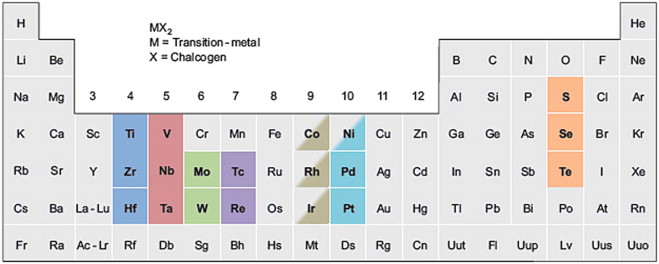
Periodic Table Exploration of MXenes for Efficient Electrochemical Nitrate Reduction to Ammonia

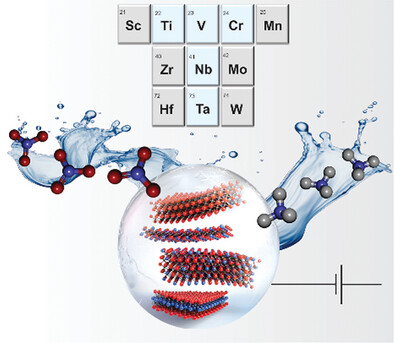
Applying electrochemical nitrate reduction reaction (NO3RR) to produce ammonia offers a sustainable alternative to the energy-intensive Haber-Bosch process, which is crucial for clean energy and agricultural applications. While 2D MXenes hold great promise as electrocatalysts for NO3RR, their application for ammonia production remains underexplored. This study combines experimental and theoretical approaches to evaluate the catalytic …

Periodic Table Exploration of MXenes for Efficient Electrochemical Nitrate Reduction to Ammonia Read More »

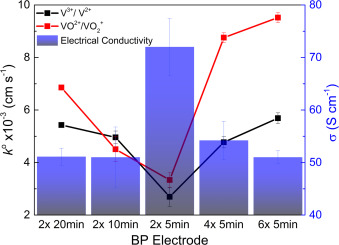
Heterolayered carbon allotrope architectonics via multi-material 3D printing for advanced electrochemical devices

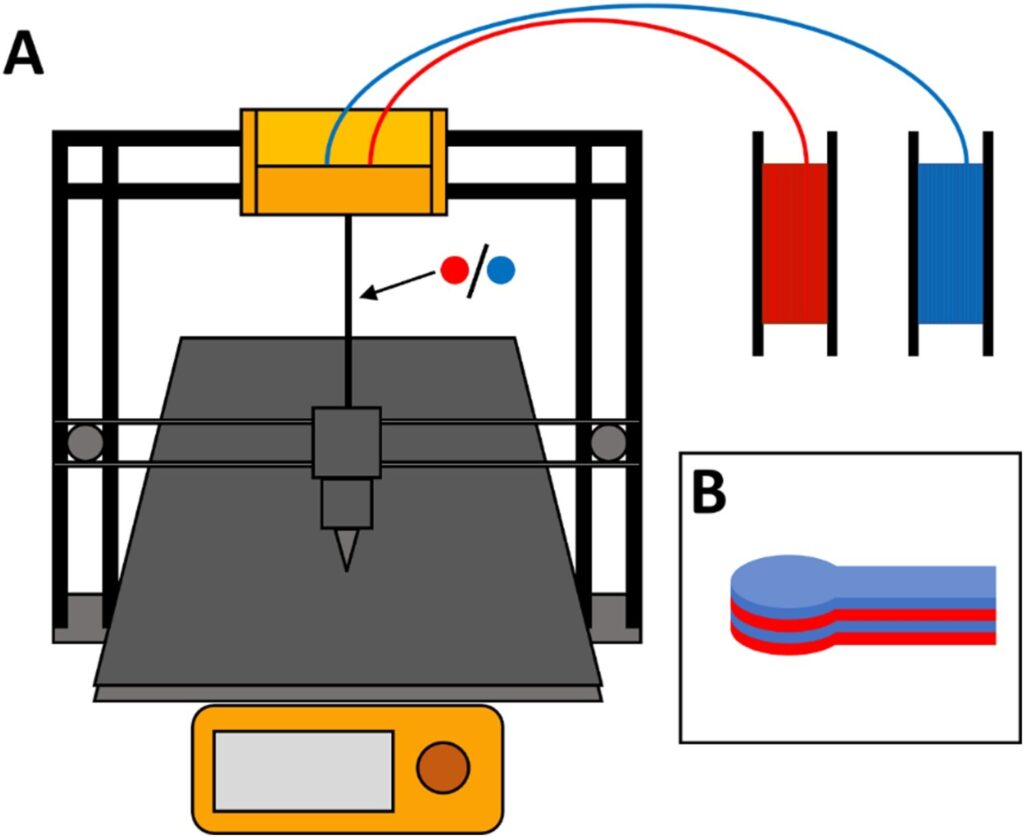
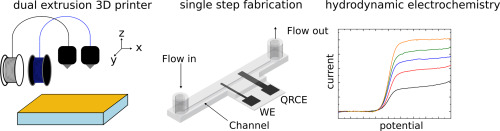
3D printing has become a powerful technique in electrochemistry for fabricating electrodes, thanks to readily available conductive nanocomposite filaments, such as those based on carbon fillers (i.e., carbon nanotubes (CNTs) or carbon black (CB)) within an insulating polymeric matrix like polylactic acid (PLA). Inspired by inorganic heterostructures that enhance the functional characteristics of nanomaterials, we …

Heterolayered carbon allotrope architectonics via multi-material 3D printing for advanced electrochemical devices Read More »

Engineering 3D Printed Structures Towards Electrochemically Driven Green Ammonia Synthesis: A Perspective

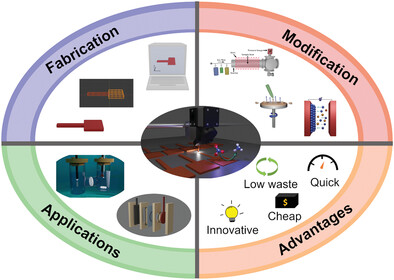
Broadening scope of 3D printing technology is recently identified as a potential strategy to mitigate concerns in the light of rising energy crisis and environmental imbalances. The importance of ammonia as a hydrogen carrier is well known and, in the context of 3D printing, designing and fabrication of electrode substrates for ammonia synthesis from nitrate …

Engineering 3D Printed Structures Towards Electrochemically Driven Green Ammonia Synthesis: A Perspective Read More »

Advances in Designing 3D-Printed Systems for CO2 Reduction

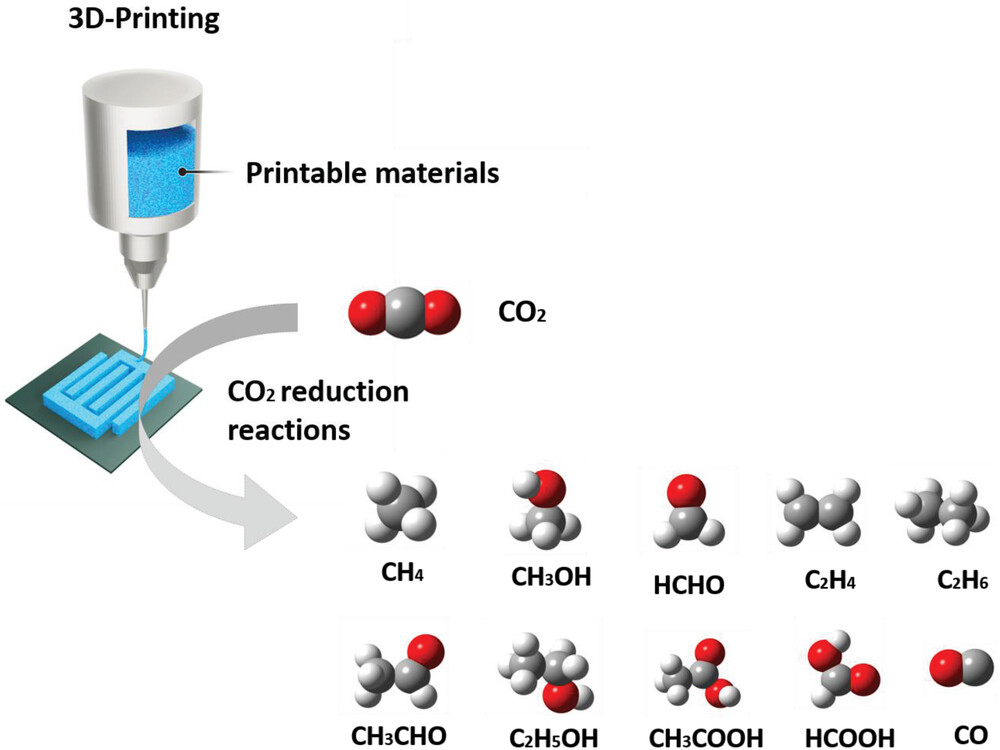
The increasing level of atmospheric carbon dioxide (CO2), and the resultant global warming is a matter of growing concern among scientists, environmentalists, and climate experts across the globe over the past several decades. Numerous attempts are being undertaken today that seek solutions to mitigate this global crisis. This includes designing functional catalysts, devices and reactors …

Advances in Designing 3D-Printed Systems for CO2 Reduction Read More »

Vanadium Dopants: A Boon or a Bane for Molybdenum Dichalcogenides-Based Electrocatalysis Applications

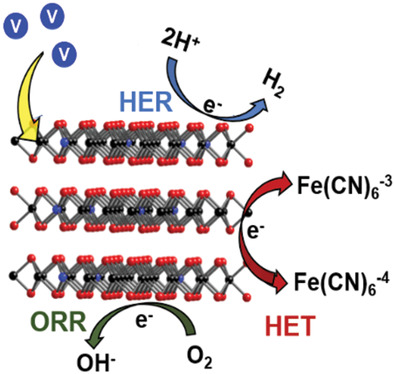
The ever-rising concerns with regards to energy shortages and climate change have made the search for clean and renewable energy sources a pressing priority for the sustainable development of societies. Although, conventional precious metal-based catalysts such as platinum, iridium, and ruthenium are able to efficiently catalyze the conversion of chemical to electrical energy, they are …

Vanadium Dopants: A Boon or a Bane for Molybdenum Dichalcogenides-Based Electrocatalysis Applications Read More »

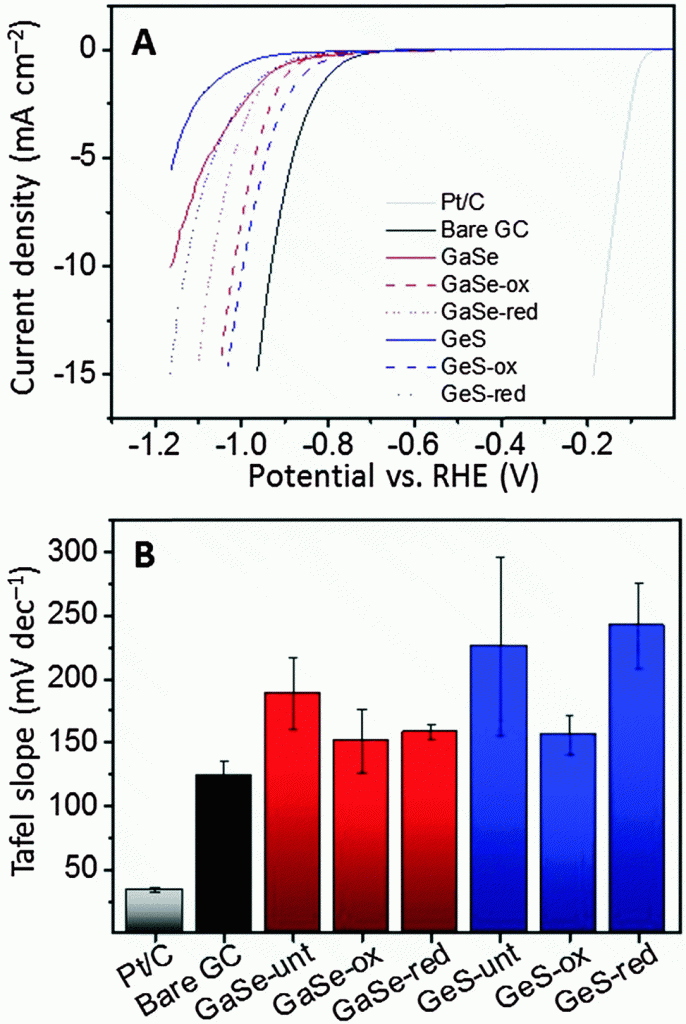
Electrochemistry of Layered Semiconducting A(III)B(VI) Chalcogenides: Indium Monochalcogenides (InS, InSe, InTe)

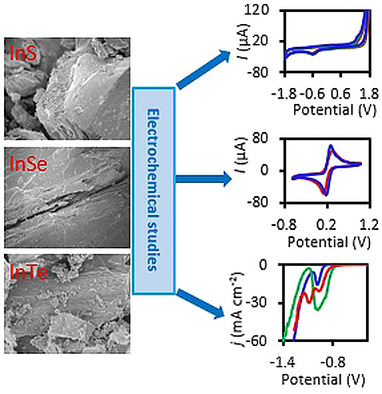
Layered A(III)B(VI) chalcogenides represent an interesting class semiconductors, where most of adopting 2D structures. Unlike the typical sandwiched structure of transition metal dichalcogenides (TMDs), layered A(III)B(VI) chalcogenides like InSe and GaSe are composed of X-M-M-X motif where M is gallium/indium and X is sulfur/selenium/tellurium. The exception is InS, which adopt an orthorhombic 3D structure. Herein, …

Electrochemistry of Layered Semiconducting A(III)B(VI) Chalcogenides: Indium Monochalcogenides (InS, InSe, InTe) Read More »

Edge vs. basal plane electrochemistry of layered pnictogens (As, Sb, Bi): Does edge always offer faster electron transfer?

Materials with layered structure are at the forefront of material research. Graphite, MoS2 and black phosphorus, as layered materials, exhibit, in general, fast heterogeneous transfer at the edge planes and slow at the basal plane for many electroactive molecules. There is a fundamental question whether this is general behaviour of layered materials. Here, we examined fundamental …

Edge vs. basal plane electrochemistry of layered pnictogens (As, Sb, Bi): Does edge always offer faster electron transfer? Read More »

Fluorine saturation on thermally reduced graphene

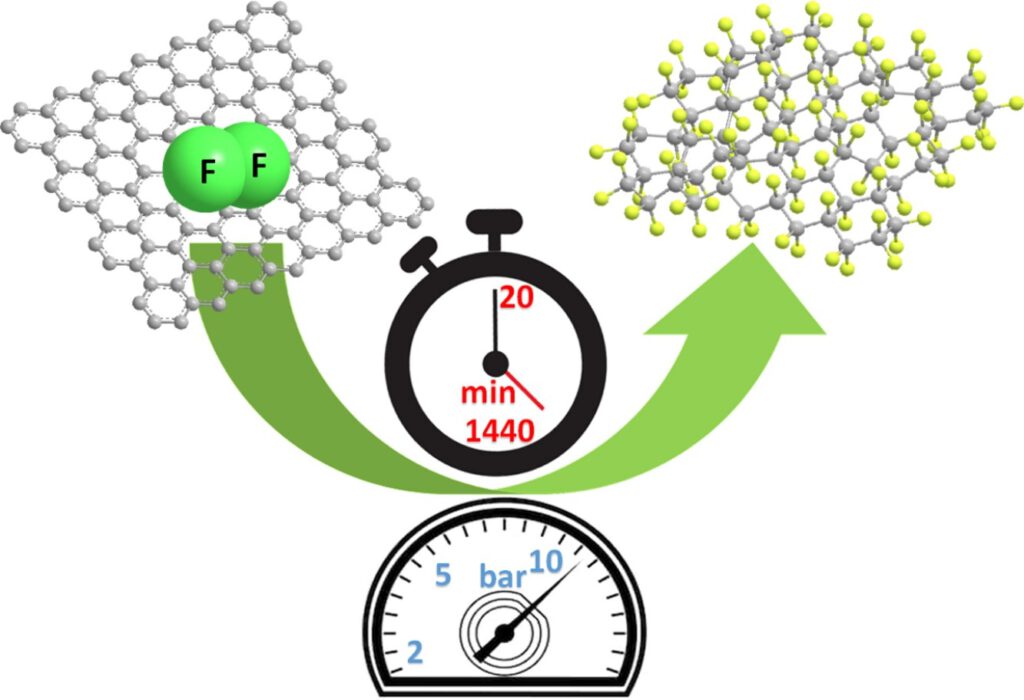
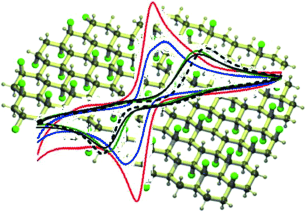
Fluorographene is a wide band-gap insulator with high photoluminescence and hydrophobicity. In the past, fluorographene was considered to be chemically inert similarly to Teflon. However, it has been recently reported that fluorographene can undergo several chemical modifications such as nucleophilic or radical substitutions. Fluorinated graphene is typically prepared by top-down synthesis based on sonochemical exfoliation …

Fluorine saturation on thermally reduced graphene Read More »

Layered Crystalline and Amorphous Platinum Disulfide (PtS2): Contrasting Electrochemistry

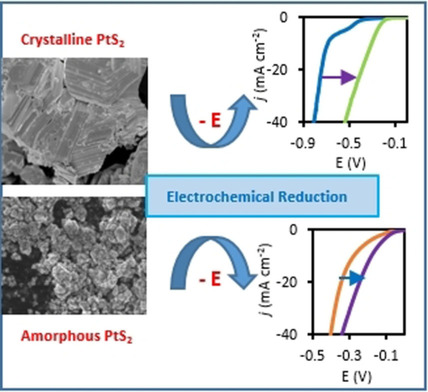
Group 6 transition metal dichalcogenides (TMDs), such as MoS2 and WS2 have been extensively studied for various applications while few studies have delved into other TMDs such as platinum dichalcogenides. In this work, layered crystalline and amorphous platinum disulfide (PtS2) were synthesized, characterised and their fundamental electrochemical properties were investigated. Both materials exhibited inherent oxidation …

Layered Crystalline and Amorphous Platinum Disulfide (PtS2): Contrasting Electrochemistry Read More »

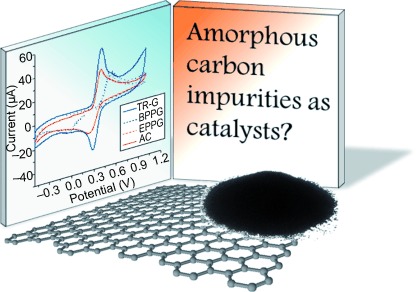
Two-Dimensional Materials on the Rocks: Positive and Negative Role of Dopants and Impurities in Electrochemistry

Two-dimensional (2D) materials, such as graphene and transition-metal chalcogenides, were shown in many works as very potent catalysts for industrially important electrochemical reactions, such as oxygen reduction, hydrogen and oxygen evolution, and carbon dioxide reduction. We critically discuss here the development in the field, showing that not only dopants but also impurities can have dramatic …

Two-Dimensional Materials on the Rocks: Positive and Negative Role of Dopants and Impurities in Electrochemistry Read More »

Cyanographene and Graphene Acid: The Functional Group of Graphene Derivative Determines the Application in Electrochemical Sensing and Capacitors

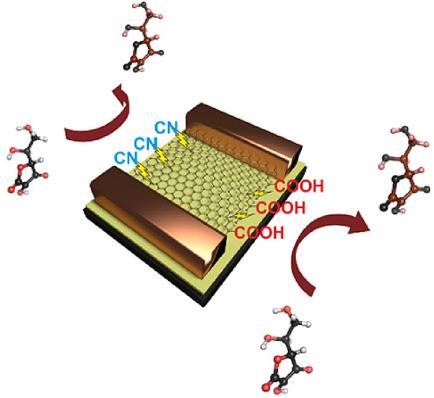
Well-defined, stoichiometric derivatives of graphene afford many opportunities in fine-tuning of graphene properties and hence, extend the application potential of this material. Here, we present the electrochemical properties of cyanographene (G-CN), and graphene acid (G-COOH) in order to understand the role of the covalently attached functional groups on the graphene sheet in electrochemical sensing for …

Cyanographene and Graphene Acid: The Functional Group of Graphene Derivative Determines the Application in Electrochemical Sensing and Capacitors Read More »

Electrochemical Exfoliation of MoS2 Crystal for Hydrogen Electrogeneration

Transition metal dichalcogenides (TMDs) have recently emerged within the group of 2D materials due to their electrical, catalytic and optical properties significantly enhanced and useful when down-sized to single layer. In particular, MoS2 has attracted much attention due to its semiconducting nature with a useful band gap when present as single layer, the enhanced photoluminescence, …

Electrochemical Exfoliation of MoS2 Crystal for Hydrogen Electrogeneration Read More »

Multimaterial 3D-Printed Water Electrolyzer with Earth-Abundant Electrodeposited Catalysts

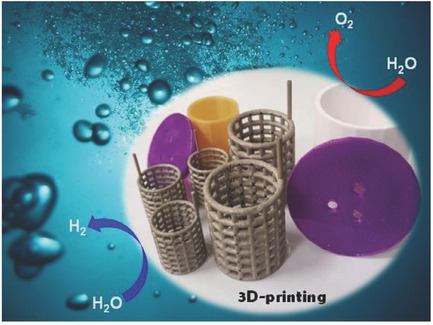
Additive manufacturing (AM) is reaching a stage of development that enables high throughput fabrication of end products/devices. An important contribution to the advancement of this technology is given by the possibility to combine different materials into a single printing process or integrate diverse technologies for the fabrication of different components. Here we show how a …

Multimaterial 3D-Printed Water Electrolyzer with Earth-Abundant Electrodeposited Catalysts Read More »

Additive manufacturing of electrochemical interfaces: Simultaneous detection of biomarkers

3D-printed stainless steel helical shaped electrodes with or without surface modification with a gold (Au) film are tested as novel electrode materials for the electrochemical detection of ascorbic acid and uric acid in aqueous solutions. Their performance in terms of sensitivity, selectivity and reproducibility is evaluated and compared to conventional glassy carbon electrode (GCE). Owing …

Additive manufacturing of electrochemical interfaces: Simultaneous detection of biomarkers Read More »

Self-Contained Polymer/Metal 3D Printed Electrochemical Platform for Tailored Water Splitting

The enormous advancements made recently in additive manufacturing require parallel development of new printable materials with particular focus on so-defined functional materials. Functional materials have specific properties that are useful for the fabrication of active devices such as sensors, electronic components, catalytic reactors, etc. It is shown here that the combination of standard 3D-printing technologies …

Self-Contained Polymer/Metal 3D Printed Electrochemical Platform for Tailored Water Splitting Read More »

3D-printed Electrodes for Sensing of Biologically Active Molecules

3D printing (additive manufacturing) is currently an emerging technology that could revolutionize the traditional manufacturing process. The application of 3D printing technology has been examined in many different fields including manufacturing, science, medicine, and electronics. Another application of 3D printing technology which holds promising potential is fabrication of electrochemical sensors and transducers. Electroanalytical devices hold …

3D-printed Electrodes for Sensing of Biologically Active Molecules Read More »

3D-printed metal electrodes for electrochemical detection of phenols

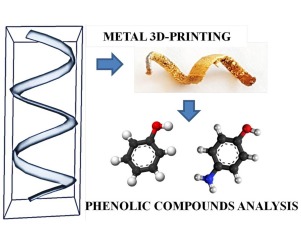
3D printed metal electrode modified by means of electroplating methodologies was tested and compared with conventional glassy carbon (GC) electrode for the individual and simultaneous electrochemical detection of phenol and p-aminophenol (p-AP) in aqueous solution via cyclic and differential pulse voltammetry. The 3D printed gold-plated electrode produced two distinct oxidation peaks for phenol and p-AP …

3D-printed metal electrodes for electrochemical detection of phenols Read More »

3D-printed Metal Electrodes for Heavy Metals Detection by Anodic Stripping Voltammetry

Heavy metals, being one of the most toxic and hazardous pollutants in natural water, are of great public health concern. Much effort is still being devoted to the optimization of the electroanalytical methods and devices, particularly for the development of novel electrode materials in order to enhance selectivity and sensitivity for the analysis of heavy …

3D-printed Metal Electrodes for Heavy Metals Detection by Anodic Stripping Voltammetry Read More »

Graphitic carbon nitride: Effects of various precursors on the structural, morphological and electrochemical sensing properties

Graphitic carbon nitride (g-C3N4) has been discovered very long ago, in the 1830s. g-C3N4, an analogue of graphene, has been of great interest due to the strong electron donor nature of nitrogen present in g-C3N4, which is absent in graphene. Though studies have shown that g-C3N4 can be used as an electrochemical sensing platform for …

Graphitic carbon nitride: Effects of various precursors on the structural, morphological and electrochemical sensing properties Read More »
Unconventionally Layered CoTe2 and NiTe2 as Electrocatalysts for Hydrogen Evolution

Two members of the transition metal ditelluride family, CoTe2 and NiTe2, exist in multiple structures encompassing marcasite-, pyrite- and CdI2 related structures. The allotrope modification is influenced by weak changes in stoichiometry and synthesis. It is crucial to emphasize that the CdI2 structure type is manifested by NiTe2 while the CoTe2 adopts a related structure …

Unconventionally Layered CoTe2 and NiTe2 as Electrocatalysts for Hydrogen Evolution Read More »

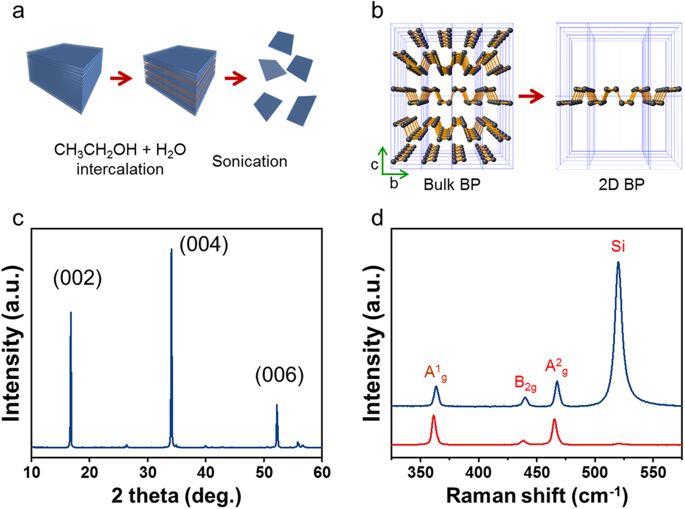
Electrochemical Exfoliation of Layered Black Phosphorus into Phosphorene

Among 2D materials that recently have attracted enormous interest, black phosphorus (BP) is gaining a rising popularity due to its tunable band-gap structure, which is strongly correlated to the thickness and can enable its use in optoelectronic and electronic applications. It is therefore important to provide a facile and scalable methodology to prepare single or …

Electrochemical Exfoliation of Layered Black Phosphorus into Phosphorene Read More »

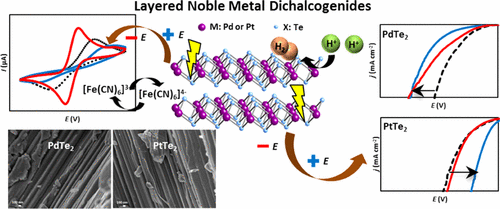
Layered Noble Metal Dichalcogenides: Tailoring Electrochemical and Catalytic Properties

Owing to the anisotropic nature, layered transition metal dichalcogenides (TMDs) have captured tremendous attention for their promising uses in a plethora of applications. Currently, bulk of the research is centered on Group 6 TMDs. Layered noble metal dichalcogenides, in particular the noble metal tellurides, belong to a subset of Group 10 TMDs, wherein the transition …

Layered Noble Metal Dichalcogenides: Tailoring Electrochemical and Catalytic Properties Read More »
Phosphorene and black phosphorus for sensing and biosensing

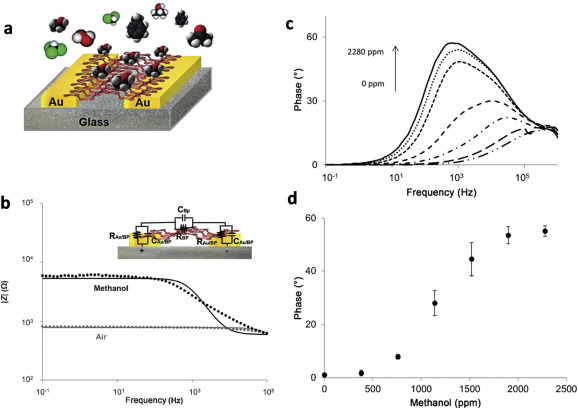
Two dimensional (2D) materials exhibit highly useful materials properties. Graphene, single sheet transition metals dichalcogenides found plethora applications in various fields, including analytical chemistry. Layered black phosphorus and its single sheet variation (phosphorene) became popular material very recently due to its monoelemental composition, biocompatibility, electrochemical properties, tunable bandgap and resulting optical properties. Here we describe …

Phosphorene and black phosphorus for sensing and biosensing Read More »

Electrosynthesis of Bifunctional WS3-x/Reduced Graphene Oxide Hybrid for Hydrogen Evolution Reaction and Oxygen Reduction Reaction Electrocatalysis

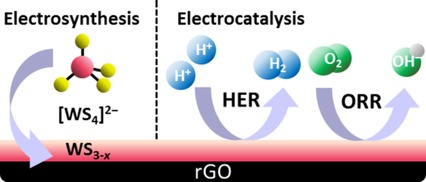
A multitude of research into the application of transition-metal dichalcogenides as earth-abundant hydrogen evolution reaction (HER) electrocatalysts has been conducted. However, current synthetic methods generally deploy environmentally harmful chemicals and energy-consuming reaction conditions, despite the primary intent to attain renewable energy production. Here, the desirable properties of tungsten sulfide and reduced graphene oxide (rGO) have …

Electrosynthesis of Bifunctional WS3-x/Reduced Graphene Oxide Hybrid for Hydrogen Evolution Reaction and Oxygen Reduction Reaction Electrocatalysis Read More »
2H -> 1T Phase Engineering of Layered Tantalum Disulfides in Electrocatalysis: Oxygen Reduction Reaction

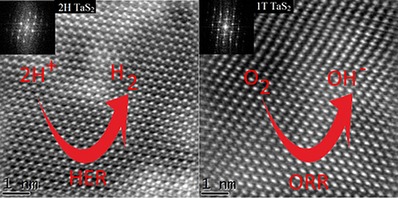
Tremendous attention is currently being paid to renewable sources of energy. Transition-metal dichalcogenides (TMDs) have been intensively studied for their promising catalytic activities in the hydrogen evolution reaction (HER) and the oxygen reduction reaction (ORR). In this fundamental work, we explored the catalytic properties of TMD family members 2HTaS(2) and 1T TaS2. Our findings reveal …

2H -> 1T Phase Engineering of Layered Tantalum Disulfides in Electrocatalysis: Oxygen Reduction Reaction Read More »
Concentration of Nitric Acid Strongly Influences Chemical Composition of Graphite Oxide

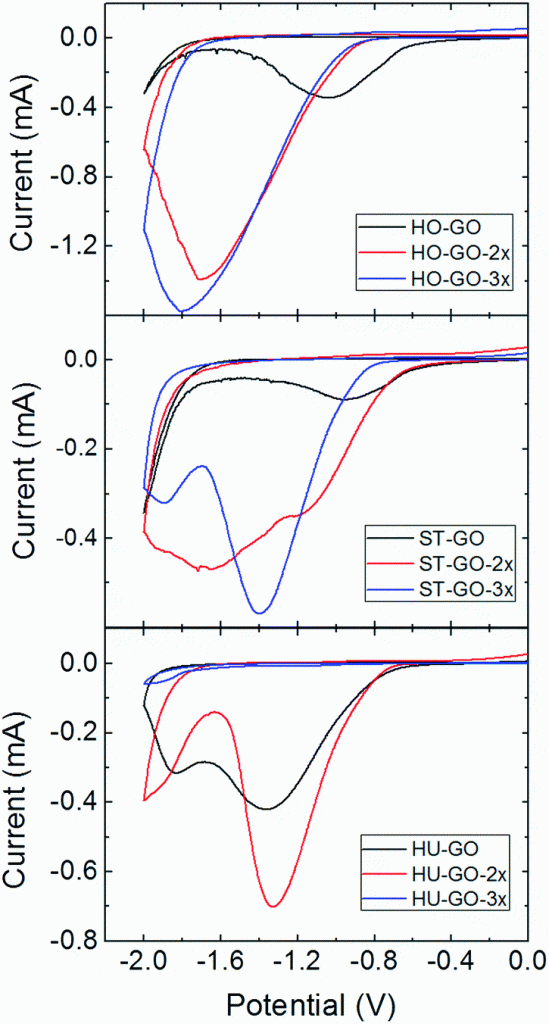
Graphite oxide is the most widely used precursor for the synthesis of graphene through top-down methods. We demonstrate a significant influence of nitric acid concentration on the structure and composition of the graphite oxide prepared by graphite oxidation. In general, two main chlorate-based oxidation methods are currently used for graphite oxide synthesis: the Staudenmaier method …

Concentration of Nitric Acid Strongly Influences Chemical Composition of Graphite Oxide Read More »
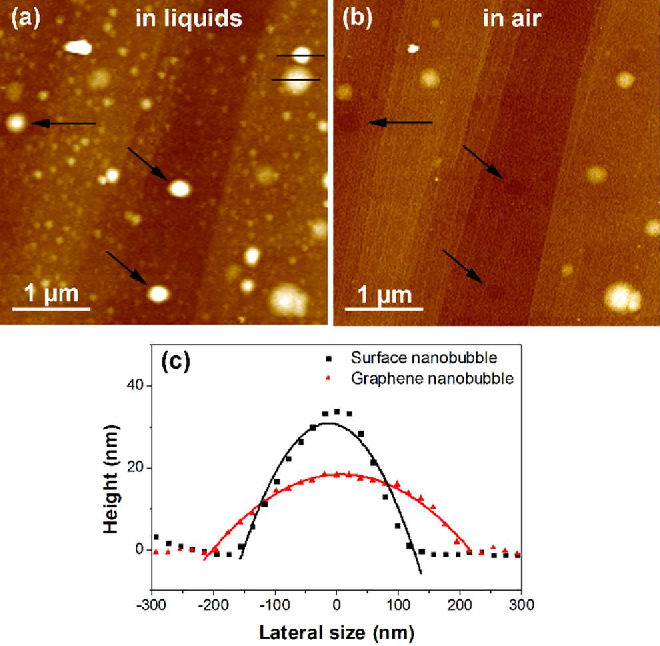
Graphene Nanobubbles Produced by Water Splitting

Graphene nanobubbles are of significant interest due to their ability to trap mesoscopic volumes of gas for various applications in nanoscale engineering. However; conventional protocols to produce such bubbles are relatively elaborate and require specialized equipment to subject graphite samples to high temperatures or pressures. Here, we demonstrate, the formation of graphene nanobubbles between layers …

Graphene Nanobubbles Produced by Water Splitting Read More »
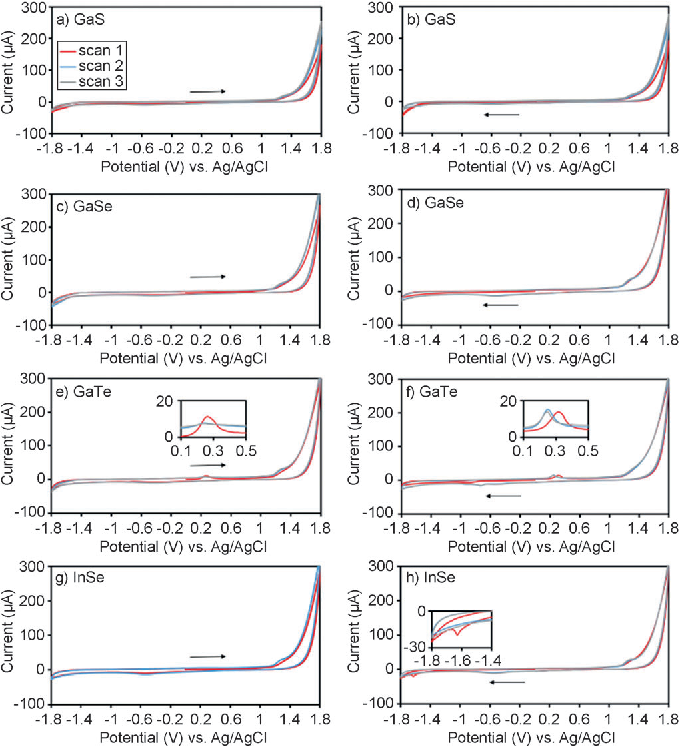
Layered Post-Transition-Metal Dichalcogenides (X-M-M-X) and Their Properties

A(III)B(VI) chalcogenides are an interesting group of layered semiconductors with several attractive properties, such as tunable band gaps and the formation of solid solutions. Unlike the typically sandwiched structure of transitionmetal dichalcogenides, A(III)B(VI) layered chalcogenides with hexagonal symmetry are stacked through the X-M-M-X motif, in which M is gallium and indium, and X is sulfur, …

Layered Post-Transition-Metal Dichalcogenides (X-M-M-X) and Their Properties Read More »
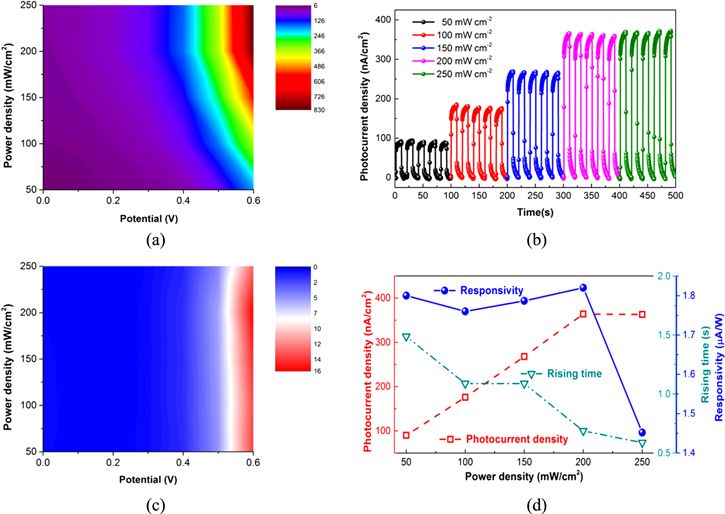
Exfoliation of Layered Topological Insulators Bi2Se3 and Bi2Te3 via Electrochemistry

Among layered materials, topological insulators such as Bi2Se3 and Bi2Te3 are lately attracting much attention due to particular electronic properties and, especially with Bi2Te3, excellent thermoelectric properties. Methods of preparation of few-layered nanosheets of Bi2Se3 and Bi2Te3 range from the bottom-up chemical vapor deposition or hydrothermal synthesis from oxide precursors to the top-down mechanical exfoliation …

Exfoliation of Layered Topological Insulators Bi2Se3 and Bi2Te3 via Electrochemistry Read More »
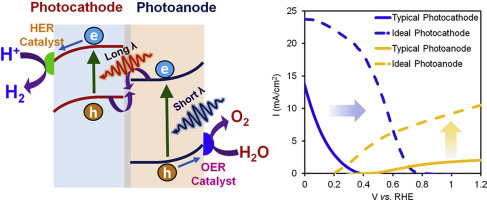
Electrochemical catalysis at low dimensional carbons: Graphene, carbon nanotubes and beyond – A review

Nanocarbons, such as graphene, carbon nanotubes and other carbon nanomaterials show very interesting and useful electrochemical and electrocatalytic properties. These can be harnessed in various applications, from sensing and biosensing devices to energy storage and generation devices, such as supercapacitors, batteries or catalysts in the fuel cells. Here we review progress made towards understanding the …

Electrochemical catalysis at low dimensional carbons: Graphene, carbon nanotubes and beyond – A review Read More »
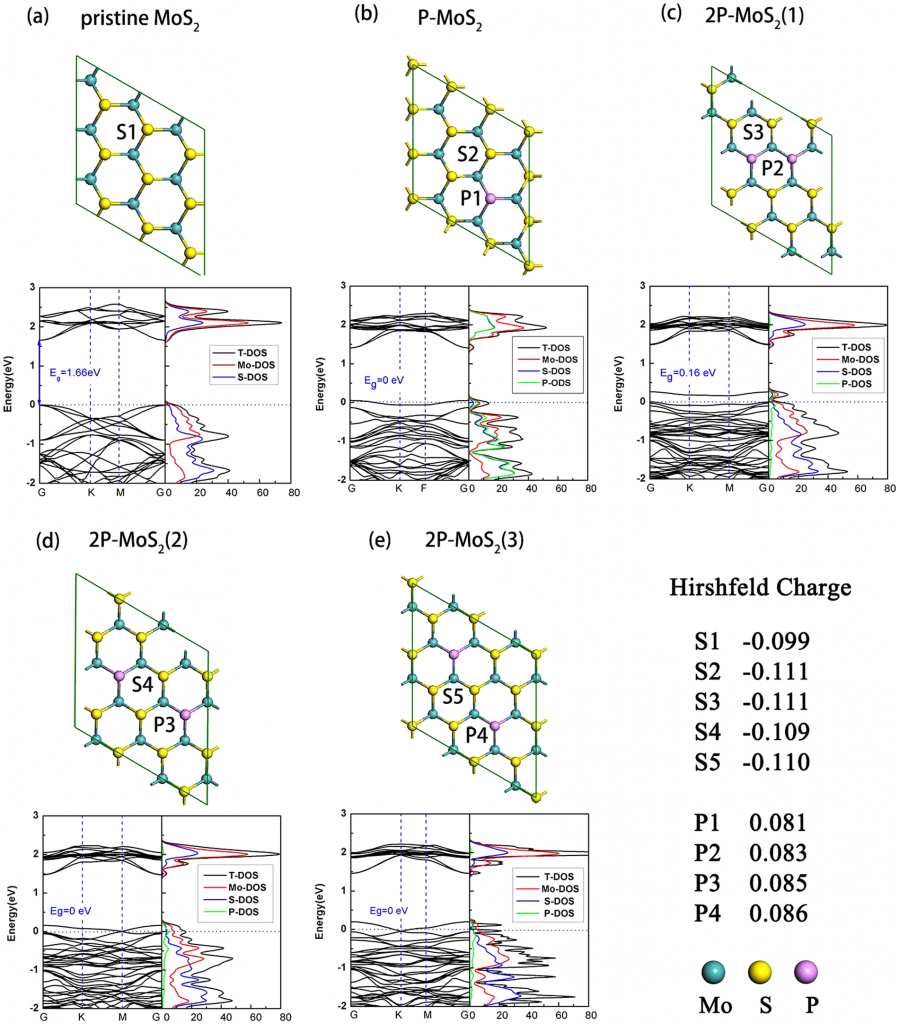
Microwave Exfoliation of Graphite Oxides in H2S Plasma for the Synthesis of Sulfur-Doped Graphenes as Oxygen Reduction Catalysts

Tuning the electronic and chemical properties of graphene can be carried out through heteroatomic doping, enabling its use as an electrocatalyst. Sulfur-doped graphene has been suggested to be a viable alternative to traditional Pt-based catalysts for oxygen reduction under alkaline conditions. Herein we present a fast and efficient route to synthesize S-doped graphenes through the …

Microwave Exfoliation of Graphite Oxides in H2S Plasma for the Synthesis of Sulfur-Doped Graphenes as Oxygen Reduction Catalysts Read More »

Graphane Nanostripes

Graphane, the hydrogenated counterpart of graphene, was shown to exhibit properties such as tunable band gaps through varied degrees of hydrogenation, fluorescence, or ferromagnetism. Graphane nanostripe properties have also been theoretically predicted. Herein, we show that graphane nanostripes can be prepared by opening carbon nanotubes using Birch reduction in liquid ammonia utilizing potassium as a …

Graphane Nanostripes Read More »
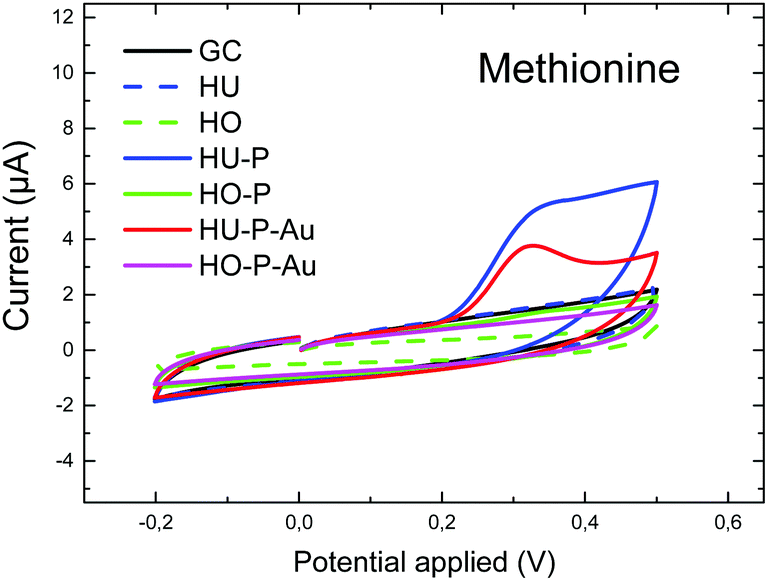
Phosphorus and Halogen Co-Doped Graphene Materials and their Electrochemistry

Doping of graphene materials with heteroatoms is important as it can change their electronic and electrochemical properties. Here, graphene is co-doped with n-type dopants such as phosphorus and halogen (Cl, Br, I). Phosphorus and halogen are introduced through the treatment of graphene oxide with PX3 gas (PCl3, PBr3, and PI3). Graphene oxides are prepared through …

Phosphorus and Halogen Co-Doped Graphene Materials and their Electrochemistry Read More »
MoS2/WS2-Graphene Composites through Thermal Decomposition of Tetrathiomolybdate/Tetrathiotungstate for Proton/Oxygen Electroreduction

MoS2 and WS2 have been prepared on a conductive graphene support by thermal reduction of tetrathiotungstate/tetrathiomolybdate and graphite oxide. Whereas the catalytic properties towards hydrogen evolution are strongly influenced by the Magneli phases formed as a byproduct during the synthesis, the catalytic activity towards oxygen reduction of these composite materials is not affected by this …

MoS2/WS2-Graphene Composites through Thermal Decomposition of Tetrathiomolybdate/Tetrathiotungstate for Proton/Oxygen Electroreduction Read More »
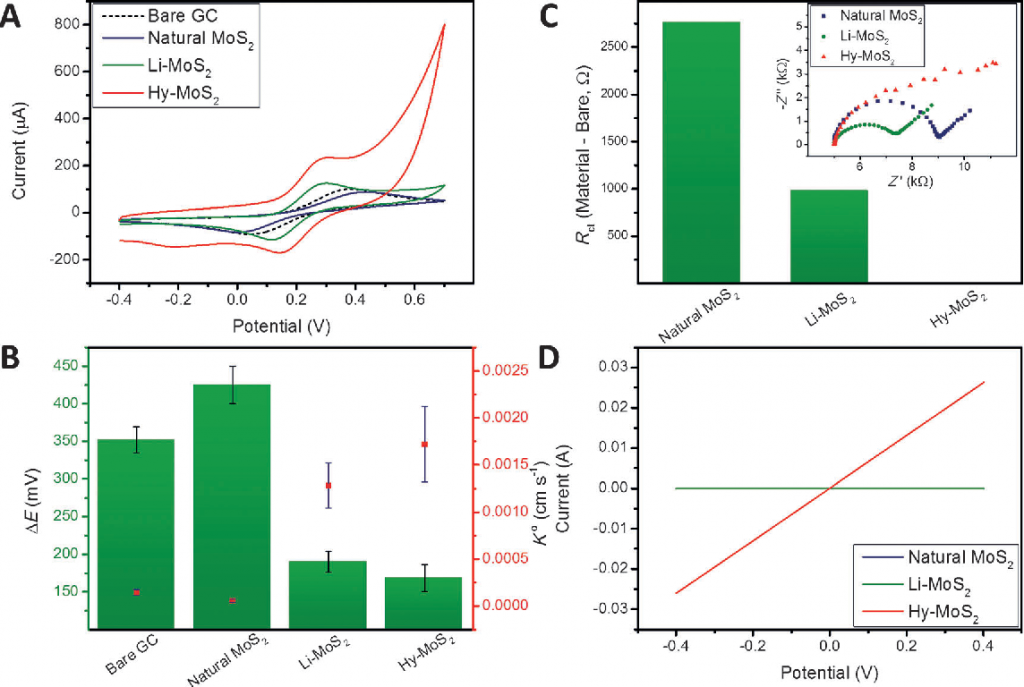
Top-Down and Bottom-Up Approaches in Engineering 1T Phase Molybdenum Disulfide (MoS2): Towards Highly Catalytically Active Materials

The metallic 1T phase of MoS2 has been widely identified to be responsible for the improved performances of MoS2 in applications including hydrogen evolution reactions and electrochemical supercapacitors. To this aim, various synthetic methods have been reported to obtain 1T phase-rich MoS2. Here, the aim is to evaluate the efficiencies of the bottom-up (hydrothermal reaction) …

Top-Down and Bottom-Up Approaches in Engineering 1T Phase Molybdenum Disulfide (MoS2): Towards Highly Catalytically Active Materials Read More »
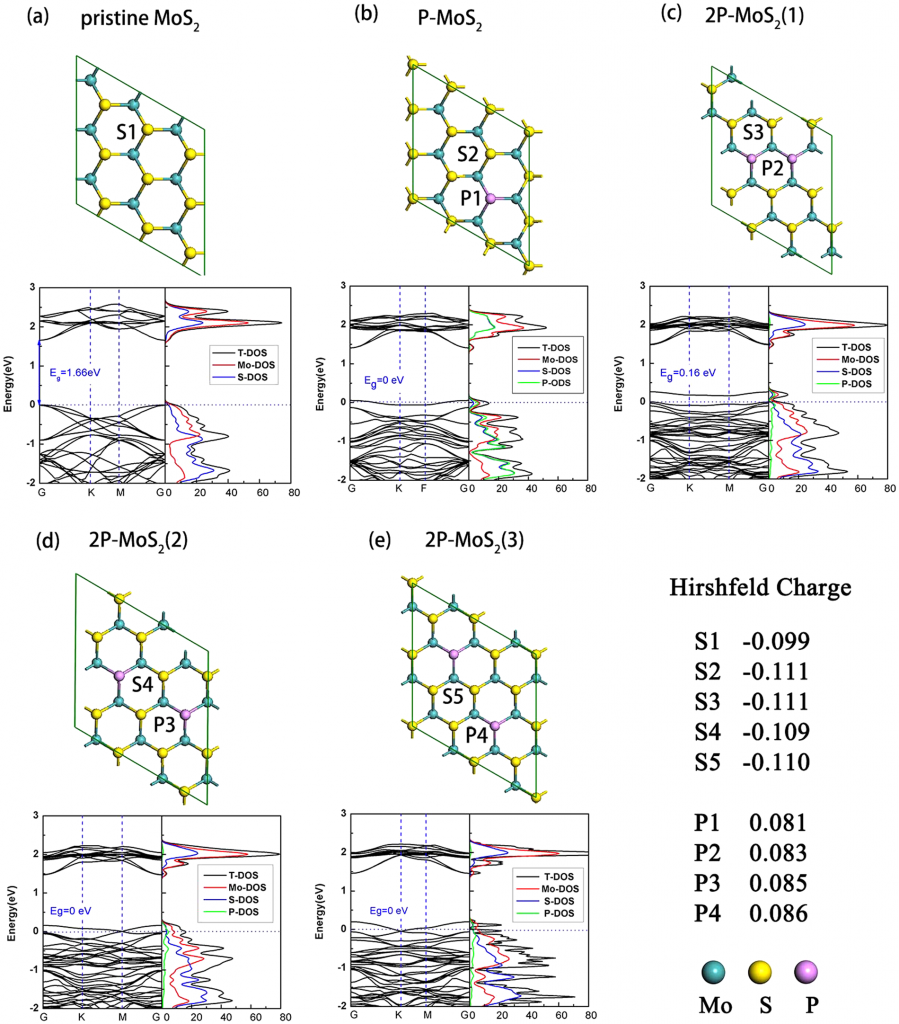
Negative Electrocatalytic Effects of p-Doping Niobium and Tantalum on MoS2 and WS2 for the Hydrogen Evolution Reaction and Oxygen Reduction Reaction

Transition-metal dichalcogenides (TMDs) are at the forefront of research for their promising catalytic abilities and unique materials properties. With great interest in the study of mono- or few-layered TMDs, we seek to fundamentally explore the effects of doping on bulk TMDs, particularly MoS2 and WS2 for the hydrogen evolution reaction (HER) and oxygen reduction reaction …

Negative Electrocatalytic Effects of p-Doping Niobium and Tantalum on MoS2 and WS2 for the Hydrogen Evolution Reaction and Oxygen Reduction Reaction Read More »
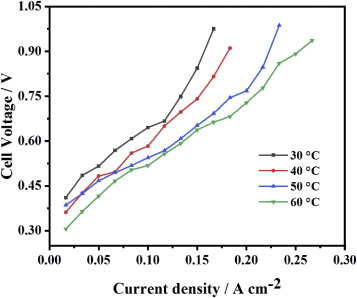
Layered Platinum Dichalcogenides (PtS2, PtSe2, and PtTe2) Electrocatalysis: Monotonic Dependence on the Chalcogen Size

Presently, research in layered transition metal dichalcogenides (TMDs) for numerous electrochemical applications have largely focused on Group 6 TMDs, especially MoS2 and WS2, whereas TMDs belonging to other groups are relatively unexplored. This work unravels the electrochemistry of Group 10 TMDs: specifically PtS2, PtSe2, and PtTe2. Here, the inherent electroactivities of these Pt dichalcogenides and …

Layered Platinum Dichalcogenides (PtS2, PtSe2, and PtTe2) Electrocatalysis: Monotonic Dependence on the Chalcogen Size Read More »

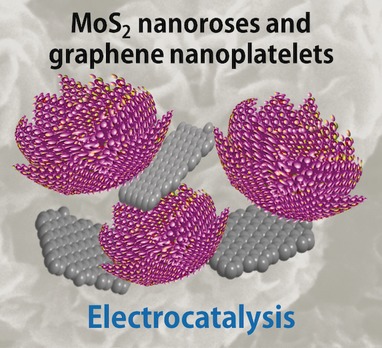
Nanostructured MoS2 Nanorose/Graphene Nanoplatelet Hybrids for Electrocatalysis

Tailoring and enhancing electrocatalytic activity is of the utmost importance from the viewpoints of sustainable energy and sensing. MoS2 and graphene show great promise for the electrocatalysis of many reactions. Given that both graphene and MoS2 are highly anisotropic in nature, with edge planes that are several orders of magnitude more catalytically active than basal …

Nanostructured MoS2 Nanorose/Graphene Nanoplatelet Hybrids for Electrocatalysis Read More »

Graphene-Amorphous Transition-Metal Chalcogenide (MoSx, WSx) Composites as Highly Efficient Hybrid Electrocatalysts for the Hydrogen Evolution Reaction

Layered transition-metal dichalcogenides (TMDs) show promising electrocatalytic properties towards the hydrogen evolution reaction (HER). A series of graphene-amorphous TMD composites were prepared under hydrothermal conditions. Materials with varying contents of MoSx and WSx were synthesized from ammonium tetrathiomolybdate and ammonium tetrathiotungstate precursors in the presence of graphene oxide and diethylene glycol as a reducing agent. …

Graphene-Amorphous Transition-Metal Chalcogenide (MoSx, WSx) Composites as Highly Efficient Hybrid Electrocatalysts for the Hydrogen Evolution Reaction Read More »

Helical 3D-Printed Metal Electrodes as Custom-Shaped 3D Platform for Electrochemical Devices

3D-printing represents an emerging technology that can revolutionize the way object and functional devices are fabricated. Here the use of metal 3D printing is demonstrated to fabricate bespoke electrochemical stainless steel electrodes that can be used as platform for different electrochemical applications ranging from electrochemical capacitors, oxygen evolution catalyst, and pH sensor by means of …

Helical 3D-Printed Metal Electrodes as Custom-Shaped 3D Platform for Electrochemical Devices Read More »

Electrochemically Exfoliated Graphene and Graphene Oxide for Energy Storage and Electrochemistry Applications

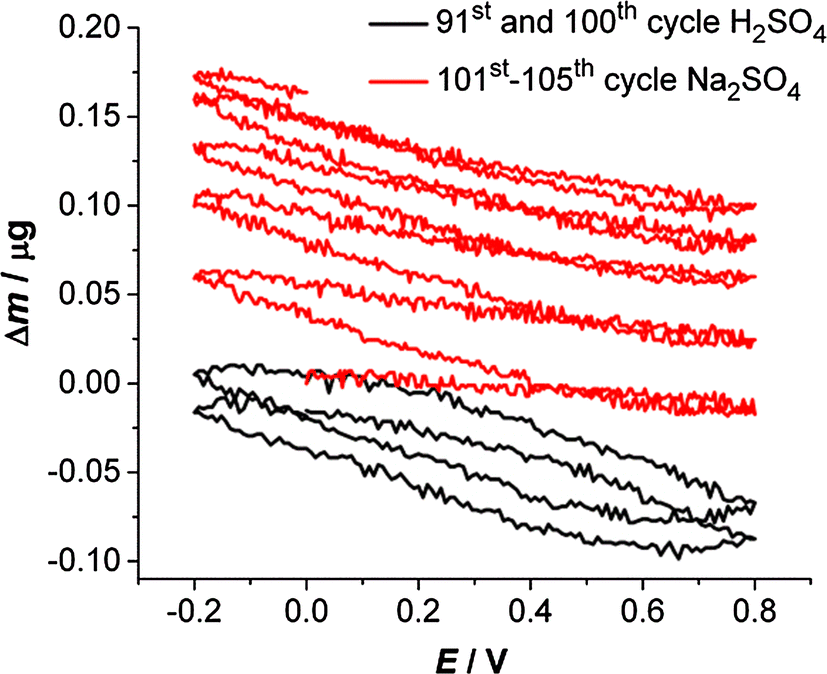
Top-down methods are of key importance for large-scale graphene and graphene oxide preparation. Electrochemical exfoliation of graphite has lately gained much interest because of the simplicity of execution, the short process time, and the good quality of graphene that can be obtained. Here, we test three different electrolytes, that is, H2SO4, Na2SO4, and LiClO4, with …

Electrochemically Exfoliated Graphene and Graphene Oxide for Energy Storage and Electrochemistry Applications Read More »

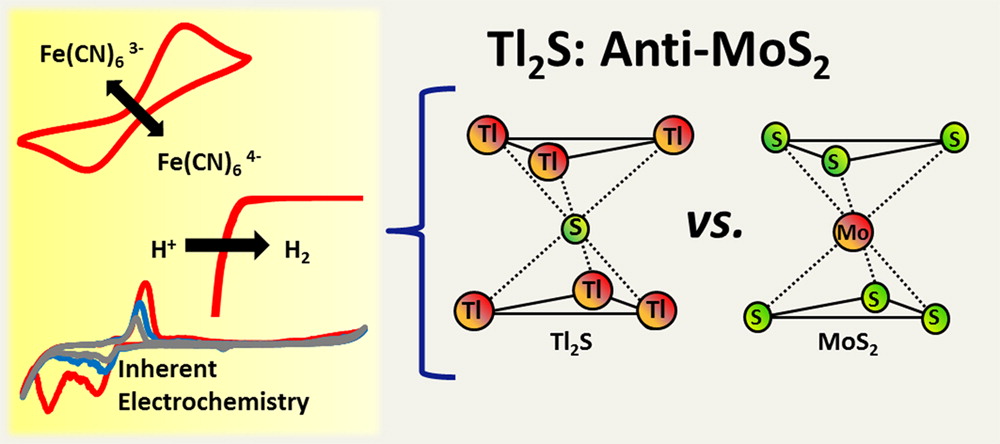
Anti-MoS2 Nanostructures: Tl2S and Its Electrochemical and Electronic Properties

Layered transition metal dichalcogenides are catalytically important compounds. Unlike the mounting interest in transition metal dichalcogenides such as MoS2 and WS2 for electrochemical applications, other metal chalcogenides with layered structure but different chemical composition have received little attention among the scientific community. One such example is represented by thallium(I) sulfide (Tl2S), a Group 13 chalcogenide, …

Anti-MoS2 Nanostructures: Tl2S and Its Electrochemical and Electronic Properties Read More »
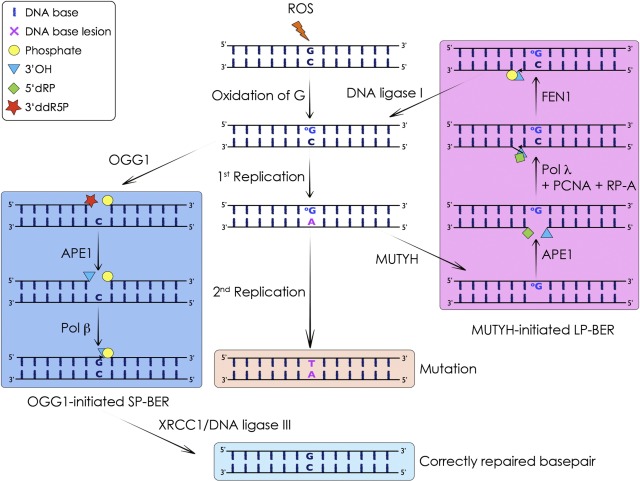
Transition Metal Oxides for the Oxygen Reduction Reaction: Influence of the Oxidation States of the Metal and its Position on the Periodic Table

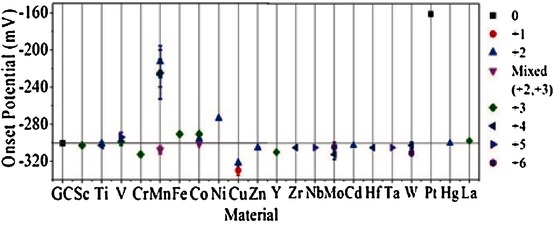
Electrocatalysts have been developed to meet the needs and requirements of renewable energy applications. Metal oxides have been well explored and are promising for this purpose, however, many reports focus on only one or a few metal oxides at once. Herein, thirty metal oxides, which were either commercially available or synthesized by a simple and …

Transition Metal Oxides for the Oxygen Reduction Reaction: Influence of the Oxidation States of the Metal and its Position on the Periodic Table Read More »

Electrochemical Fluorographane: Hybrid Electrocatalysis of Biomarkers, Hydrogen Evolution, and Oxygen Reduction

Fluorographane (C1HxF1-x+)(n) is a new member of the graphene family that exhibits hydrophobicity and a large band gap that is tunable based on the level of fluorination. Herein, sensing and energy applications of fluorographane are reported. The results reveal that the carbon-to-fluoride ratio of fluorographane has a great impact on the electrochemical performance of the …

Electrochemical Fluorographane: Hybrid Electrocatalysis of Biomarkers, Hydrogen Evolution, and Oxygen Reduction Read More »

Assessments of Surface Coverage after Nanomaterials are Drop Cast onto Electrodes for Electroanalytical Applications

The drop-casting method for the suspension of nanomaterials on conducting surfaces is a commonly used procedure for evaluating the electrochemical properties of the drop-cast materials. In this study, we pinpoint a key limitation of the method, which may lead to misinterpretation of the obtained data, especially when evaluating heterogeneous electron-transfer rates. The electrochemical responses recorded …

Assessments of Surface Coverage after Nanomaterials are Drop Cast onto Electrodes for Electroanalytical Applications Read More »

So-Called “Metal-Free” Oxygen Reduction at Graphene Nanoribbons is in fact Metal Driven

The oxygen reduction reaction (ORR) is of key importance in the field of electrochemical energy production. Remarkable catalytic properties of metal-free graphene nanoribbons towards the ORR were suggested in previous reports. Herein, we show that the electrocatalytic properties of an undoped supposedly metal-free graphene nanoribbon towards the ORR is actually caused by metallic impurities within …

So-Called “Metal-Free” Oxygen Reduction at Graphene Nanoribbons is in fact Metal Driven Read More »

Geographical and Geological Origin of Natural Graphite Heavily Influence the Electrical and Electrochemical Properties of Chemically Modified Graphenes

Natural graphite is an important precursor for the production of chemically modified graphenes in bulk quantities for electrochemical applications. These natural graphites have varying fundamental properties due to the different geological processes and environments at their points of origin, which are expected to affect their chemical reactivity and hence the properties of the derived graphene …

Geographical and Geological Origin of Natural Graphite Heavily Influence the Electrical and Electrochemical Properties of Chemically Modified Graphenes Read More »
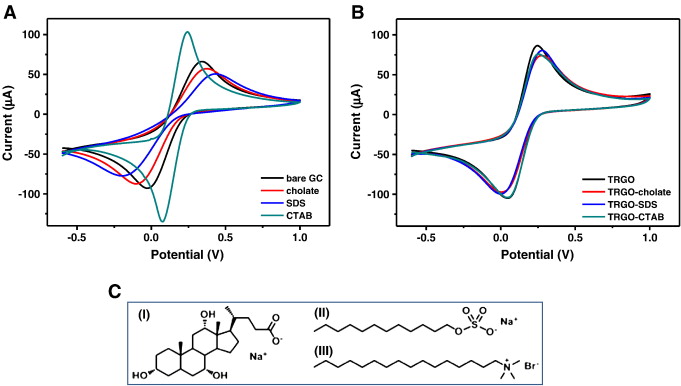
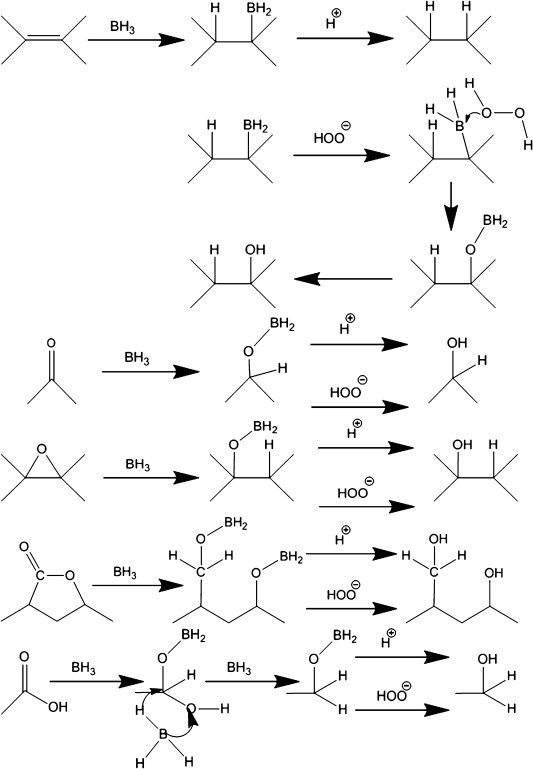
Hydroboration of Graphene Oxide: Towards Stoichiometric Graphol and Hydroxygraphane

Covalently functionalized graphene materials with well-defined stoichiometric composition are of a very high importance in the research of 2D carbon material family due to their well-defined properties. Unfortunately, most of the contemporary graphene-functionalized materials do not have this kind of defined composition and, usually, the amount of heteroatoms bonded to graphene framework is in the …

Hydroboration of Graphene Oxide: Towards Stoichiometric Graphol and Hydroxygraphane Read More »

Selective Nitrogen Functionalization of Graphene by Bucherer-Type Reaction

Nitrogen functionalization of graphene offers new hybrid materials with improved performance for important technological applications. Despite studies highlighting the dependence of the performance of nitrogen-functionalized graphene on the types of nitrogen functional groups that are present, precise synthetic control over their ratio is challenging. Herein, the synthesis of nitrogen-functionalized graphene rich in amino groups by …

Selective Nitrogen Functionalization of Graphene by Bucherer-Type Reaction Read More »

The Structural Stability of Graphene Anticorrosion Coating Materials is Compromised at Low Potentials

Corrosion of engineered structures is a major problem causing an estimated economic loss of more than 2trillion US dollars annually worldwide. Graphene has recently emerged as highly promising, low-cost, and transparent anticorrosion coating material. Herein, it is shown that a multilayer graphene film grown on Ni by chemical vapor deposition undergoes abrupt stability failure under …

The Structural Stability of Graphene Anticorrosion Coating Materials is Compromised at Low Potentials Read More »
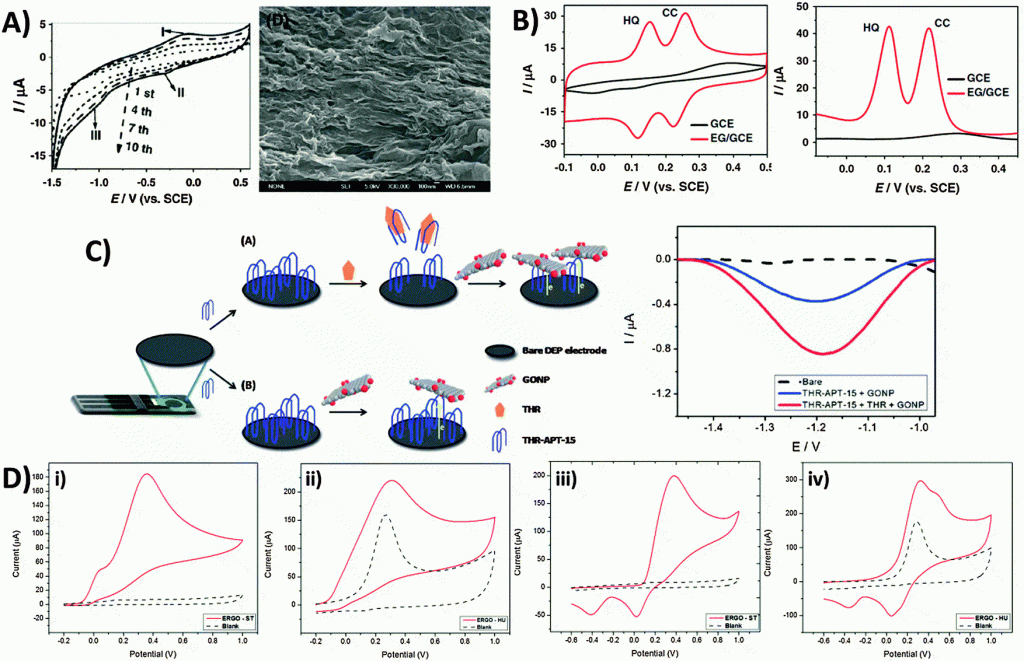
Mycotoxin Aptasensing Amplification by using Inherently Electroactive Graphene-Oxide Nanoplatelet Labels

We develop an electrochemical aptasensor for ochratoxinA (OTA) by utilizing graphene-oxide nanoplatelets (GONPs) as electroactive labels. OTA aptamer (OTA-apt), which serves as the recognition element, was first immobilized onto the electrode surface before the modified electrode underwent exposure to OTA. Subsequently, incubation with GONPs was performed and the nanoplatelets conjugated to the immobilized OTA-apt through …

Mycotoxin Aptasensing Amplification by using Inherently Electroactive Graphene-Oxide Nanoplatelet Labels Read More »
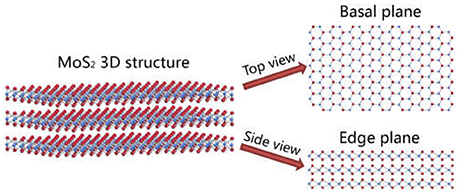
Pristine Basal-and Edge-Plane-Oriented Molybdenite MoS2 Exhibiting Highly Anisotropic Properties

The layered structure of molybdenum disulfide (MoS2) is structurally similar to that of graphite, with individual sheets strongly covalently bonded within but held together through weak van der Waals interactions. This results in two distinct surfaces of MoS2: basal and edge planes. The edge plane was theoretically predicted to be more electroactive than the basal …

Pristine Basal-and Edge-Plane-Oriented Molybdenite MoS2 Exhibiting Highly Anisotropic Properties Read More »
Catalytic and Charge Transfer Properties of Transition Metal Dichalcogenides Arising from Electrochemical Pretreatment

Layered transition metal dichalcogenides (TMDs) have been the center of attention in the scientific community due to their properties that can be tapped on for applications in electrochemistry and hydrogen evolution reaction (HER) catalysis. We report on the effect of electrochemical treatment of exfoliated MoS2, WS2, MoSe2 and WSe2 nanosheets toward the goal of activating …

Catalytic and Charge Transfer Properties of Transition Metal Dichalcogenides Arising from Electrochemical Pretreatment Read More »
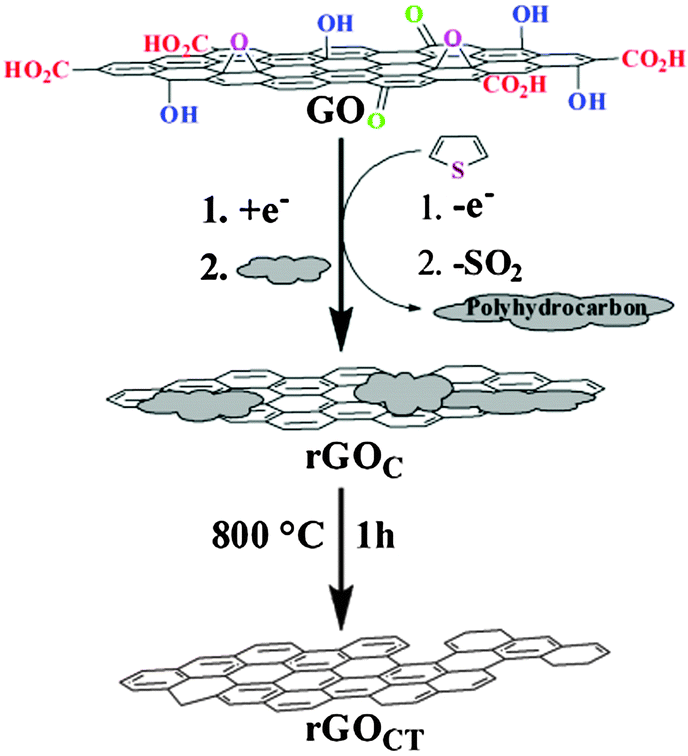
Monothiolation and Reduction of Graphene Oxide via One-Pot Synthesis: Hybrid Catalyst for Oxygen Reduction

The functionalization of graphene provides diverse possibilities to improve the handling of graphene and enable further chemical transformation on graphene. Graphene functionalized with mainly heteroatom-based functional groups to enhance its chemical and physical properties is intensively pursued but often resulted in grafting of the heteroatoms as various functional groups. Here, we show that graphene oxide …

Monothiolation and Reduction of Graphene Oxide via One-Pot Synthesis: Hybrid Catalyst for Oxygen Reduction Read More »

Misfit-Layered Bi1.85Sr2Co1.85O7.7-delta for the Hydrogen Evolution Reaction: Beyond van der Waals Heterostructures

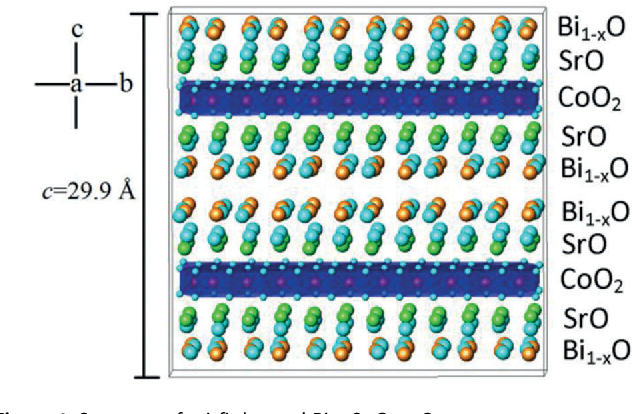
Recent research on stable 2D nanomaterials has led to the discovery of new materials for energy-conversion and energy-storage applications. A class of layered heterostructures known as misfit-layered chalcogenides consists of well-defined atomic layers and has previously been applied as thermoelectric materials for use as high-temperature thermoelectric batteries. The performance of such misfit-layered chalcogenides in electrochemical …

Misfit-Layered Bi1.85Sr2Co1.85O7.7-delta for the Hydrogen Evolution Reaction: Beyond van der Waals Heterostructures Read More »
p-Element-Doped Graphene: Heteroatoms for Electrochemical Enhancement

Graphene is finding important applications in electrochemistry. Here, we discuss how the doping of graphene with heteroatoms, namely boron, nitrogen, phosphorus, sulfur, fluorine, chlorine, bromine, and iodine, change the electrochemical properties of the material. In addition, we summarize the different doping routes and show that the process has an influence upon electrochemical properties.

Inherent Electrochemistry of Layered Post-Transition Metal Halides: The Unexpected Effect of Potential Cycling of PbI2

The development of two-dimensional nanomaterials has expedited the growth of advanced technological applications. PbI2 is a layered inorganic solid with important and unique properties suitable for applications in the detection of electromagnetic radiation. While the optical and electrical properties of layered PbI2 have been generally established, its electrochemistry has remained largely unexplored. In this work, …

Inherent Electrochemistry of Layered Post-Transition Metal Halides: The Unexpected Effect of Potential Cycling of PbI2 Read More »
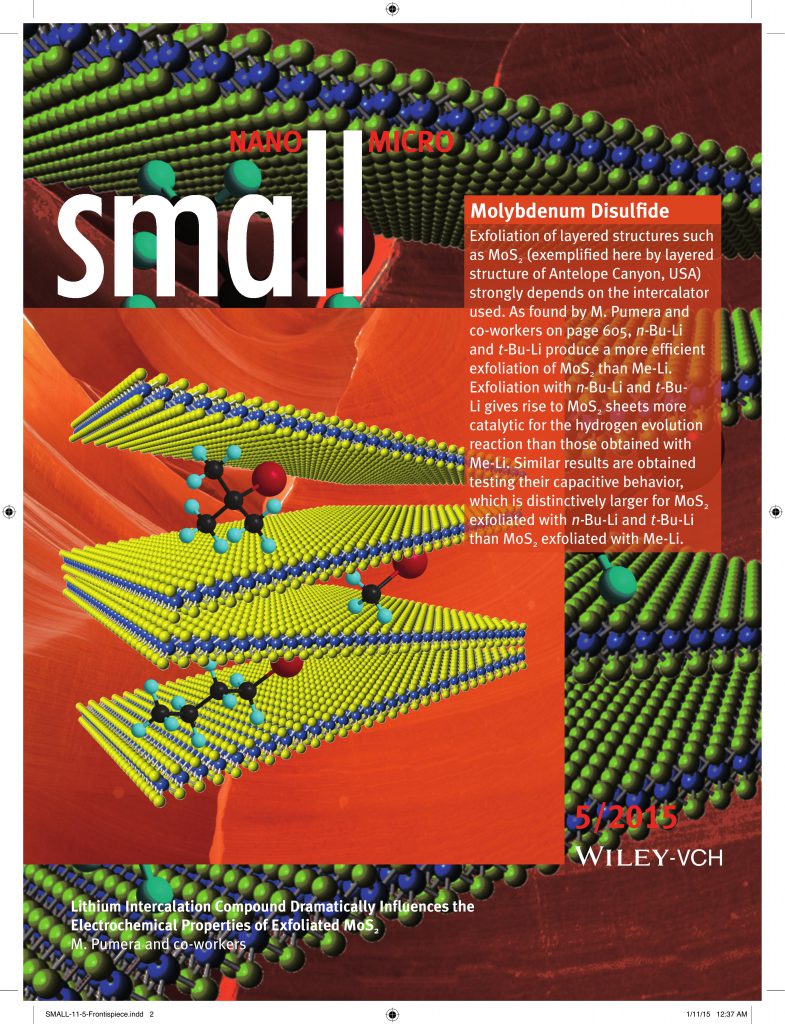
Lithium Intercalation Compound Dramatically Influences the Electrochemical Properties of Exfoliated MoS2

MoS2 and other transition metal dichalcogenides (TMDs) have recently gained a renewed interest due to the interesting electronic, catalytic, and mechanical properties which they possess when down-sized to single or few layer sheets. Exfoliation of the bulk multilayer structure can be achieved by a preliminary chemical Li intercalation followed by the exfoliation due to the …

Lithium Intercalation Compound Dramatically Influences the Electrochemical Properties of Exfoliated MoS2 Read More »

Precise Tuning of the Charge Transfer Kinetics and Catalytic Properties of MoS2 Materials via Electrochemical Methods

MoS2 has become particularly popular for its catalytic properties towards the hydrogen evolution reaction (HER). It has been shown that the metallic 1T phase of MoS2, obtained by chemical exfoliation after lithium intercalation, possesses enhanced catalytic activity over the semiconducting 2H phase due to the improved conductivity properties which facilitate charge-transfer kinetics. Here we demonstrate …

Precise Tuning of the Charge Transfer Kinetics and Catalytic Properties of MoS2 Materials via Electrochemical Methods Read More »
Electrochemistry of Transition Metal Dichalcogenides: Strong Dependence on the Metal-to-Chalcogen Composition and Exfoliation Method

Beyond MoS2 as the first transition metal dichalcogenide (TMD) to have gained recognition as an efficient catalyst for the hydrogen evolution reaction (HER), interest in other TMD nanomaterials is steadily beginning to proliferate. This is particularly true in the field of electrochemistry, with a myriad of emerging applications ranging from catalysis to supercapacitors and solar …

Electrochemistry of Transition Metal Dichalcogenides: Strong Dependence on the Metal-to-Chalcogen Composition and Exfoliation Method Read More »
Layered transition-metal dichalcogenides (MoS2 and WS2) for sensing and biosensing

Layered transition-metal dichalcogenides comprise a category of two-dimensional materials that offer exciting properties, including metallic and semi-conducting electrical capabilities, fluorescence and fast heterogeneous electron transfer. To date, these materials have mostly been employed in energy-storage and generation devices. However, in very recent times, there was a significant emerging trend in their utilization in analytical chemistry. …

Layered transition-metal dichalcogenides (MoS2 and WS2) for sensing and biosensing Read More »
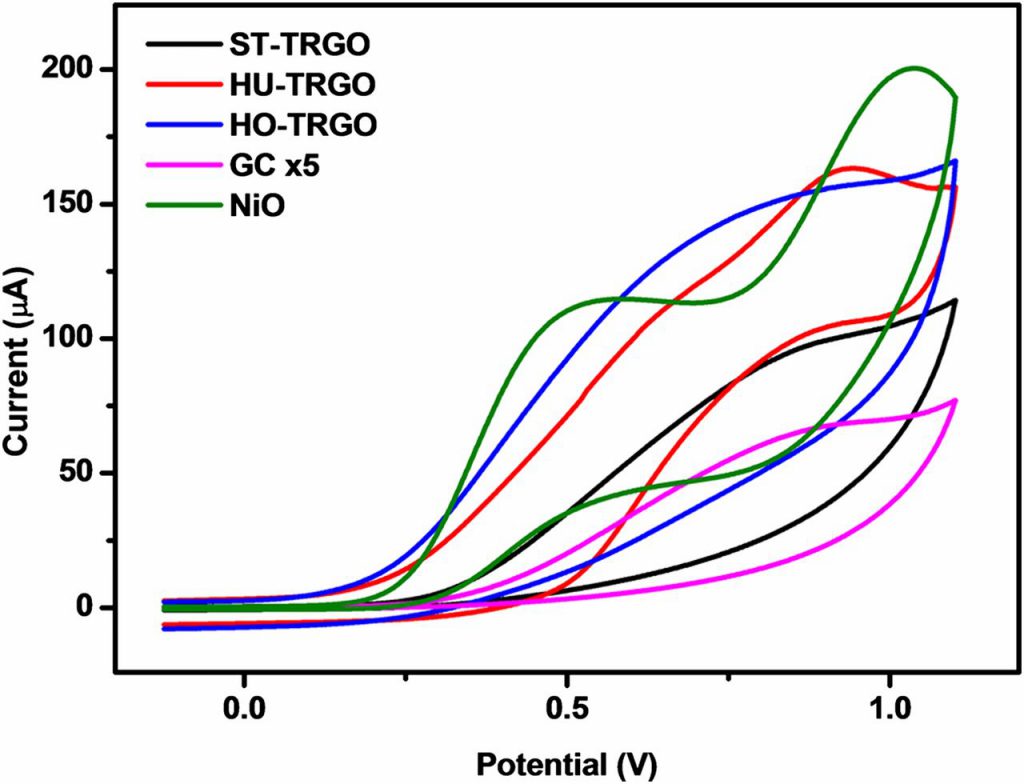
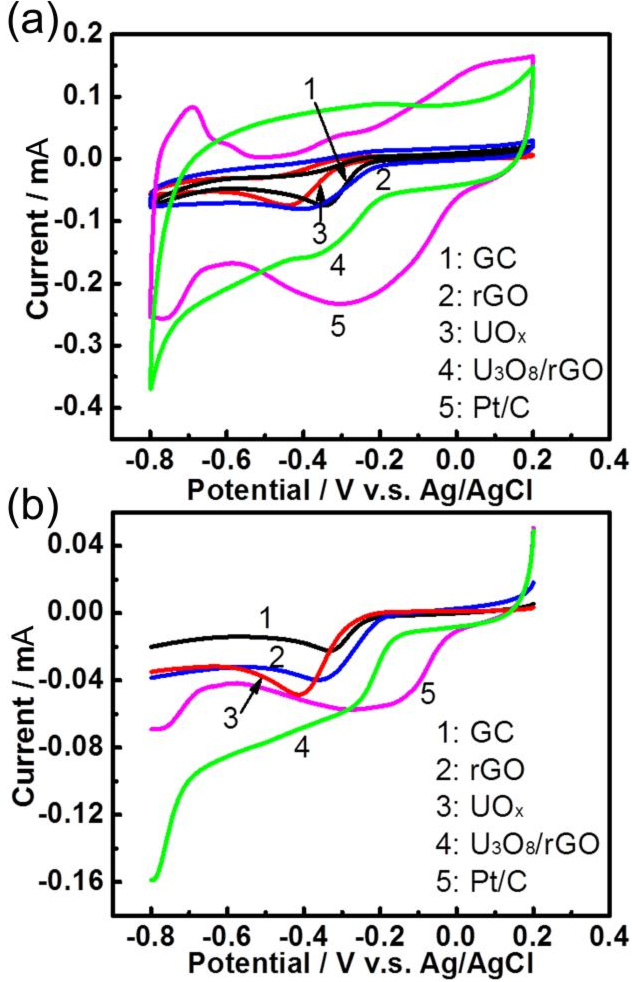
Uranium- and Thorium-Doped Graphene for Efficient Oxygen and Hydrogen Peroxide Reduction

Oxygen reduction and hydrogen peroxide reduction are technologically important reactions in the fields of energy generation and sensing. Metal-doped graphenes, where metal serves as the catalytic center and graphene as the high area conductor, have been used as electrocatalysts for such applications. In this paper, we investigated the use of uranium-graphene and thorium-graphene hybrids prepared …

Uranium- and Thorium-Doped Graphene for Efficient Oxygen and Hydrogen Peroxide Reduction Read More »

Fluorographites (CFx)(n) Exhibit Improved Heterogeneous Electron-Transfer Rates with Increasing Level of Fluorination: Towards the Sensing of Biomolecules

Halogenated sp(2) materials are of high interest owing to their important electronic and electrochemical properties. Although methods for graphite and graphene fluorination have been extensively researched, the fundamental electrochemical properties of fluorinated graphite are not well established. In this paper, the electrochemistry of three fluorographite materials of different carbon-to-fluorine ratio were studied: (CF0.33)(n), (CF0.47)(n), and …

Fluorographites (CFx)(n) Exhibit Improved Heterogeneous Electron-Transfer Rates with Increasing Level of Fluorination: Towards the Sensing of Biomolecules Read More »
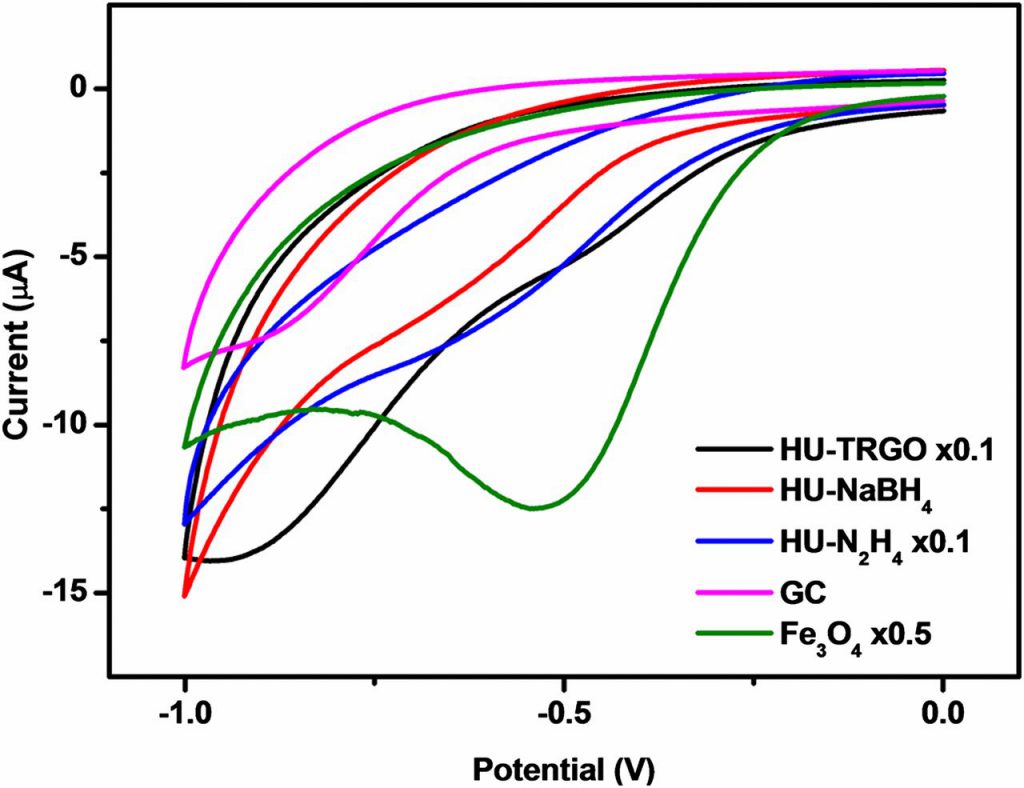
Transition Metal-Depleted Graphenes for Electrochemical Applications via Reduction of CO2 by Lithium

Graphene has immense potential for future applications in the electrochemical field, such as in supercapacitors, fuel cells, batteries, or sensors. Graphene materials for such applications are typically fabricated through a top-down approach towards oxidation of graphite to graphite oxide, with consequent exfoliation/reduction to yield reduced graphenes. Such a method allows the manufacture of graphenes in …

Transition Metal-Depleted Graphenes for Electrochemical Applications via Reduction of CO2 by Lithium Read More »

Capacitance of p-and n-Doped Graphenes is Dominated by Structural Defects Regardless of the Dopant Type

Graphene materials possess attractive properties that can be used for the fabrication of supercapacitors with enhanced energy-storage performance. It has been shown that both boron and nitrogen doping of graphene can improve the intrinsic capacitance of the material relative to the undoped precursor. We address the question of whether p-doping (using boron as dopant) or …

Capacitance of p-and n-Doped Graphenes is Dominated by Structural Defects Regardless of the Dopant Type Read More »

Simultaneous Electrochemical Detection of Silver and Molybdenum Nanoparticles

Nanoparticles (NPs) and quantum dots (QDs) are of interest as redox tags in electrochemical biosensing. Simultaneous monitoring of the redox reactions of these tags with different redox potentials under mild conditions may allow the multiplex detection of target analytes in point-of-care applications. The multiplex detection of Ag and Mo NPs on a glassy carbon electrode …

Simultaneous Electrochemical Detection of Silver and Molybdenum Nanoparticles Read More »

Graphene platforms for the detection of caffeine in real samples

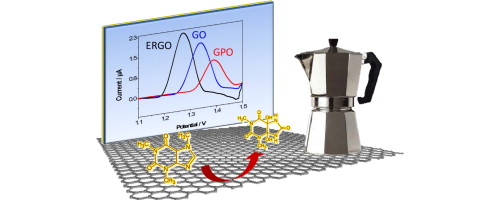
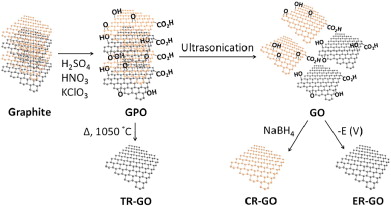
The analysis of food components is of high importance due to food safety and security. Here the electrochemical detection of caffeine was performed on different chemically modified graphene (CMG) surfaces carrying diverse amount of defects and oxygen functionalities. The analytical performances of graphite oxide (GPO), graphene oxide (GO), and electrochemically reduced graphene oxide (ERGO) were …

Graphene platforms for the detection of caffeine in real samples Read More »

Highly Hydrogenated Graphene through Microwave Exfoliation of Graphite Oxide in Hydrogen Plasma: Towards Electrochemical Applications

Hydrogenated graphenes exhibit a variety of properties with potential applications in devices, ranging from a tunable band gap to fluorescence, ferromagnetism, and the storage of hydrogen. We utilize a one-step microwave-irradiation process in hydrogen plasma to create highly hydrogenated graphene from graphite oxides. The procedure serves the dual purposes of deoxygenation and concurrent hydrogenation of …

Highly Hydrogenated Graphene through Microwave Exfoliation of Graphite Oxide in Hydrogen Plasma: Towards Electrochemical Applications Read More »

Electrochemistry of graphene, graphene oxide and other graphenoids: Review

The electrochemical behaviors of single-, few- and multi-layer graphene, graphene oxides, reduced graphene oxides, CVD graphene and three-dimensional graphene are discussed and critically evaluated, providing an up-to-date summary on the progress of the field. (C) 2013 Elsevier B.V. All rights reserved.

Unusual Inherent Electrochemistry of Graphene Oxides Prepared Using Permanganate Oxidants

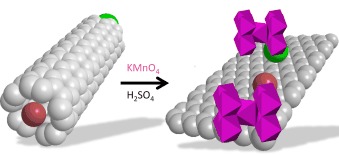
Graphene and graphene oxides are materials of significant interest in electrochemical devices such as supercapacitors, batteries, fuel cells, and sensors. Graphene oxides and reduced graphenes are typically prepared by oxidizing graphite in strong mineral acid mixtures with chlorate (Staudenmaier, Hofmann) or permanganate (Hummers, Tour) oxidants. Herein, we reveal that graphene oxides pose inherent electrochemistry, that …

Unusual Inherent Electrochemistry of Graphene Oxides Prepared Using Permanganate Oxidants Read More »

Sulfur-Doped Graphene via Thermal Exfoliation of Graphite Oxide in H2S, SO2, or CS2 Gas

Doping of graphene with heteroatoms is an effective way to tailor its properties. Here we describe a simple and scalable method of doping graphene lattice with sulfur atoms during the thermal exfoliation process of graphite oxides. The graphite oxides were first prepared by Staudenmaler, Hofmann, and Hummers methods followed by treatments in hydrogen sulfide, sulfur …

Sulfur-Doped Graphene via Thermal Exfoliation of Graphite Oxide in H2S, SO2, or CS2 Gas Read More »

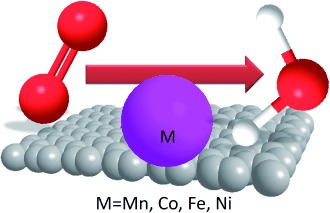
Transition Metal (Mn, Fe, Co, Ni)-Doped Graphene Hybrids for Electrocatalysis

The development of electrocatalysts is crucial for renewable energy applications. Metal-doped graphene hybrid materials have been explored for this purpose, however, with much focus on noble metals, which are limited by their low availability and high costs. Transition metals may serve as promising alternatives. Here, transition metal-doped graphene hybrids were synthesized by a simple and …

Transition Metal (Mn, Fe, Co, Ni)-Doped Graphene Hybrids for Electrocatalysis Read More »

Precise Tuning of Surface Composition and Electron-Transfer Properties of Graphene Oxide Films through Electroreduction

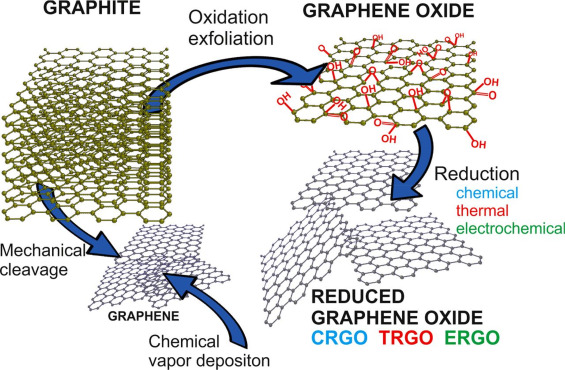
Graphene materials are generally prepared from the exfoliation of graphite oxide (GO) to graphene oxide, followed by subsequent chemical or thermal reduction. These methods, although efficient in removing most of the oxygen functionalities from the GO material, lack control over the extent of the reduction process. We demonstrate here an electrochemical reduction procedure that not …

Precise Tuning of Surface Composition and Electron-Transfer Properties of Graphene Oxide Films through Electroreduction Read More »

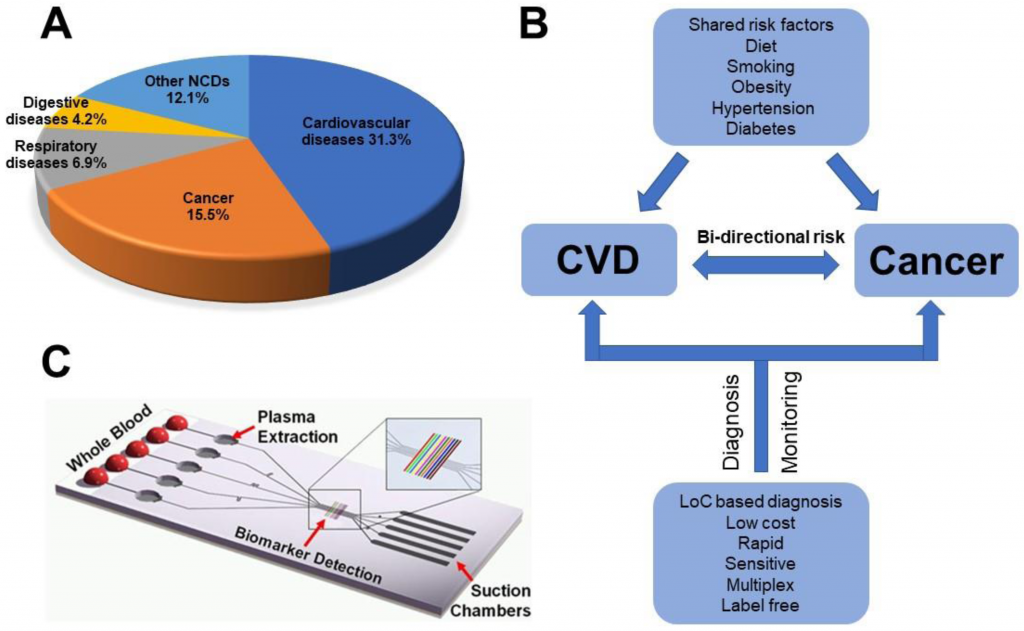
Chemically Modified Graphenes as Detectors in Lab-on-Chip Device

Graphene materials hold immense potentials for electrochemical detectors in lab-on-chip devices. The electronic and electrochemical properties of graphene based materials are significantly affected by the fabrication routes and by the structural features, such as density of defects and amount of oxygen containing groups. Therefore it is paramount to evaluate various graphene-based materials prior to their …

Chemically Modified Graphenes as Detectors in Lab-on-Chip Device Read More »

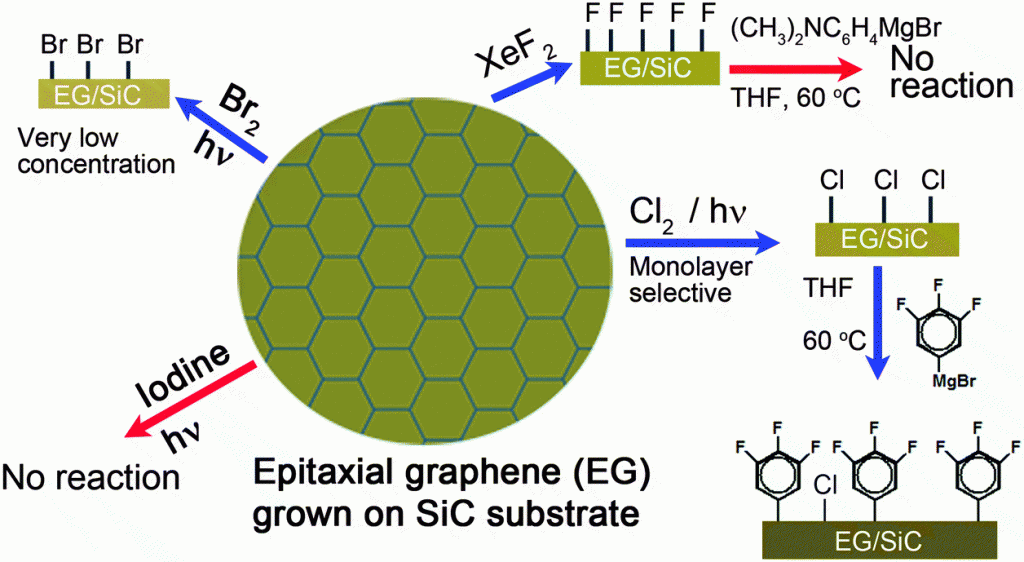
Halogenation of Graphene with Chlorine, Bromine, or Iodine by Exfoliation in a Halogen Atmosphere

Nanoarchitectonics on graphene implicates a specific and exact anchoring of molecules or nanoparticles onto the surface of graphene. One such example of an effective anchoring group that is highly reactive is the halogen moiety. Herein we describe a simple and scalable method for the introduction of halogen (chlorine, bromine, and iodine) moieties onto the surface …

Halogenation of Graphene with Chlorine, Bromine, or Iodine by Exfoliation in a Halogen Atmosphere Read More »

Graphite Oxides: Effects of Permanganate and Chlorate Oxidants on the Oxygen Composition

Research on graphene materials has refocused on graphite oxides (GOs) in recent years. The fabrication of GO is commonly accomplished by using concentrated sulfuric acid in conjunction with: a) fuming nitric acid and KClO3 oxidant (Staudenmaier); b) concentrated nitric acid and KClO3 oxidant (Hofmann); c) sodium nitrate for in situ production of nitric acid in …

Graphite Oxides: Effects of Permanganate and Chlorate Oxidants on the Oxygen Composition Read More »

Graphene Sheet Orientation of Parent Material Exhibits Dramatic Influence on Graphene Properties

The production of graphene from various sources has garnered much attention in recent years with the development of methods that range from bottom-up to top-down approaches. The top-down approach often requires thermal treatment to obtain a few-layered and lowly oxygenated graphene sheets. Herein, we demonstrate the production of graphene through oxidation and thermal-reduction/exfoliation of two …

Graphene Sheet Orientation of Parent Material Exhibits Dramatic Influence on Graphene Properties Read More »

Chemically reduced graphene contains inherent metallic impurities present in parent natural and synthetic graphite

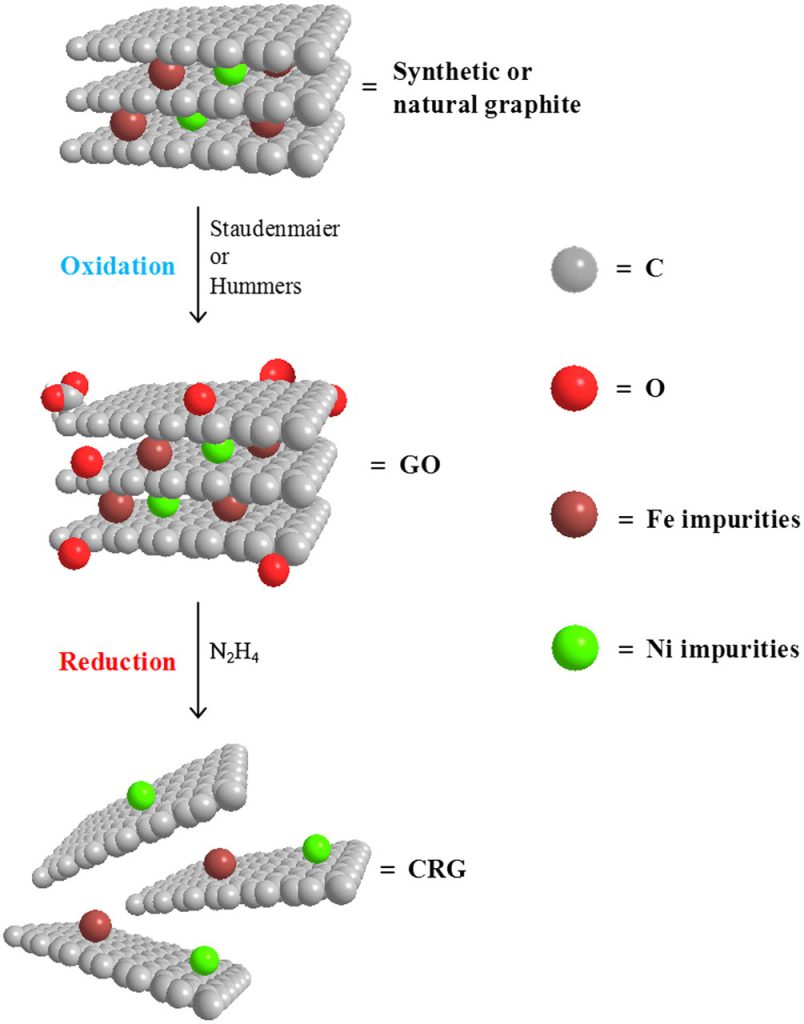
Graphene-related materials are in the forefront of nanomaterial research. One of the most common ways to prepare graphenes is to oxidize graphite (natural or synthetic) to graphite oxide and exfoliate it to graphene oxide with consequent chemical reduction to chemically reduced graphene. Here, we show that both natural and synthetic graphite contain a large amount …

Chemically reduced graphene contains inherent metallic impurities present in parent natural and synthetic graphite Read More »

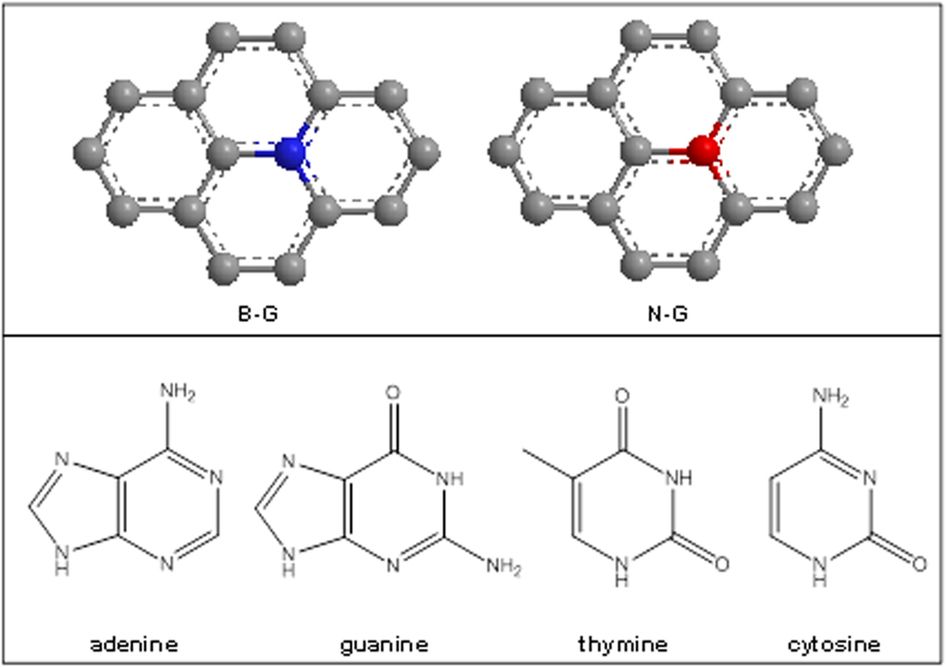
Oxidation of DNA bases is influenced by their position in the DNA strand

Electrochemical detection of DNA is an important field of research, with strong implications for next generation diagnostics. In this paper, we show that the electrochemical responses of DNA bases (guanine, adenine, thymine, cytosine) in terms of peak potentials and peak current may be influenced by the sequences of an oligomer at standard glassy carbon (GC), …

Oxidation of DNA bases is influenced by their position in the DNA strand Read More »

Surfactants show both large positive and negative effects on observed electron transfer rates at thermally reduced graphenes

The use of surfactants is ubiquitous in the production of graphene and its analogs as well as their stabilization in solution due to their hydrophobicity causing significant aggregation in aqueous media. Several redox probes ([Fe(CN)(6)](4-/3-), [Ru(NH3)(6)](2+/3+), Fe-aq(2+/3+)) were employed to assess the effect of various surfactants on the electrochemical responses of glassy carbon (GC) as …

Surfactants show both large positive and negative effects on observed electron transfer rates at thermally reduced graphenes Read More »

Comparison of the electroanalytical performance of chemically modified graphenes (CMGs) using uric acid

We compared the differential pulse voltammetric performance of various chemically modified graphenes (CMGs) to those of glassy carbon (GC) and edge plane pyrolytic graphite (EPPG), using a biologically important analyte, uric acid. Analytical parameters of sensitivity, linearity, repeatability and selectivity were considered. Graphite oxide, graphene oxide, chemically reduced graphene oxide, electrochemically reduced graphene oxide and …

Comparison of the electroanalytical performance of chemically modified graphenes (CMGs) using uric acid Read More »

Lithium Aluminum Hydride as Reducing Agent for Chemically Reduced Graphene Oxides

Chemical reduction of graphene oxide is one of the main routes of preparation for large quantities of graphenes. A wide range of reducing agents was described for this task, such as hydroquinone, ascorbic acid, saccharides, proteins, hydrazine, or sodium borohydride. With exception of sodium borohydride and hydrazine, no “standard” organic chemistry agents have been described …

Lithium Aluminum Hydride as Reducing Agent for Chemically Reduced Graphene Oxides Read More »

The Inherent Electrochemistry of Nickel/Nickel-Oxide Nanoparticles

The direct detection of nanoparticles is at the forefront of research owing to their environmental and toxicological applications. Herein, we studied the inherent electrochemistry of Ni and NiO nanoparticles and proposed a simple and direct electrochemical method for the determination of the concentrations of both nickel (Ni) and nickel oxide (NiO) nanoparticles in alkaline solution. …

The Inherent Electrochemistry of Nickel/Nickel-Oxide Nanoparticles Read More »

Inherent Electrochemistry and Activation of Chemically Modified Graphenes for Electrochemical Applications

Graphene research is currently at the frontier of electrochemistry. Many different graphene-based materials are employed by electrochemists as electrodes in sensing and in energy-storage devices. Because the methods for their preparation are inherently different, graphene materials are expected to exhibit different electrochemical behaviors depending on the functionalities and density of defects present. Electrochemical treatment of …

Inherent Electrochemistry and Activation of Chemically Modified Graphenes for Electrochemical Applications Read More »

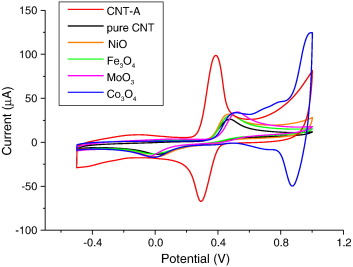
Redox-Active Nickel in Carbon Nanotubes and Its Direct Determination

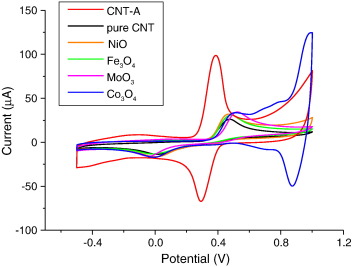
The presence of residual metal-catalyst impurities in carbon nanotubes is responsible for their toxicity. It is important to differentiate between the total amount of impurities and the redox-active (bioavailable) amount of such impurities because only the bioavailable impurities exhibit toxic effects. Herein, we report a simple and specific method for quantifying the amount of redox-active …

Redox-Active Nickel in Carbon Nanotubes and Its Direct Determination Read More »

Nanoporous Carbon Materials for Electrochemical Sensing

Nanoporous carbon materials are highly important materials for a wide array of applications. Here we show that nanoporous carbon can act as highly active materials for electrochemical sensing. We observed that nanoporous carbon material exhibits a faster heterogeneous electron transfer than graphite and pure carbon nanotubes. Nanoporous carbon exhibits a superior electrochemical performance for sensing …

Nanoporous Carbon Materials for Electrochemical Sensing Read More »

Voltammetry of carbon nanotubes and graphenes: excitement, disappointment, and reality

Voltammetry of carbon nanotubes and graphene underwent significant development in the first decade of the 21st century. The initial excitement concerning the performance of the new materials was replaced with increasing crises in the field caused by the use of impure materials. Here, I provide a personal view of these developments and some reality checks …

Voltammetry of carbon nanotubes and graphenes: excitement, disappointment, and reality Read More »

Number of graphene layers exhibiting an influence on oxidation of DNA bases: Analytical parameters

This article investigates the analytical performance of double-, few- and multi-layer graphene upon oxidation of adenine and guanine. We observed that the sensitivity of differential pulse voltammetric response of guanine and adenine is significantly higher at few-layer graphene surface than single-layer graphene. We use glassy carbon electrode as substrate coated with graphenes. Our findings shall …

Number of graphene layers exhibiting an influence on oxidation of DNA bases: Analytical parameters Read More »

Gold Nanospacers Greatly Enhance the Capacitance of Electrochemically Reduced Graphene

Graphene has great potential in electrochemical storage applications for supercapacitors owing to its high conductivity, large surface area, and the economical feasibility in producing it. The main issue that faces graphene nanomaterials in this application is that they tend to restack, thus decreasing the accessible surface area and leading to low capacitance. Gold nanoparticles of …

Gold Nanospacers Greatly Enhance the Capacitance of Electrochemically Reduced Graphene Read More »

Nanographite Impurities in Carbon Nanotubes: Their Influence on the Oxidation of Insulin, Nitric Oxide, and Extracellular Thiols

There has been growing interest in the use of modified-carbon-nanotube electrodes in applications such as the electrochemical detection of biologically significant compounds, owing to their apparent electrocatalytic properties and ability to enhance oxidative signals. In spite of their salient properties, little work has been done to further examine the reasons for these reported characteristics. In …

Nanographite Impurities in Carbon Nanotubes: Their Influence on the Oxidation of Insulin, Nitric Oxide, and Extracellular Thiols Read More »

Electrochemistry at Chemically Modified Graphenes

Electrochemical applications of graphene are of great interest to many researchers as they can potentially lead to crucial technological advancements in fabrication of electrochemical devices for energy production and storage, and highly sensitive sensors. There are many routes towards fabrication of bulk quantities of chemically modified graphenes (CMG) for applications such as electrode materials. Each …

Electrochemistry at Chemically Modified Graphenes Read More »

Platelet graphite nanofibers/soft polymer composites for electrochemical sensing and biosensing

The fabrication and attractive sensing and biosensing performance of platelet graphite nanofibers/polysulfone (PGNF/PSf) composite nanomaterials is described. The PGNF/PSf nanocomposites were fabricated by facile phase-inversion method. Their electrochemical performance was compared to the one of carbon nanotubes/PSf and graphite microparticles/PSf composite. It was clearly demonstrated that PGNF/PSf provides superior voltammetric and amperometric performance for sensing …

Platelet graphite nanofibers/soft polymer composites for electrochemical sensing and biosensing Read More »

Direct Determination of Bioavailable Molybdenum in Carbon Nanotubes

Bioavailable residual metallic impurities within carbon nanotubes (CNTs) are responsible for the toxicity of CNTs. Herein we present a method for fast, sensitive determination of bioavailable molybdenum residual catalyst impurities within CNTs by using electrochemical oxidation in neutral pH buffers at low potentials. This method is unique because no other method can rapidly distinguish between …

Direct Determination of Bioavailable Molybdenum in Carbon Nanotubes Read More »

Graphene-based electrochemical sensor for detection of 2,4,6-trinitrotoluene (TNT) in seawater: the comparison of single-, few-, and multilayer graphene nanoribbons and graphite microparticles

The detection of explosives in seawater is of great interest. We compared response single-, few-, and multilayer graphene nanoribbons and graphite microparticle-based electrodes toward the electrochemical reduction of 2,4,6-trinitrotoluene (TNT). We optimized parameters such as accumulation time, accumulation potential, and pH. We found that few-layer graphene exhibits about 20% enhanced signal for TNT after accumulation …

Graphene-based electrochemical sensor for detection of 2,4,6-trinitrotoluene (TNT) in seawater: the comparison of single-, few-, and multilayer graphene nanoribbons and graphite microparticles Read More »

Multilayer graphene nanoribbons exhibit larger capacitance than their few-layer and single-layer graphene counterparts

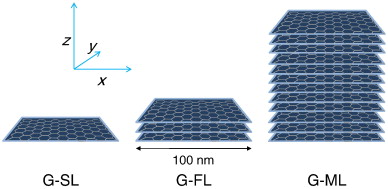
This article demonstrates that it is not always beneficial to exfoliate graphitic structures to single-layer graphene to achieve maximum electrochemical performance. Using electrochemical impedance spectroscopy, we show that multilayer graphene nanoribbons with cross sections of 100 x 100 nm provide larger capacitance (15.6 F/g) than do few-layer graphene nanoribbons (14.9 F/g) and far larger capacitance …

Multilayer graphene nanoribbons exhibit larger capacitance than their few-layer and single-layer graphene counterparts Read More »

Graphene for electrochemical sensing and biosensing

Graphene has proved to be an excellent nanomaterial for applications in electrochemistry. We review progress in constructing high-performance electrochemical sensors and biosensors. We also discuss: different routes for graphene fabrication; graphene-modified electrodes and graphene-composite electrodes for sensing, including those based on ionic liquids; incorporation of biorecognition elements into graphene-based electrodes; and, graphene-supported electrocatalytic nanoparticle-based electrochemical …

Graphene for electrochemical sensing and biosensing Read More »

Platelet Graphite Nanofibers for Electrochemical Sensing and Biosensing: The Influence of Graphene Sheet Orientation

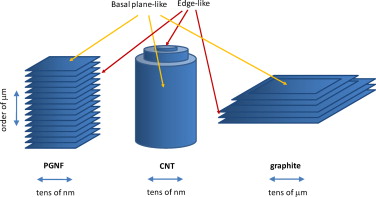
Here, we demonstrate that platelet graphite nanofibers (PGNFs) exhibit fast heterogeneous electron-transfer rates for a wide variety of compounds such as FeCl3, ferrocyanide, dopamine, uric acid, ascorbic acid, and the reduced form of beta-nicotinamide adenine dinucleotide. The electrochemical properties of PGNFs are superior to those of multiwalled carbon nanotubes (MWCNTs) or graphite microparticles (GMPs). Transmission …

Platelet Graphite Nanofibers for Electrochemical Sensing and Biosensing: The Influence of Graphene Sheet Orientation Read More »

Electrochemistry of Graphene: New Horizons for Sensing and Energy Storage

Graphene is a new 2D nanomaterial with outstanding material, physical, chemical, and electrochemical properties. In this review, we first discuss the methods of preparing graphene sheers and their chemistry. Following that, the fundamental reasons governing the electrochemistry of graphene are meaningfully described Graphene is all excellent. electrode material with the advantages of conductivity and electrochemistry …

Electrochemistry of Graphene: New Horizons for Sensing and Energy Storage Read More »

The Electrochemistry of Carbon Nanotubes: Fundamentals and Applications

Carbon nanotubes (CNTs) are in the forefront of electrochemical research. It has become clear that an understanding of the fundamental reasons for the electrochemical activity of CNTs is essential for further progress in the field. This review provides a critical discussion of the fundamental reasons behind the electrochemical and “electrocatalytic” activity of CNTs as well …

The Electrochemistry of Carbon Nanotubes: Fundamentals and Applications Read More »

Metallic Impurities within Residual Catalyst Metallic Nanoparticles Are in Some Cases Responsible for “Electrocatalytic” Effect of Carbon Nanotubes

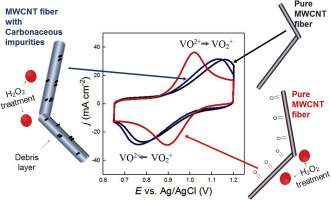
We show that in some cases, the metallic impurities within residual catalyst metallic nanoparticle impurities, which remain in carbon nanotubes from their synthesis even after purification, are responsible for “electrocatalytic” properties of carbon nanotubes. Ibis is demonstrated in an example of double-walled carbon nanotubes (DWCNTs) containing cobalt residual catalyst nanoparticle impurities, which themselves contain iron-based …

Metallic Impurities within Residual Catalyst Metallic Nanoparticles Are in Some Cases Responsible for “Electrocatalytic” Effect of Carbon Nanotubes Read More »

Relationship between Carbon Nanotube Structure and Electrochemical Behavior: Heterogeneous Electron Transfer at Electrochemically Activated Carbon Nanotubes

The electrochemical activation of multiwalled carbon nanotubes (MWCNTs) (at potentials of 1.5-2.0 V vs Ag/AgCl for 60-360 s) results in significantly increased rate constants (k(obs)(0)) for heterogeneous electron-transfer with [Fe(CN)(6)](3-14-) (from 8.34 x 10(-5)cms(-1) for as-received MWCNTs to 3.67 x 10(-3) cm s(-1) for MWCNTs that were electrochemically activated at 2.0 V for 180s). The …

Relationship between Carbon Nanotube Structure and Electrochemical Behavior: Heterogeneous Electron Transfer at Electrochemically Activated Carbon Nanotubes Read More »

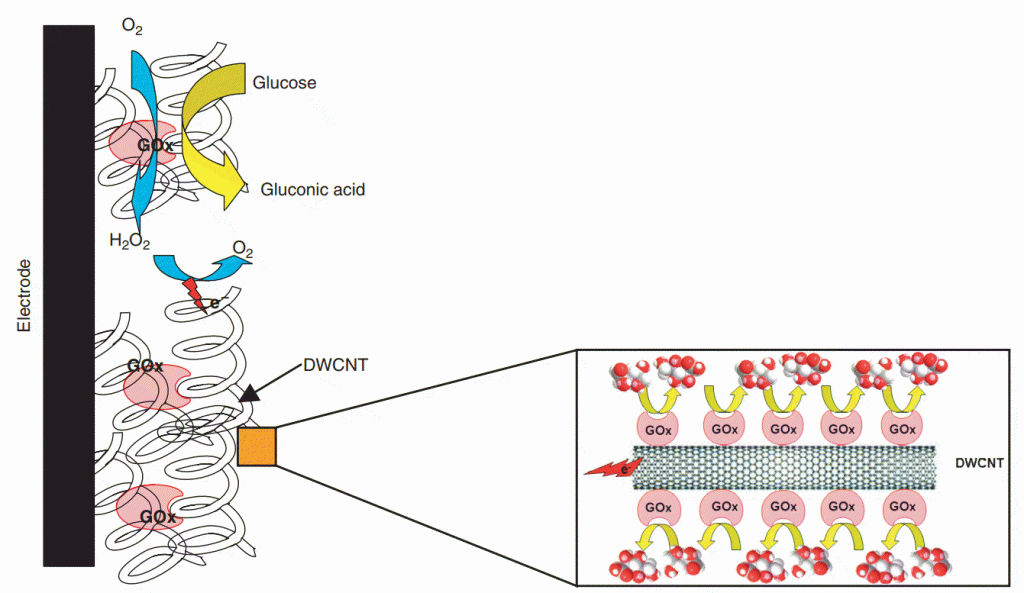
Redox protein noncovalent functionalization of double-wall carbon nanotubes: Electrochemical binder-less glucose biosensor

Double wall carbon nanotubes are noncovalently functionalized with redox protein and such assembly is used for construction of electrochemical binder-less glucose biosensor. Redox protein glucose oxidase performs as biorecognition element and double wall carbon nanotubes act both as immobilization platform for redox enzyme and as signal transducer. The double carbon nanotubes are characterized by cyclic …

Redox protein noncovalent functionalization of double-wall carbon nanotubes: Electrochemical binder-less glucose biosensor Read More »

Electrochemical properties of double wall carbon nanotube electrodes

Electrochemical properties of double wall carbon nanotubes (DWNT) were assessed and compared to their single wall (SWNT) counterparts. The double and single wall carbon nanotube materials were characterized by Raman spectroscopy, scanning and transmission electron microscopy and electrochemistry. The electrochemical behavior of DWNT film electrodes was characterized by using cyclic voltammetry of ferricyanide and NADH. …

Electrochemical properties of double wall carbon nanotube electrodes Read More »

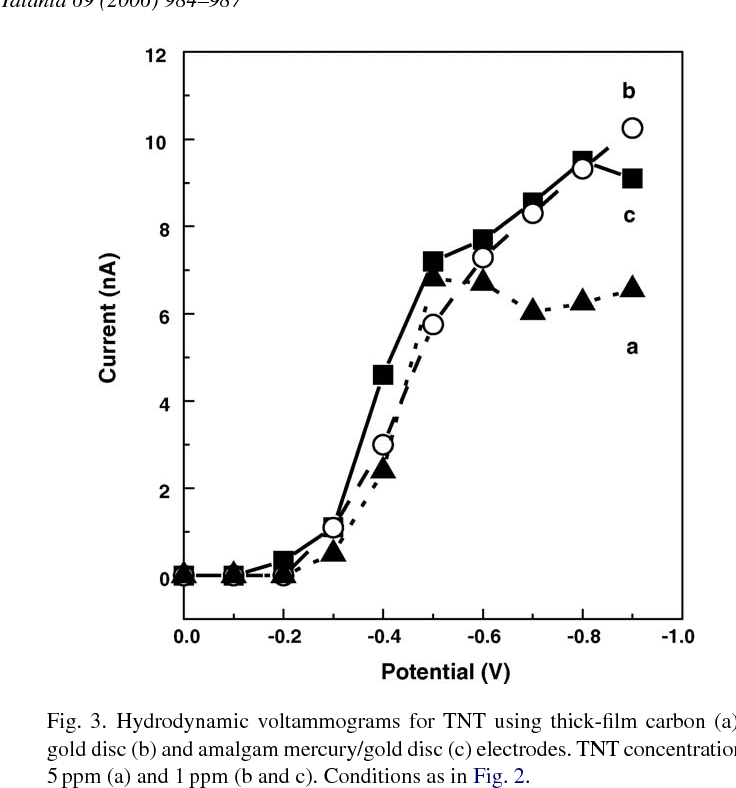
Microchip flow-injection analysis of trace 2,4,6-trinitrotoluene (TNT) using mercury-amalgam electrochemical detector

This paper reports on a microfluidic device for the flow-injection/electrochemistry analysis of nitroaromatic explosive. The response is very fast (150assays/h), highly sensitive (detection limit 7.0 mu gL(-1),), reproducible and stable (R.S.D. = 2.0%; n=30) and linear (over 20-100 [mu g L-1 range). Relevant experimental parameters have been optimized. The new microsystem offers great promise for …

Microchip flow-injection analysis of trace 2,4,6-trinitrotoluene (TNT) using mercury-amalgam electrochemical detector Read More »

New materials for electrochemical sensing VII. Microfluidic chip platforms

This overview covers important aspects of microfluidic chip platforms as new materials for electrochemical (EC) sensing. It describes important trends in constructing detectors and their electronics on microfluidic chip platforms, the importance of selecting appropriate detector materials, and the different detection modes in on-chip amperometry, conductometry and potentiometry. We pay particular attention to the latest …

New materials for electrochemical sensing VII. Microfluidic chip platforms Read More »

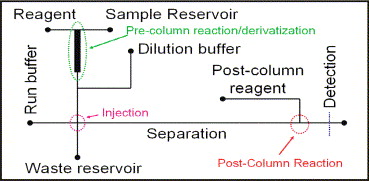
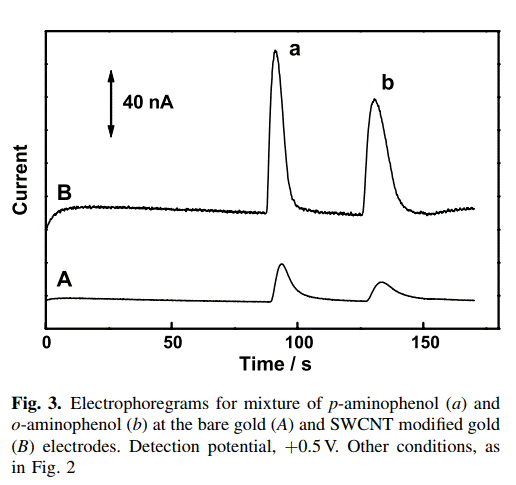
Microchip capillary electrophoresis with a single-wall carbon nanotube/gold electrochemical detector for determination of aminophenols and neurotransmitters

A new SWCNT modified gold detector for microchip capillary electrophoresis-electrochemistry is described. SWCNT modified gold electrode displays greatly improved sensitivity and separation resolution compared to bare gold electrode, reflecting the electrocatalytic activity of SWCNT. The SWCNT/Au electrode exhibits low background noise levels. Parameters such as separation voltage and detection potential of the microchip electrophoresis-electrochemistry with …

Microchip capillary electrophoresis with a single-wall carbon nanotube/gold electrochemical detector for determination of aminophenols and neurotransmitters Read More »