Keyword Author: catalysis

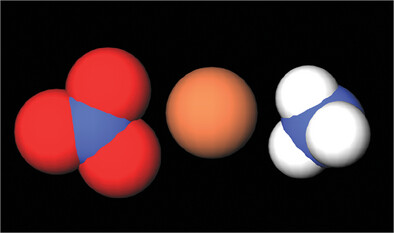
Copper-Infused MXene from MAX Phase for Enhanced Electrochemical Ammonia Production

The electrochemical conversion of nitrate to value-added ammonia is a green alternative to the energy-intensive Haber–Bosch process. However, due to inefficient catalysts, guiding the reaction route towards selective ammonia synthesis is still challenging. Here, we report a highly efficient Cu-infused V2C catalyst, synthesized via the molten salt synthesis method using selective CuCl2 etching. The optimized …

Copper-Infused MXene from MAX Phase for Enhanced Electrochemical Ammonia Production Read More »
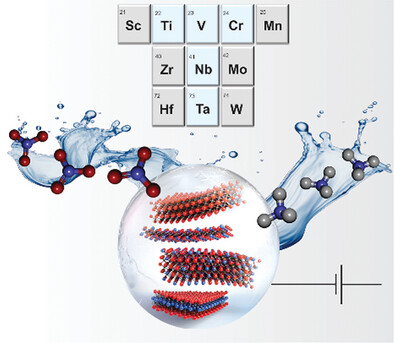
Periodic Table Exploration of MXenes for Efficient Electrochemical Nitrate Reduction to Ammonia

Applying electrochemical nitrate reduction reaction (NO3RR) to produce ammonia offers a sustainable alternative to the energy-intensive Haber-Bosch process, which is crucial for clean energy and agricultural applications. While 2D MXenes hold great promise as electrocatalysts for NO3RR, their application for ammonia production remains underexplored. This study combines experimental and theoretical approaches to evaluate the catalytic …

Periodic Table Exploration of MXenes for Efficient Electrochemical Nitrate Reduction to Ammonia Read More »

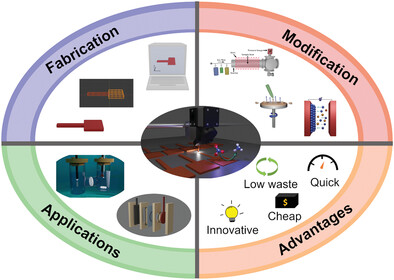
Engineering 3D Printed Structures Towards Electrochemically Driven Green Ammonia Synthesis: A Perspective

Broadening scope of 3D printing technology is recently identified as a potential strategy to mitigate concerns in the light of rising energy crisis and environmental imbalances. The importance of ammonia as a hydrogen carrier is well known and, in the context of 3D printing, designing and fabrication of electrode substrates for ammonia synthesis from nitrate …

Engineering 3D Printed Structures Towards Electrochemically Driven Green Ammonia Synthesis: A Perspective Read More »

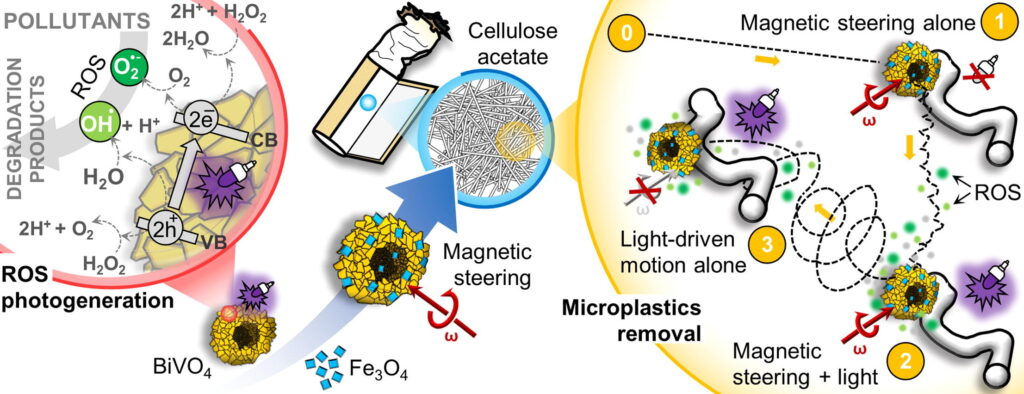
Photocatalysis dramatically influences motion of magnetic microrobots: Application to removal of microplastics and dyes

Micromachines gain momentum in the applications for environmental remediation. Magnetic components have been used to functionalize light–responsive micromachines to achieve efficient magnetic microrobots with photodegradation activity for decomposition of environmental pollutants. However, the influence of photocatalyst itself on the trajectory of micromotors in conjunction with magnetic motion was never considered. In this work, light-powered catalysis …

Photocatalysis dramatically influences motion of magnetic microrobots: Application to removal of microplastics and dyes Read More »

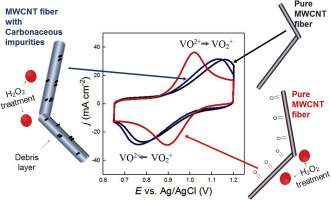
Two-Dimensional Materials on the Rocks: Positive and Negative Role of Dopants and Impurities in Electrochemistry

Two-dimensional (2D) materials, such as graphene and transition-metal chalcogenides, were shown in many works as very potent catalysts for industrially important electrochemical reactions, such as oxygen reduction, hydrogen and oxygen evolution, and carbon dioxide reduction. We critically discuss here the development in the field, showing that not only dopants but also impurities can have dramatic …

Two-Dimensional Materials on the Rocks: Positive and Negative Role of Dopants and Impurities in Electrochemistry Read More »

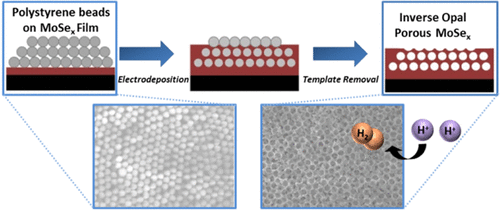
Inverse Opal-like Porous MoSeX Films for Hydrogen Evolution Catalysis: Overpotential-Pore Size Dependence

Transition metal dichalcogenides (TMDs) are prized as electrocatalysts for hydrogen evolution reaction (HER). Common TMD syntheses entail conditions of high temperatures and reagents that are detrimental to the environment. The electrochemical synthesis of TMDs is advocated as a viable alternative to the conventional synthetic procedures in terms of simplicity, ecological sustainability, and versatility of deposition …

Inverse Opal-like Porous MoSeX Films for Hydrogen Evolution Catalysis: Overpotential-Pore Size Dependence Read More »

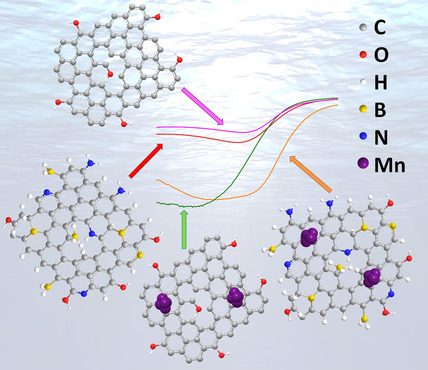
One-Step Synthesis of B/N Co-doped Graphene as Highly Efficient Electrocatalyst for the Oxygen Reduction Reaction: Synergistic Effect of Impurities

In the last decade, numerous studies of graphene doping by various metal and nonmetal elements have been done in order to obtain tailored properties, such as non-zero band gap, electrocatalytic activity, or controlled optical properties. From nonmetal elements, boron and nitrogen were the most studied dopants. Recently, it has been shown that in some cases …

One-Step Synthesis of B/N Co-doped Graphene as Highly Efficient Electrocatalyst for the Oxygen Reduction Reaction: Synergistic Effect of Impurities Read More »

Electrochemical catalysis at low dimensional carbons: Graphene, carbon nanotubes and beyond – A review

Nanocarbons, such as graphene, carbon nanotubes and other carbon nanomaterials show very interesting and useful electrochemical and electrocatalytic properties. These can be harnessed in various applications, from sensing and biosensing devices to energy storage and generation devices, such as supercapacitors, batteries or catalysts in the fuel cells. Here we review progress made towards understanding the …

Electrochemical catalysis at low dimensional carbons: Graphene, carbon nanotubes and beyond – A review Read More »

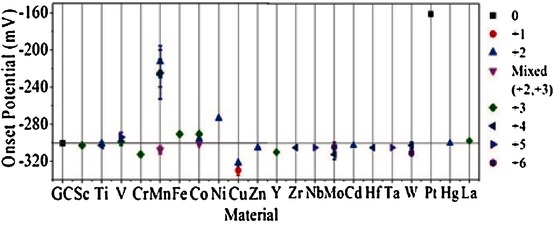
Transition Metal Oxides for the Oxygen Reduction Reaction: Influence of the Oxidation States of the Metal and its Position on the Periodic Table

Electrocatalysts have been developed to meet the needs and requirements of renewable energy applications. Metal oxides have been well explored and are promising for this purpose, however, many reports focus on only one or a few metal oxides at once. Herein, thirty metal oxides, which were either commercially available or synthesized by a simple and …

Transition Metal Oxides for the Oxygen Reduction Reaction: Influence of the Oxidation States of the Metal and its Position on the Periodic Table Read More »

Intrinsic electrochemical performance and precise control of surface porosity of graphene-modified electrodes using the drop-casting technique

Graphenes have for a long time been shown to exhibit enhanced electrochemical sensing and fast heterogeneous electron transfers, but the nature of such improved electrochemistry is disputed due to its inherent porosity. Adsorption and thin layer effects may additionally contribute to the observed behaviour. Furthermore, overall extents of the impact from these factors are typically …

Intrinsic electrochemical performance and precise control of surface porosity of graphene-modified electrodes using the drop-casting technique Read More »

Impact Electrochemistry of Layered Transition Metal Dichalcogenides

Layered transition metal dichalcogenides (TMDs) exhibit paramount importance in the electrocatalysis of the hydrogen evolution reaction. It is crucial to determine the size of the electrocatalytic particles as well as to establish their electrocatalytic activity, which occurs at the edges of these particles. Here, we show that individual TMD (MoS2, MoSe2, WS2, or WSe2; in …

Impact Electrochemistry of Layered Transition Metal Dichalcogenides Read More »

Iridium- and Osmium-decorated Reduced Graphenes as Promising Catalysts for Hydrogen Evolution

Renewable energy sources are highly sought after as a result of numerous worldwide problems concerning the environment and the shortage of energy. Currently, the focus in the field is on the development of catalysts that are able to provide water splitting catalysis and energy storage for the hydrogen evolution reaction (HER). While platinum is an …

Iridium- and Osmium-decorated Reduced Graphenes as Promising Catalysts for Hydrogen Evolution Read More »

Monothiolation and Reduction of Graphene Oxide via One-Pot Synthesis: Hybrid Catalyst for Oxygen Reduction

The functionalization of graphene provides diverse possibilities to improve the handling of graphene and enable further chemical transformation on graphene. Graphene functionalized with mainly heteroatom-based functional groups to enhance its chemical and physical properties is intensively pursued but often resulted in grafting of the heteroatoms as various functional groups. Here, we show that graphene oxide …

Monothiolation and Reduction of Graphene Oxide via One-Pot Synthesis: Hybrid Catalyst for Oxygen Reduction Read More »
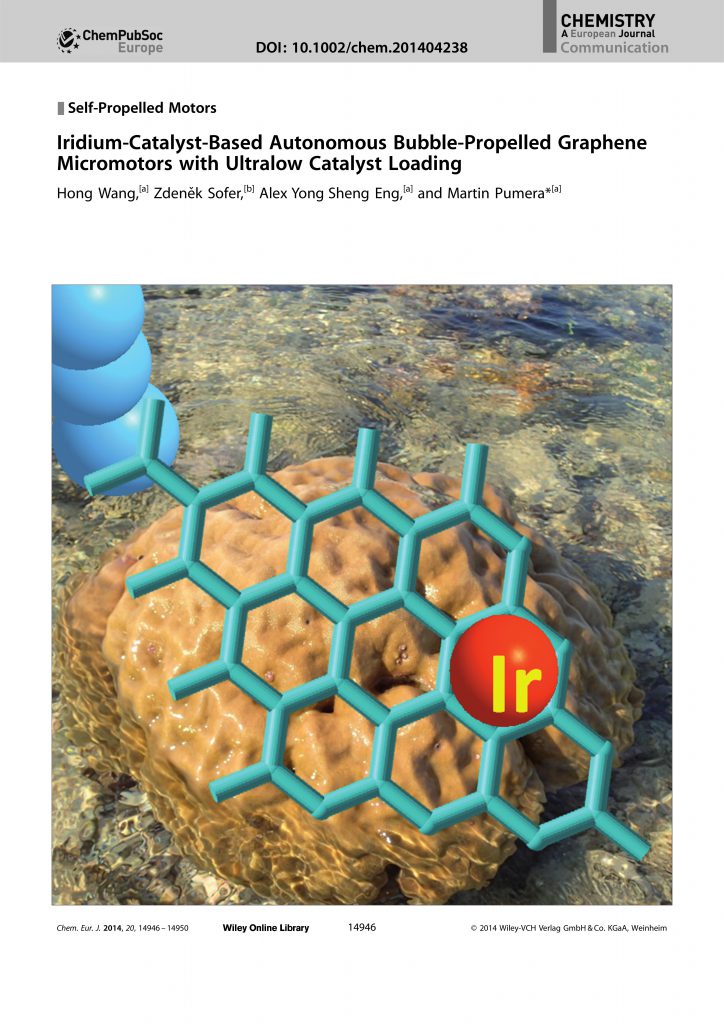
Iridium-Catalyst-Based Autonomous Bubble-Propelled Graphene Micromotors with Ultralow Catalyst Loading

A novel concept of an iridium-based bubble-propelled Janus-particle-type graphene micromotor with very high surface area and with very low catalyst loading is described. The low loading of Ir catalyst (0.54at%) allows for fast motion of graphene microparticles with high surface area of 316.2m(2)g(-1). The micromotor was prepared with a simple and scalable method by thermal …

Iridium-Catalyst-Based Autonomous Bubble-Propelled Graphene Micromotors with Ultralow Catalyst Loading Read More »

The Electrochemistry of Carbon Nanotubes: Fundamentals and Applications

Carbon nanotubes (CNTs) are in the forefront of electrochemical research. It has become clear that an understanding of the fundamental reasons for the electrochemical activity of CNTs is essential for further progress in the field. This review provides a critical discussion of the fundamental reasons behind the electrochemical and “electrocatalytic” activity of CNTs as well …

The Electrochemistry of Carbon Nanotubes: Fundamentals and Applications Read More »