Keyword Author: reduction

A Metal-Doped Fungi-Based Biomaterial for Advanced Electrocatalysis

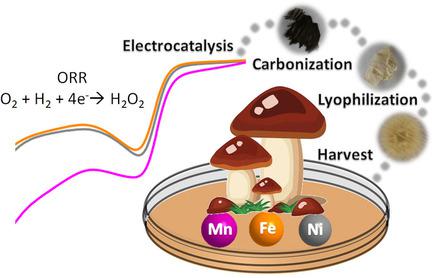
Nature and its highly sophisticated biomaterials are an endless source of inspiration for engineers and scientists across a wide range of disciplines. During the last decade, concepts of bioinspired synthesis of hierarchically structured nano- and micromaterials have been attracting increasing attention. In this article, we have utilized the natural ability of fungi to absorb metal …

A Metal-Doped Fungi-Based Biomaterial for Advanced Electrocatalysis Read More »
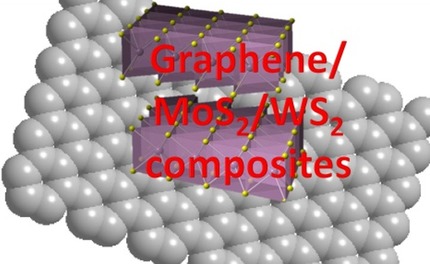
MoS2/WS2-Graphene Composites through Thermal Decomposition of Tetrathiomolybdate/Tetrathiotungstate for Proton/Oxygen Electroreduction

MoS2 and WS2 have been prepared on a conductive graphene support by thermal reduction of tetrathiotungstate/tetrathiomolybdate and graphite oxide. Whereas the catalytic properties towards hydrogen evolution are strongly influenced by the Magneli phases formed as a byproduct during the synthesis, the catalytic activity towards oxygen reduction of these composite materials is not affected by this …

MoS2/WS2-Graphene Composites through Thermal Decomposition of Tetrathiomolybdate/Tetrathiotungstate for Proton/Oxygen Electroreduction Read More »

Definitive Insight into the Graphite Oxide Reduction Mechanism by Deuterium Labeling

The reduction of graphite oxide is one of the most important reactions in the production of graphene in gram quantities. The mechanisms of these widely used reactions are poorly understood. The mechanism of the chemical reduction of two different graphite oxides prepared by the chlorate (Hofmann method) and permanganate methods (Hummers method) has been investigated. …

Definitive Insight into the Graphite Oxide Reduction Mechanism by Deuterium Labeling Read More »

Regeneration of a Conjugated sp(2) Graphene System through Selective Defunctionalization of Epoxides by Using a Proven Synthetic Chemistry Mechanism

Graphene is a promising material capable of driving technological advancement. It is, however, a challenge to obtain pristine graphene in large quantities given the limitation of current synthetic methods. Among the numerous methods available, the chemical approach provides an optimistic outlook and has garnered much interest within the graphene community as a potential alternative. One …

Regeneration of a Conjugated sp(2) Graphene System through Selective Defunctionalization of Epoxides by Using a Proven Synthetic Chemistry Mechanism Read More »

Carcinogenic Organic Residual Compounds Readsorbed on Thermally Reduced Graphene Materials are Released at Low Temperature

The preliminary oxidation of graphite to graphite oxide followed by a thermal exfoliation is one of the methods most frequently employed in the preparation of graphene. Such thermally reduced graphene can be widely used for several applications that range from coatings to sensing device fabrication. It is therefore important to investigate in detail the fabrication …

Carcinogenic Organic Residual Compounds Readsorbed on Thermally Reduced Graphene Materials are Released at Low Temperature Read More »

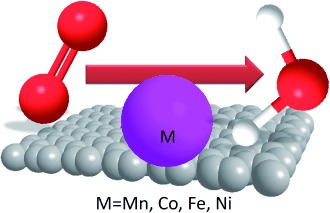
Transition Metal (Mn, Fe, Co, Ni)-Doped Graphene Hybrids for Electrocatalysis

The development of electrocatalysts is crucial for renewable energy applications. Metal-doped graphene hybrid materials have been explored for this purpose, however, with much focus on noble metals, which are limited by their low availability and high costs. Transition metals may serve as promising alternatives. Here, transition metal-doped graphene hybrids were synthesized by a simple and …

Transition Metal (Mn, Fe, Co, Ni)-Doped Graphene Hybrids for Electrocatalysis Read More »

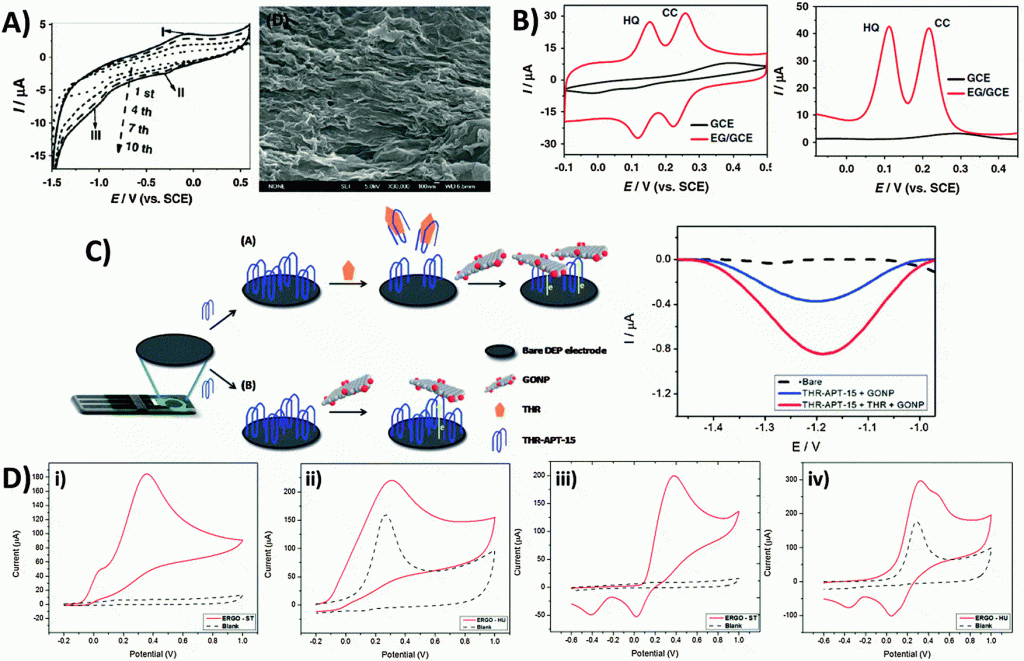
Precise Tuning of Surface Composition and Electron-Transfer Properties of Graphene Oxide Films through Electroreduction

Graphene materials are generally prepared from the exfoliation of graphite oxide (GO) to graphene oxide, followed by subsequent chemical or thermal reduction. These methods, although efficient in removing most of the oxygen functionalities from the GO material, lack control over the extent of the reduction process. We demonstrate here an electrochemical reduction procedure that not …

Precise Tuning of Surface Composition and Electron-Transfer Properties of Graphene Oxide Films through Electroreduction Read More »

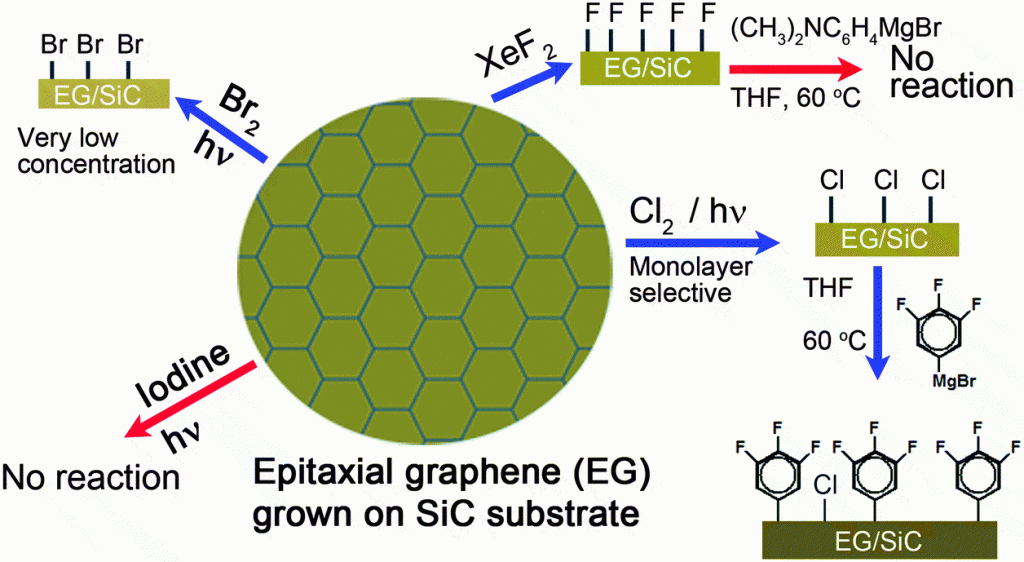
Halogenation of Graphene with Chlorine, Bromine, or Iodine by Exfoliation in a Halogen Atmosphere

Nanoarchitectonics on graphene implicates a specific and exact anchoring of molecules or nanoparticles onto the surface of graphene. One such example of an effective anchoring group that is highly reactive is the halogen moiety. Herein we describe a simple and scalable method for the introduction of halogen (chlorine, bromine, and iodine) moieties onto the surface …

Halogenation of Graphene with Chlorine, Bromine, or Iodine by Exfoliation in a Halogen Atmosphere Read More »

Metallic Impurities within Residual Catalyst Metallic Nanoparticles Are in Some Cases Responsible for “Electrocatalytic” Effect of Carbon Nanotubes

We show that in some cases, the metallic impurities within residual catalyst metallic nanoparticle impurities, which remain in carbon nanotubes from their synthesis even after purification, are responsible for “electrocatalytic” properties of carbon nanotubes. Ibis is demonstrated in an example of double-walled carbon nanotubes (DWCNTs) containing cobalt residual catalyst nanoparticle impurities, which themselves contain iron-based …

Metallic Impurities within Residual Catalyst Metallic Nanoparticles Are in Some Cases Responsible for “Electrocatalytic” Effect of Carbon Nanotubes Read More »