Keyword Author: nanoparticles

Silver-enhanced Photoresponsive g-C3N4/Ag Janus Microrobots With Negative Photogravitaxis Efficient Antibiotic Degradation

Water pollution remains a serious global challenge; hence, the efficient, low-cost, and environmentally friendly removal of pollutants from water has become a research hotspot. Photocatalytic microrobots can achieve autonomous movement and generate reactive oxygen species (ROS), presenting a great opportunity for water purification. Despite the excellent properties of g-C3N4, such as high photocatalytic activity, high …
Silver-enhanced Photoresponsive g-C3N4/Ag Janus Microrobots With Negative Photogravitaxis Efficient Antibiotic Degradation Read More »

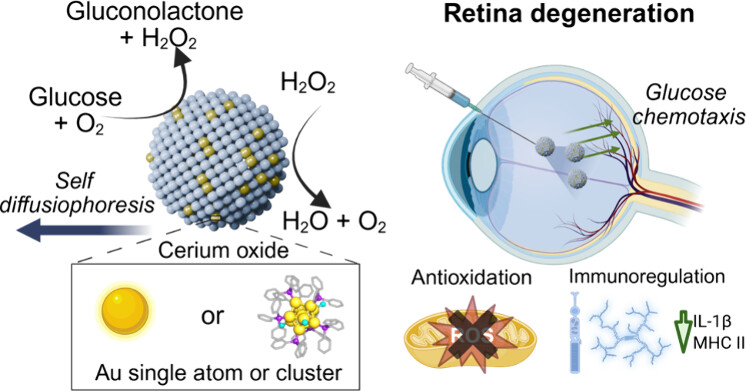
Glucose-Powered Ultrasmall Chemotactic Nanorobots for Retinal Degeneration Treatment

Retinal degeneration poses a growing global health challenge with limited effective treatments. Current options, such as intravitreal injections of therapeutic drugs, are severely constrained by the vitreous humor barrier, a dense, gel-like matrix that limits drug diffusion to the retina. Micro/nanorobots with active propulsion have emerged as promising platforms for targeted drug delivery to overcome …

Glucose-Powered Ultrasmall Chemotactic Nanorobots for Retinal Degeneration Treatment Read More »

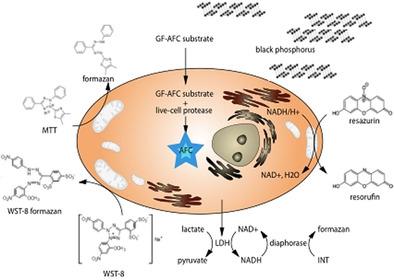
Black Phosphorus Cytotoxicity Assessments Pitfalls: Advantages and Disadvantages of Metabolic and Morphological Assays

Black phosphorus (BP) belongs to a group of 2D nanomaterials and nowadays attracts constantly increasing attention. Parallel to the growing utilization of BP nanomaterial increase also the requirements for the thorough comprehension of its potential impact on human and animal health. The aim of this study was to compare and discuss five assays commonly used …

Black Phosphorus Cytotoxicity Assessments Pitfalls: Advantages and Disadvantages of Metabolic and Morphological Assays Read More »

MoS2 Nanoparticles as Electrocatalytic Labels in Magneto-Immunoassays

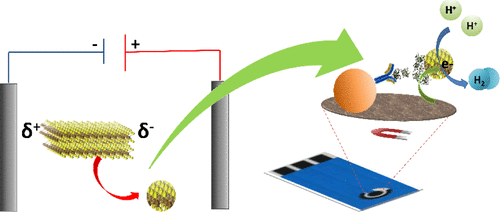
Ability to detect biomolecules with a simple and cost-effective approach has been very demanding in today’s medicine. The nanoparticles and two-dimensional materials have been extensively used within this field in devices with high selectivity and sensitivity. Here, we report the use of MoS2 nanoparticles (MoS2 NPs) as a signal-enhancing label in a standard immunoassay test. …

MoS2 Nanoparticles as Electrocatalytic Labels in Magneto-Immunoassays Read More »

Black Phosphorus Nanoparticles Potentiate the Anticancer Effect of Oxaliplatin in Ovarian Cancer Cell Line

During the past few years, growing attention has been paid to black phosphorus (BP) and its unique optical, electrical, and catalytic properties. Furthermore, BP has proven to be biocompatible and biodegradable; qualities that present new opportunities for its utilization in the field of life sciences. However, despite all its suitable properties and applicability, its utilization …

Black Phosphorus Nanoparticles Potentiate the Anticancer Effect of Oxaliplatin in Ovarian Cancer Cell Line Read More »

Ternary Transition Metal Oxide Nanoparticles with Spinel Structure for the Oxygen Reduction Reaction

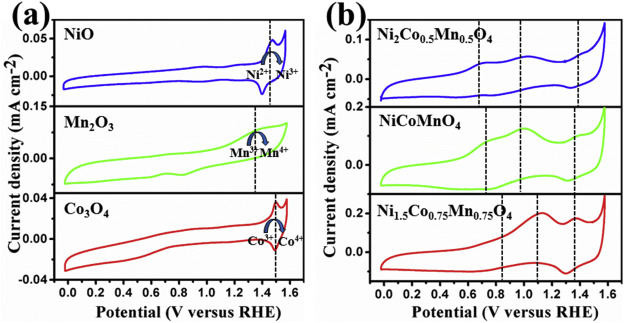
It is crucial to develop electrocatalysts for the oxygen reduction reaction (ORR) for renewable energy applications. Mixed-valence transition-metal oxides with a spinel structure have been explored for this purpose. In this work, we study the influence of the composition of the catalysts (XY2O4, X=Ni, Zn and Y=Co, Mn) on the ORR. The four different types …

Ternary Transition Metal Oxide Nanoparticles with Spinel Structure for the Oxygen Reduction Reaction Read More »

Chemical Optimization for Simultaneous Voltammetric Detection of Molybdenum and Silver Nanoparticles in Aqueous Buffer Solutions

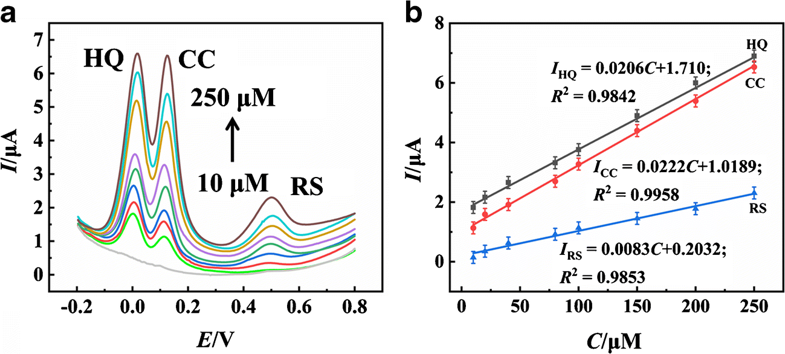
Simultaneous acquisition of redox signals from different types of metal nanoparticles (NPs) in a multiplexing system requires a good separation in redox potential from each component for successful identification. The appearance of a single distinct peak for each NP type is also preferred. Here, we report variations in the electrochemical nature of molybdenum (Mo) and …

Chemical Optimization for Simultaneous Voltammetric Detection of Molybdenum and Silver Nanoparticles in Aqueous Buffer Solutions Read More »

Simultaneous Electrochemical Detection of Silver and Molybdenum Nanoparticles

Nanoparticles (NPs) and quantum dots (QDs) are of interest as redox tags in electrochemical biosensing. Simultaneous monitoring of the redox reactions of these tags with different redox potentials under mild conditions may allow the multiplex detection of target analytes in point-of-care applications. The multiplex detection of Ag and Mo NPs on a glassy carbon electrode …

Simultaneous Electrochemical Detection of Silver and Molybdenum Nanoparticles Read More »

Simultaneous Direct Voltammetric Determination of Metal-Oxide Nanoparticles from Their Mixture (CuO/NiO)

Metallic oxide nanoparticles are increasingly being incorporated into consumer products, posing health hazards and damage to the ecology when they are released into the environment. In view of this situation, the development of highly sensitive and facile methods for the detection and quantification of harmful metallic oxide nanoparticles present in a sample is necessary. In …

Simultaneous Direct Voltammetric Determination of Metal-Oxide Nanoparticles from Their Mixture (CuO/NiO) Read More »

The Inherent Electrochemistry of Nickel/Nickel-Oxide Nanoparticles

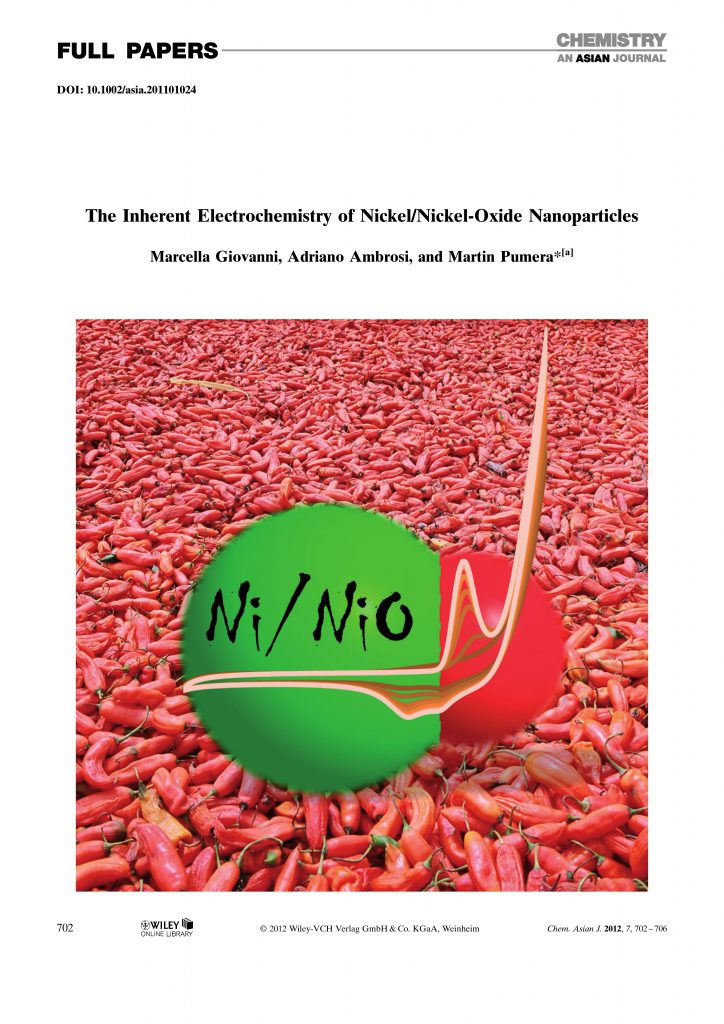
The direct detection of nanoparticles is at the forefront of research owing to their environmental and toxicological applications. Herein, we studied the inherent electrochemistry of Ni and NiO nanoparticles and proposed a simple and direct electrochemical method for the determination of the concentrations of both nickel (Ni) and nickel oxide (NiO) nanoparticles in alkaline solution. …

The Inherent Electrochemistry of Nickel/Nickel-Oxide Nanoparticles Read More »

Nanotoxicology: The Molecular Science Point of View

Research on nanotoxicity is of extremely high scientific, social, and economic value. As nanomaterial-based products enter the market, there is an urgent need for related research in order to prevent dramatic consequences of any health-oriented issues caused by nanotechnology-driven products. The results of research on nanotoxicity have profound significance because the design of nanomaterials used …

Nanotoxicology: The Molecular Science Point of View Read More »

Towards an ultrasensitive method for the determination of metal impurities in carbon nanotubes

Residual catalyst metal nanoparticles remain one of the major obstructions in the utilization of carbon nanotubes (CNTs) in many areas owing to their ability to participate in redox chemistry of biomarkers. Presented here is a comparative study of several techniques for quality control of carbon nanotubes in terms of metallic impurities, namely magnetic susceptibility, electron …

Towards an ultrasensitive method for the determination of metal impurities in carbon nanotubes Read More »