Keyword Author: cytotoxicity

Cytotoxicity of Shear Exfoliated Pnictogen (As, Sb, Bi) Nanosheets

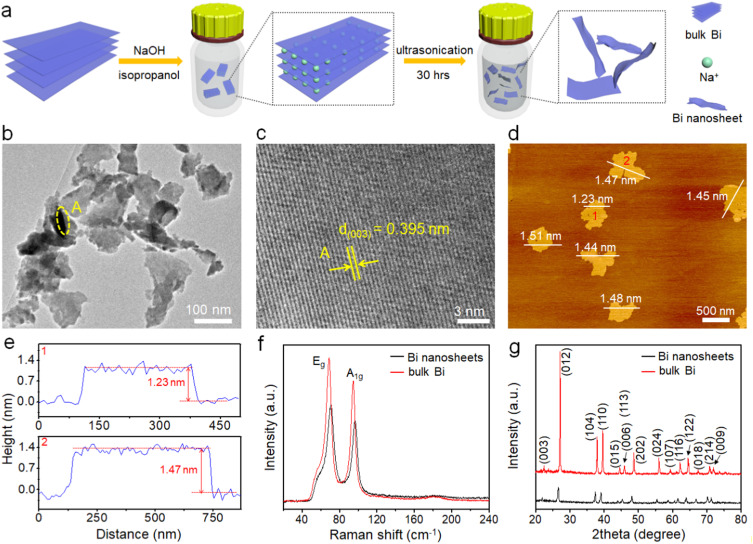
The experimental achievement of phosphorene, which exhibits superior electronic, physical, and optical properties has spurred recent interest in other Group 15 elemental 2D nanomaterials such as arsenene, antimonene, and bismuthene. These unique and superior properties of the pnictogen nanosheets have spurred intensive research efforts and led to the discovery of their diversified potential applications; for …

Cytotoxicity of Shear Exfoliated Pnictogen (As, Sb, Bi) Nanosheets Read More »
Black Phosphorus Cytotoxicity Assessments Pitfalls: Advantages and Disadvantages of Metabolic and Morphological Assays

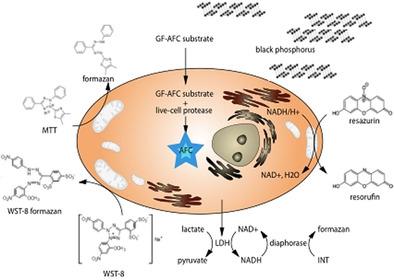
Black phosphorus (BP) belongs to a group of 2D nanomaterials and nowadays attracts constantly increasing attention. Parallel to the growing utilization of BP nanomaterial increase also the requirements for the thorough comprehension of its potential impact on human and animal health. The aim of this study was to compare and discuss five assays commonly used …

Black Phosphorus Cytotoxicity Assessments Pitfalls: Advantages and Disadvantages of Metabolic and Morphological Assays Read More »

Cytotoxicity of phosphorus allotropes (black, violet, red)

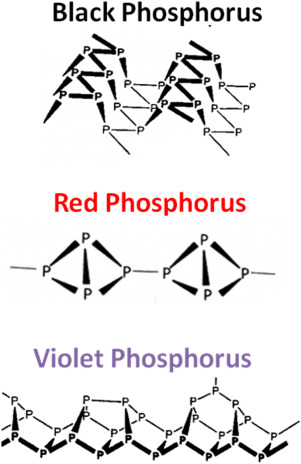
Black phosphorus has shown great potential in many applications such as energy, optoelectronics and bio/sensing. However, its toxicity study is still in its infancy. Here, the cytotoxicity of black phosphorus prepared by two different synthesis methods, i.e. vapour growth transport and high pressure conversion, are investigated. Precursor and intermediate materials, namely red and violet phosphorus, …

Cytotoxicity of phosphorus allotropes (black, violet, red) Read More »

Triazine- and Heptazine-Based Carbon Nitrides: Toxicity

Graphitic carbon nitride has attracted extensive interests recently because of its potential in biosensing, photocatalytic, and biomedical applications. Similar to graphene, it is a two-dimensional carbon and nitrogen-based nanomaterial with weak van der Waals forces between each layer. Carbon nitrides can have various structural moieties such as triazine and heptazine. Unlike graphene-substituted nanosheets, the toxicity …

Triazine- and Heptazine-Based Carbon Nitrides: Toxicity Read More »

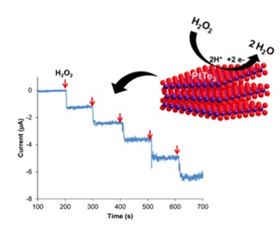
Layered PtTe2 Matches Electrocatalytic Performance of Pt/C for Oxygen Reduction Reaction with Significantly Lower Toxicity

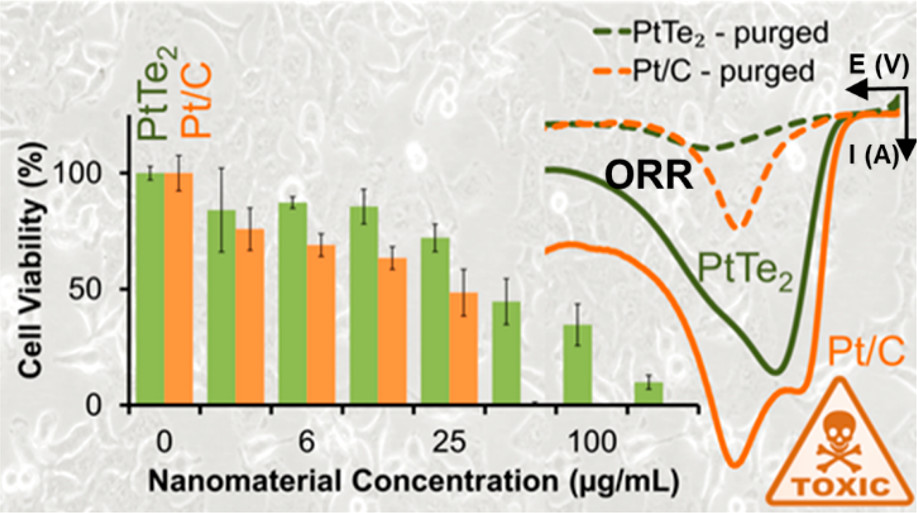
Oxygen reduction reaction (ORR) is an important reaction for fuel cells and platinum on carbon (Pt/C) is a typical electrocatalyst for ORR in industrial applications. There is a constant search for a replacement for Pt/C with better ORR electrocatalytic performance but thus far, most materials show poorer electrocatalytic activity than Pt/C. Herein, we present electrocatalytical …

Layered PtTe2 Matches Electrocatalytic Performance of Pt/C for Oxygen Reduction Reaction with Significantly Lower Toxicity Read More »

In vitro cytotoxicity of covalently protected layered molybdenum disulfide

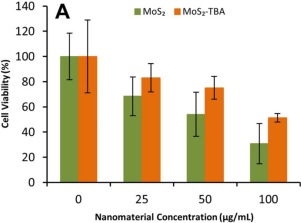
Layered molybdenum disulfide (MoS2) is in forefront of materials research. MoS2 has been reported to display various unique electronic, catalytic and sensing properties. Functionalization of MoS2 is common as it can improve biocompatibility, electrochemical behaviour, catalytic performance, and sensing abilities. In this study, a cytotoxicity study of MoS2 functionalized with an organic molecule, thiobarbituric acid …

In vitro cytotoxicity of covalently protected layered molybdenum disulfide Read More »

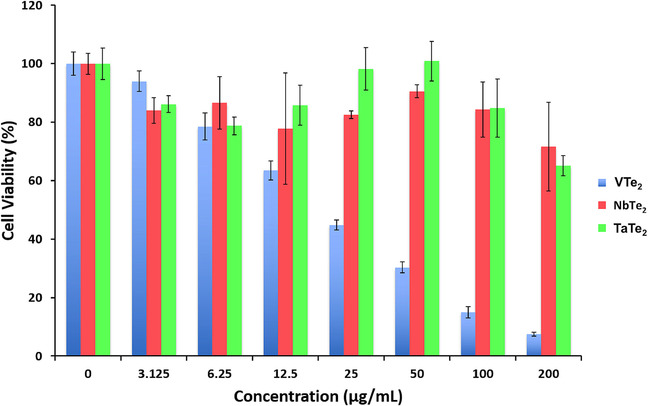
Cytotoxicity of Group 5 Transition Metal Ditellurides (MTe2; M=V, Nb, Ta)

Much research effort has been put in to study layered compounds with transition metal dichalcogenides (TMDs) being one of the most studied compounds. Due to their extraordinary properties such as excellent electrochemical properties, tuneable band gaps, and low shear resistance due to weak van der Waals interactions between layers, TMDs have been found to have …

Cytotoxicity of Group 5 Transition Metal Ditellurides (MTe2; M=V, Nb, Ta) Read More »

Cytotoxicity of Exfoliated Layered Vanadium Dichalcogenides

Transition-metal Group 5 vanadium dichalcogenides have shown promising properties for many applications, such as batteries, capacitors, electrocatalysts for hydrogen production and many more. However, their toxicological effects have not yet been well understood. Here, we studied the cytotoxicity of exfoliated VS2, VSe2 and VTe2 by incubating various concentrations of the materials with human lung carcinoma …

Cytotoxicity of Exfoliated Layered Vanadium Dichalcogenides Read More »

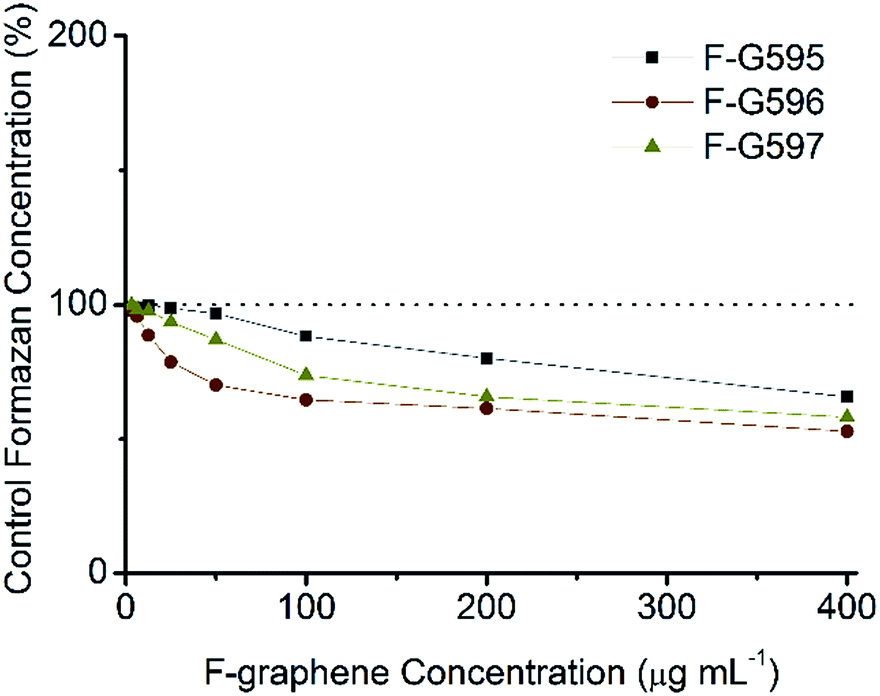
Fluorinated Nanocarbons Cytotoxicity

As the research in nanotechnology progresses, there will eventually be an influx in the number of commercial products containing different types of nanomaterials. This phenomenon might damage our health and environment if the nanomaterials used are found to be toxic and they are released into the waters when the products degrade. In this study, we …

Fluorinated Nanocarbons Cytotoxicity Read More »

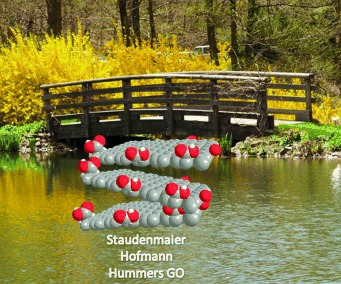
Graphene Oxides: Transformations in Natural Waters over a Period of Three Months

Graphene oxide (GO), a derivative of graphene consisting of various oxygen moieties, has gained popularity owing to its excellent physiochemical properties and applicability in various fields. GO nanomaterials can be synthesized by using Hofmann (HO), Hummers (HU), and Staudenmaier (ST) methods of oxidative treatment of graphite to give GO-HO, GO-HU, and GO-ST, respectively. These GO …

Graphene Oxides: Transformations in Natural Waters over a Period of Three Months Read More »