Keyword Author: transition metals

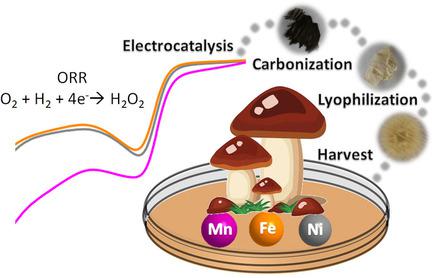
A Metal-Doped Fungi-Based Biomaterial for Advanced Electrocatalysis

Nature and its highly sophisticated biomaterials are an endless source of inspiration for engineers and scientists across a wide range of disciplines. During the last decade, concepts of bioinspired synthesis of hierarchically structured nano- and micromaterials have been attracting increasing attention. In this article, we have utilized the natural ability of fungi to absorb metal …

A Metal-Doped Fungi-Based Biomaterial for Advanced Electrocatalysis Read More »
In vitro cytotoxicity of covalently protected layered molybdenum disulfide

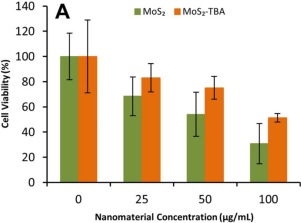
Layered molybdenum disulfide (MoS2) is in forefront of materials research. MoS2 has been reported to display various unique electronic, catalytic and sensing properties. Functionalization of MoS2 is common as it can improve biocompatibility, electrochemical behaviour, catalytic performance, and sensing abilities. In this study, a cytotoxicity study of MoS2 functionalized with an organic molecule, thiobarbituric acid …

In vitro cytotoxicity of covalently protected layered molybdenum disulfide Read More »

Morphological Effects and Stabilization of the Metallic 1T Phase in Layered V-, Nb-, and Ta-Doped WSe2 for Electrocatalysis

Layered transition-metal dichalcogenides ( TMDs) are valued for their electrocatalytic properties toward the hydrogen-evolution reaction ( HER) and oxygen-reduction reaction ( ORR). One effective strategy to activate the electrocatalytic properties of TMDs is through doping. The optimistic outlook of doped-MoS2 as an electrocatalyst witnessed in previous reports spurred us to examine the effect of doping …

Morphological Effects and Stabilization of the Metallic 1T Phase in Layered V-, Nb-, and Ta-Doped WSe2 for Electrocatalysis Read More »

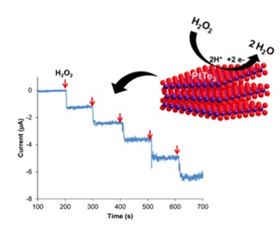
Layered Transition-Metal Ditellurides in Electrocatalytic Applications-Contrasting Properties

The layered compounds and especially transition-metal dichalcogenides are at the forefront of current research on electrocatalytic materials. Despite the fact that electrocatalytical properties of molybdenum and tungsten disulfides are well-known, their tellurium analogues are significantly less explored. Here we show an effective method for MoTe2 and WTe2 chemical exfoliation based on alkali metal intercalation and …

Layered Transition-Metal Ditellurides in Electrocatalytic Applications-Contrasting Properties Read More »

Electrosynthesis of Bifunctional WS3-x/Reduced Graphene Oxide Hybrid for Hydrogen Evolution Reaction and Oxygen Reduction Reaction Electrocatalysis

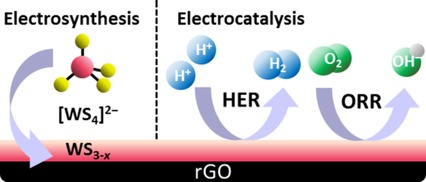
A multitude of research into the application of transition-metal dichalcogenides as earth-abundant hydrogen evolution reaction (HER) electrocatalysts has been conducted. However, current synthetic methods generally deploy environmentally harmful chemicals and energy-consuming reaction conditions, despite the primary intent to attain renewable energy production. Here, the desirable properties of tungsten sulfide and reduced graphene oxide (rGO) have …

Electrosynthesis of Bifunctional WS3-x/Reduced Graphene Oxide Hybrid for Hydrogen Evolution Reaction and Oxygen Reduction Reaction Electrocatalysis Read More »

Cytotoxicity of Exfoliated Layered Vanadium Dichalcogenides

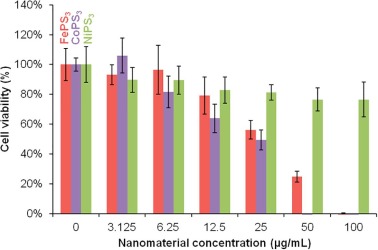
Transition-metal Group 5 vanadium dichalcogenides have shown promising properties for many applications, such as batteries, capacitors, electrocatalysts for hydrogen production and many more. However, their toxicological effects have not yet been well understood. Here, we studied the cytotoxicity of exfoliated VS2, VSe2 and VTe2 by incubating various concentrations of the materials with human lung carcinoma …

Cytotoxicity of Exfoliated Layered Vanadium Dichalcogenides Read More »

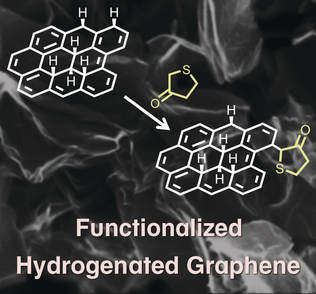
Functionalization of Hydrogenated Graphene: Transition-Metal-Catalyzed Cross-Coupling Reactions of Allylic C-HBonds

The chemical functionalization of hydrogenated graphene can modify its physical properties and lead to better processability. Herein, we describe the chemical functionalization of hydrogenated graphene through a dehydrogenative cross-coupling reaction between an allylic C-H bond and the -C-H bond of tetrahydrothiophen-3-one using Cu(OTf)(2) as the catalyst and DDQ as the oxidant. The chemical functionalization was …

Functionalization of Hydrogenated Graphene: Transition-Metal-Catalyzed Cross-Coupling Reactions of Allylic C-HBonds Read More »

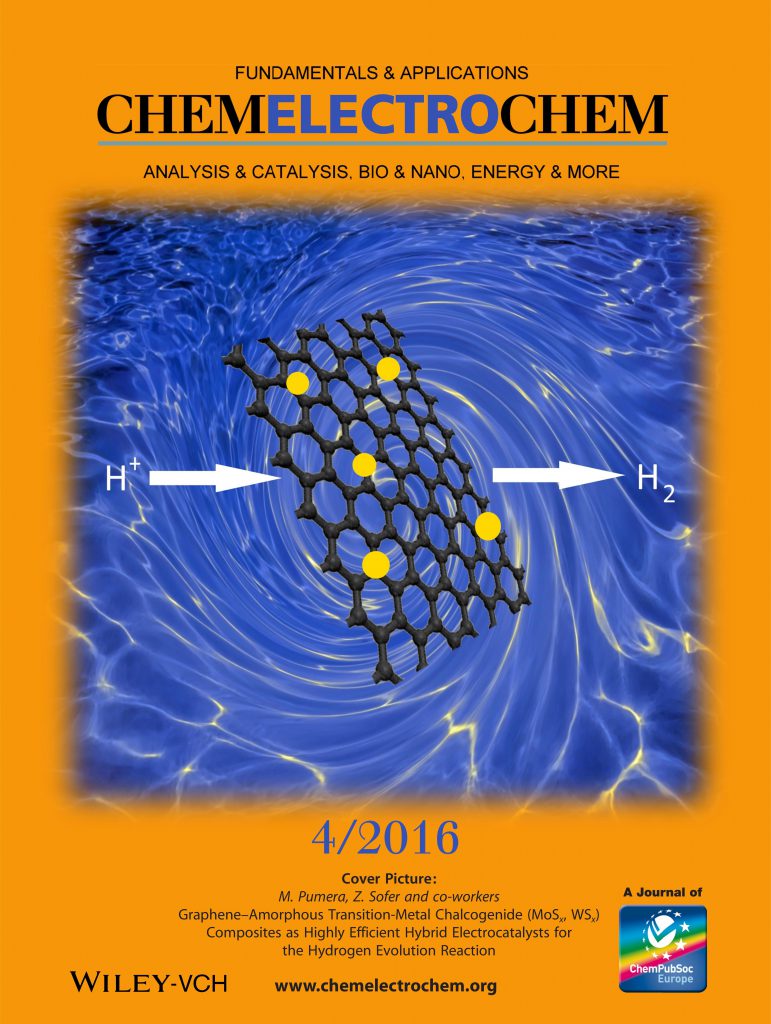
Graphene-Amorphous Transition-Metal Chalcogenide (MoSx, WSx) Composites as Highly Efficient Hybrid Electrocatalysts for the Hydrogen Evolution Reaction

Layered transition-metal dichalcogenides (TMDs) show promising electrocatalytic properties towards the hydrogen evolution reaction (HER). A series of graphene-amorphous TMD composites were prepared under hydrothermal conditions. Materials with varying contents of MoSx and WSx were synthesized from ammonium tetrathiomolybdate and ammonium tetrathiotungstate precursors in the presence of graphene oxide and diethylene glycol as a reducing agent. …

Graphene-Amorphous Transition-Metal Chalcogenide (MoSx, WSx) Composites as Highly Efficient Hybrid Electrocatalysts for the Hydrogen Evolution Reaction Read More »

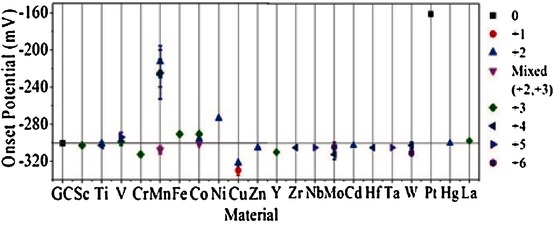
Transition Metal Oxides for the Oxygen Reduction Reaction: Influence of the Oxidation States of the Metal and its Position on the Periodic Table

Electrocatalysts have been developed to meet the needs and requirements of renewable energy applications. Metal oxides have been well explored and are promising for this purpose, however, many reports focus on only one or a few metal oxides at once. Herein, thirty metal oxides, which were either commercially available or synthesized by a simple and …

Transition Metal Oxides for the Oxygen Reduction Reaction: Influence of the Oxidation States of the Metal and its Position on the Periodic Table Read More »

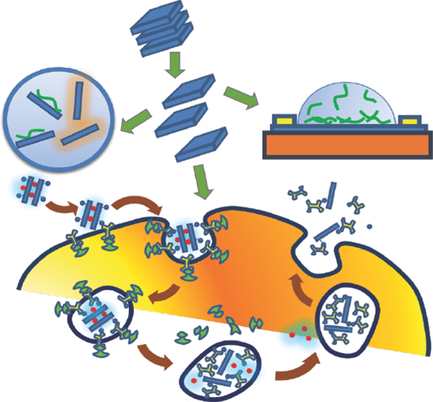
Two-Dimensional Transition Metal Dichalcogenides in Biosystems

The intriguing properties of two-dimensional transition metal dichalcogenides (2D TMDCs) have led to a significant body of fundamental research and rapid uptake of these materials in many applications. Specifically, 2D TMDCs have shown great potential in biological systems due to their tunable electronic characteristics, unique optical properties, stability in aqueous environments, large surface area that …

Two-Dimensional Transition Metal Dichalcogenides in Biosystems Read More »

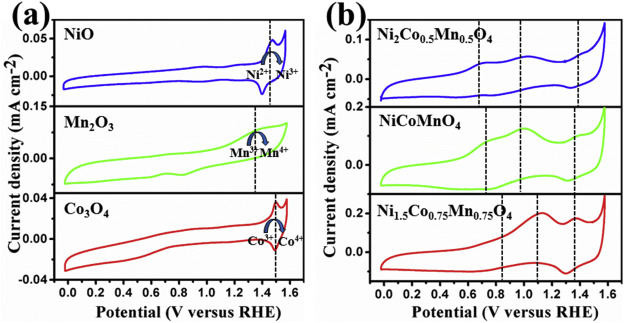
Ternary Transition Metal Oxide Nanoparticles with Spinel Structure for the Oxygen Reduction Reaction

It is crucial to develop electrocatalysts for the oxygen reduction reaction (ORR) for renewable energy applications. Mixed-valence transition-metal oxides with a spinel structure have been explored for this purpose. In this work, we study the influence of the composition of the catalysts (XY2O4, X=Ni, Zn and Y=Co, Mn) on the ORR. The four different types …

Ternary Transition Metal Oxide Nanoparticles with Spinel Structure for the Oxygen Reduction Reaction Read More »

Cytotoxicity of Exfoliated Transition-Metal Dichalcogenides (MoS2, WS2, and WSe2) is Lower Than That of Graphene and its Analogues

Studies involving transition-metal dichalcogenides (TMDs) have been around for many decades and in recent years, many were focused on using TMDs to synthesize inorganic analogues of carbon nanotubes, fullerene, as well as graphene and its derivatives with the ultimate aim of employing these materials into consumer products. In view of this rising trend, we investigated …

Cytotoxicity of Exfoliated Transition-Metal Dichalcogenides (MoS2, WS2, and WSe2) is Lower Than That of Graphene and its Analogues Read More »