Keyword Author: Sensors

(Bio)Analytical chemistry enabled by 3D printing: Sensors and biosensors

3D printing has revolutionized the concept of object manufacturing, making an enormous impact on industry and economy. The technology has found a niche in countless fields, including scientific research. It has rendered practical solutions to scientific problems by offering tailored-shaped devices with exquisite control in design and geometry and through the versatility of printable materials. …

(Bio)Analytical chemistry enabled by 3D printing: Sensors and biosensors Read More »
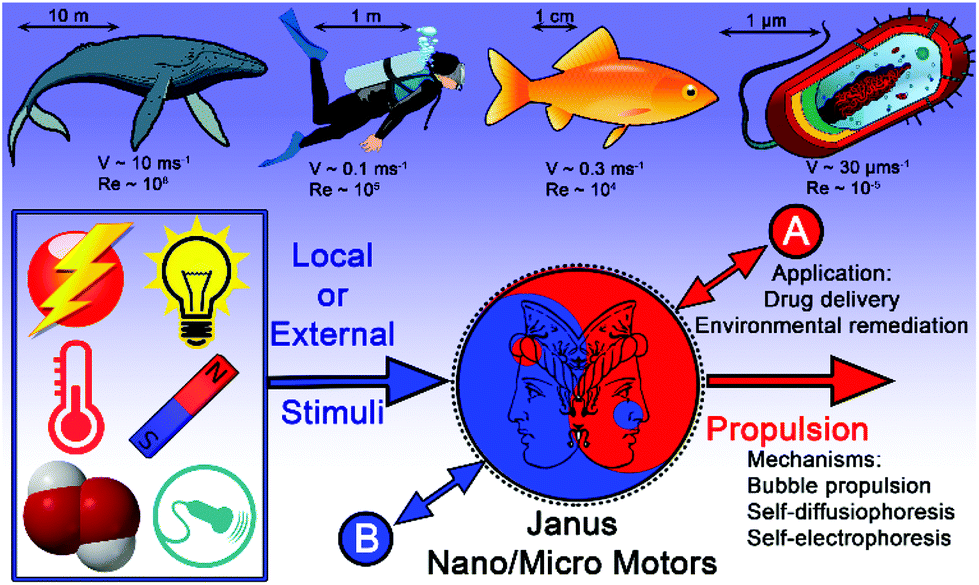
Influence of pH on the Motion of Catalytic Janus Particles and Tubular Bubble-Propelled Micromotors

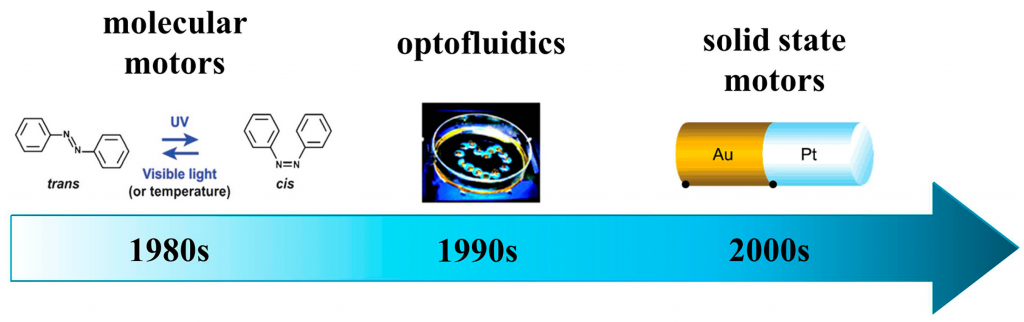
Self-propelled miniaturized machines harness the chemical potential of their environment for movement. Locomotion of chemically powered micromotors have been hugely dependent on the surroundings. The use of pH to alter the mobility of micromotors is demonstrated in this work through the manipulation of hydrogen peroxide chemistry in different acidity/alkalinity. The sequential addition of sodium hydroxide …

Influence of pH on the Motion of Catalytic Janus Particles and Tubular Bubble-Propelled Micromotors Read More »

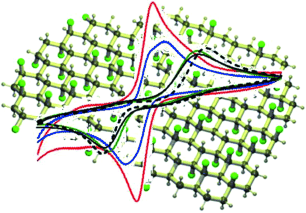
Electrochemical Fluorographane: Hybrid Electrocatalysis of Biomarkers, Hydrogen Evolution, and Oxygen Reduction

Fluorographane (C1HxF1-x+)(n) is a new member of the graphene family that exhibits hydrophobicity and a large band gap that is tunable based on the level of fluorination. Herein, sensing and energy applications of fluorographane are reported. The results reveal that the carbon-to-fluoride ratio of fluorographane has a great impact on the electrochemical performance of the …

Electrochemical Fluorographane: Hybrid Electrocatalysis of Biomarkers, Hydrogen Evolution, and Oxygen Reduction Read More »

Fluorographites (CFx)(n) Exhibit Improved Heterogeneous Electron-Transfer Rates with Increasing Level of Fluorination: Towards the Sensing of Biomolecules

Halogenated sp(2) materials are of high interest owing to their important electronic and electrochemical properties. Although methods for graphite and graphene fluorination have been extensively researched, the fundamental electrochemical properties of fluorinated graphite are not well established. In this paper, the electrochemistry of three fluorographite materials of different carbon-to-fluorine ratio were studied: (CF0.33)(n), (CF0.47)(n), and …

Fluorographites (CFx)(n) Exhibit Improved Heterogeneous Electron-Transfer Rates with Increasing Level of Fluorination: Towards the Sensing of Biomolecules Read More »

Biomimetic Artificial Inorganic Enzyme-Free Self-Propelled Microfish Robot for Selective Detection of Pb2+ in Water

The availability of drinking water is of utmost importance for the world population. Anthropogenic pollutants of water, such as heavy-metal ions, are major problems in water contamination. The toxicity assays used range from cell assays to animal tests. Herein, we replace biological toxicity assays, which use higher organisms, with artificial inorganic self-propelled microtubular robots. The …

Biomimetic Artificial Inorganic Enzyme-Free Self-Propelled Microfish Robot for Selective Detection of Pb2+ in Water Read More »

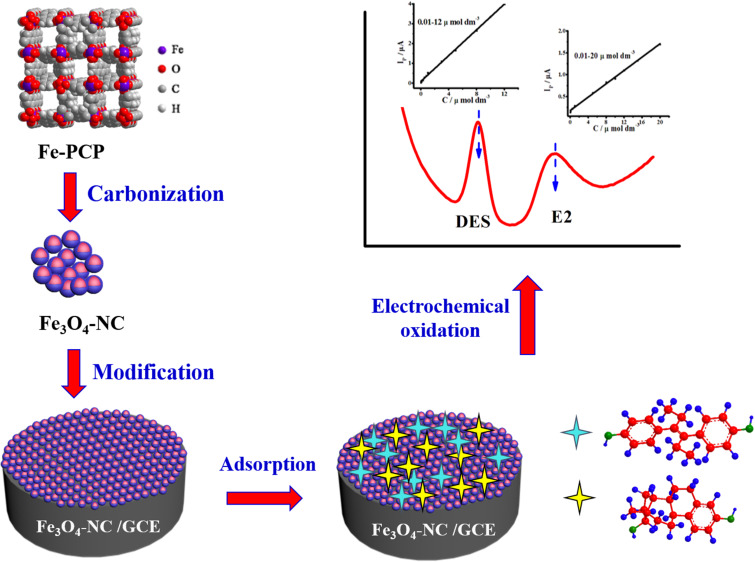
Nanoporous Carbon Materials for Electrochemical Sensing

Nanoporous carbon materials are highly important materials for a wide array of applications. Here we show that nanoporous carbon can act as highly active materials for electrochemical sensing. We observed that nanoporous carbon material exhibits a faster heterogeneous electron transfer than graphite and pure carbon nanotubes. Nanoporous carbon exhibits a superior electrochemical performance for sensing …

Nanoporous Carbon Materials for Electrochemical Sensing Read More »

Graphene-based electrochemical sensor for detection of 2,4,6-trinitrotoluene (TNT) in seawater: the comparison of single-, few-, and multilayer graphene nanoribbons and graphite microparticles

The detection of explosives in seawater is of great interest. We compared response single-, few-, and multilayer graphene nanoribbons and graphite microparticle-based electrodes toward the electrochemical reduction of 2,4,6-trinitrotoluene (TNT). We optimized parameters such as accumulation time, accumulation potential, and pH. We found that few-layer graphene exhibits about 20% enhanced signal for TNT after accumulation …

Graphene-based electrochemical sensor for detection of 2,4,6-trinitrotoluene (TNT) in seawater: the comparison of single-, few-, and multilayer graphene nanoribbons and graphite microparticles Read More »