Keyword Author: oxygen reduction

Two-Dimensional Materials on the Rocks: Positive and Negative Role of Dopants and Impurities in Electrochemistry

Two-dimensional (2D) materials, such as graphene and transition-metal chalcogenides, were shown in many works as very potent catalysts for industrially important electrochemical reactions, such as oxygen reduction, hydrogen and oxygen evolution, and carbon dioxide reduction. We critically discuss here the development in the field, showing that not only dopants but also impurities can have dramatic …
Two-Dimensional Materials on the Rocks: Positive and Negative Role of Dopants and Impurities in Electrochemistry Read More »

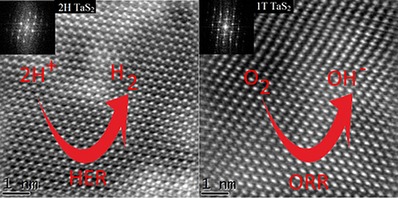
2H -> 1T Phase Engineering of Layered Tantalum Disulfides in Electrocatalysis: Oxygen Reduction Reaction

Tremendous attention is currently being paid to renewable sources of energy. Transition-metal dichalcogenides (TMDs) have been intensively studied for their promising catalytic activities in the hydrogen evolution reaction (HER) and the oxygen reduction reaction (ORR). In this fundamental work, we explored the catalytic properties of TMD family members 2HTaS(2) and 1T TaS2. Our findings reveal …

2H -> 1T Phase Engineering of Layered Tantalum Disulfides in Electrocatalysis: Oxygen Reduction Reaction Read More »

Transition Metal Oxides for the Oxygen Reduction Reaction: Influence of the Oxidation States of the Metal and its Position on the Periodic Table

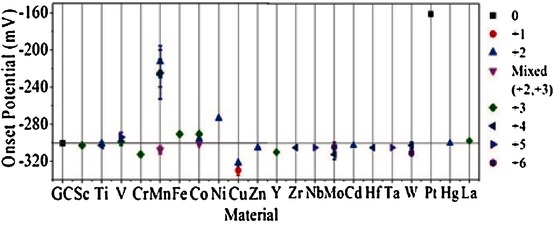
Electrocatalysts have been developed to meet the needs and requirements of renewable energy applications. Metal oxides have been well explored and are promising for this purpose, however, many reports focus on only one or a few metal oxides at once. Herein, thirty metal oxides, which were either commercially available or synthesized by a simple and …

Transition Metal Oxides for the Oxygen Reduction Reaction: Influence of the Oxidation States of the Metal and its Position on the Periodic Table Read More »

Uranium- and Thorium-Doped Graphene for Efficient Oxygen and Hydrogen Peroxide Reduction

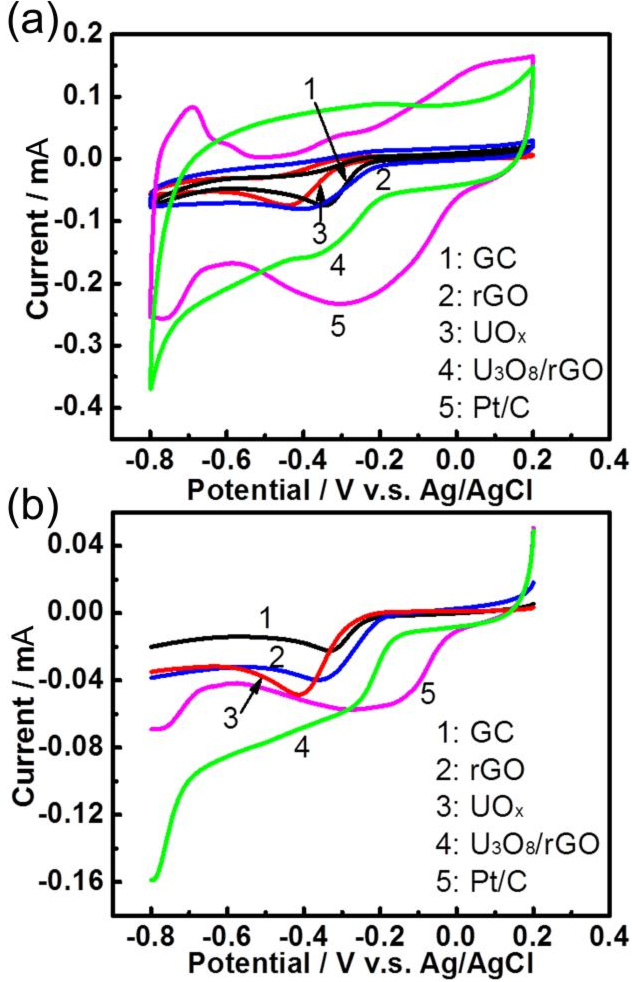
Oxygen reduction and hydrogen peroxide reduction are technologically important reactions in the fields of energy generation and sensing. Metal-doped graphenes, where metal serves as the catalytic center and graphene as the high area conductor, have been used as electrocatalysts for such applications. In this paper, we investigated the use of uranium-graphene and thorium-graphene hybrids prepared …

Uranium- and Thorium-Doped Graphene for Efficient Oxygen and Hydrogen Peroxide Reduction Read More »

“Metal-Free” Catalytic Oxygen Reduction Reaction on Heteroatom-Doped Graphene is Caused by Trace Metal Impurities

The oxygen reduction reaction (ORR) is of high industrial importance. There is a large body of literature showing that metal-based catalytic nanoparticles (e.g. Co, Mn, Fe or hybrid Mn/Co-based nanoparticles) supported on graphene act as efficient catalysts for the ORR. A significant research effort is also directed to the so-called metal-free oxygen reduction reaction on …

“Metal-Free” Catalytic Oxygen Reduction Reaction on Heteroatom-Doped Graphene is Caused by Trace Metal Impurities Read More »