Keyword Author: hydrogen evolution reaction

High-entropy alloys: Electrochemical Nanoarchitectonics toward high-performance Water splitting

High-entropy alloys (HEAs) offer unprecedented catalytic properties over single-composition nanoparticles or single atom engineered materials. Traditionally, the Hume–Rothery rule suggests that only size-and-structure similar elements can be mixed in conventional alloying, which limits the possible combinations of alloying elements. Here we propose an electrochemical approach as an innovative and alternative synthetic method for preparation of …
High-entropy alloys: Electrochemical Nanoarchitectonics toward high-performance Water splitting Read More »

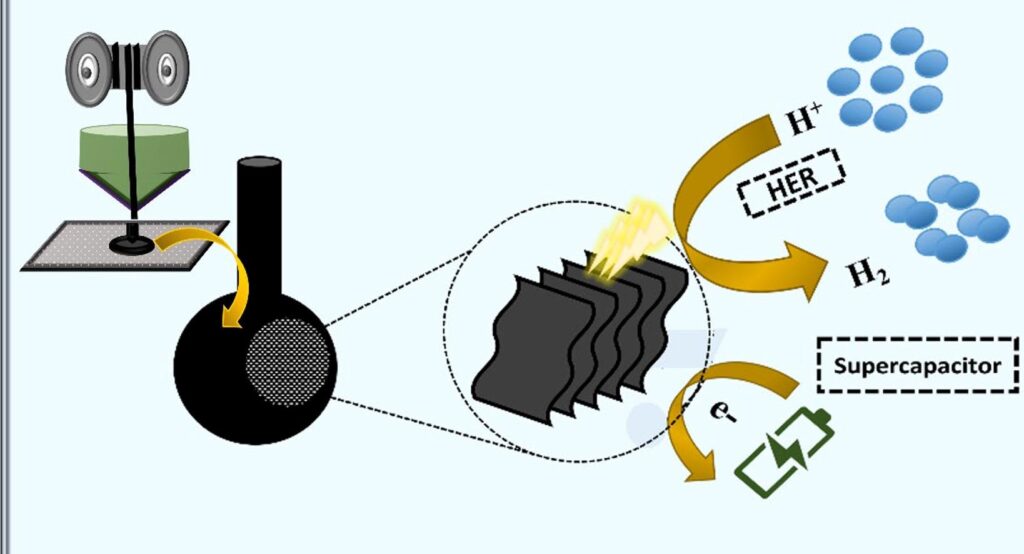
3D printing of MAX/PLA filament: Electrochemical in-situ etching for enhanced energy conversion and storage

Two-dimensional (2D) MXenes are promising materials for a variety of sustainable energy-related applications such as photoelectrochemical water splitting and energy storage devices. Among the MXene family, the Ti3C2Tx is mostly prepared by selective etching of Al from the Ti3AlC2 MAX phase using hydrofluoric acid (HF) or in-situ produced HF as an etchant. However, the severe …

3D printing of MAX/PLA filament: Electrochemical in-situ etching for enhanced energy conversion and storage Read More »

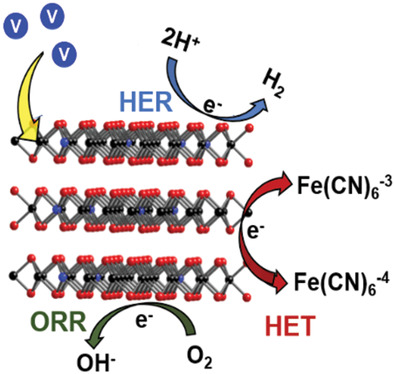
Vanadium Dopants: A Boon or a Bane for Molybdenum Dichalcogenides-Based Electrocatalysis Applications

The ever-rising concerns with regards to energy shortages and climate change have made the search for clean and renewable energy sources a pressing priority for the sustainable development of societies. Although, conventional precious metal-based catalysts such as platinum, iridium, and ruthenium are able to efficiently catalyze the conversion of chemical to electrical energy, they are …

Vanadium Dopants: A Boon or a Bane for Molybdenum Dichalcogenides-Based Electrocatalysis Applications Read More »

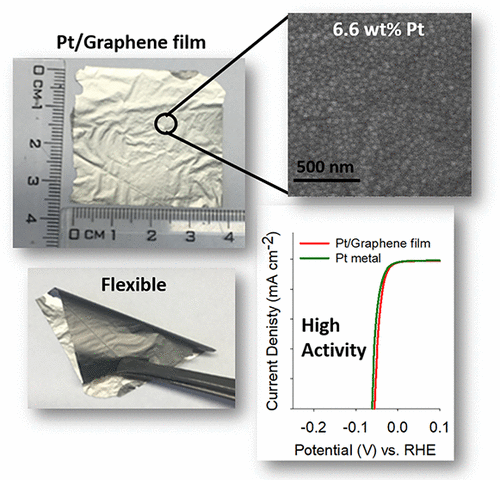
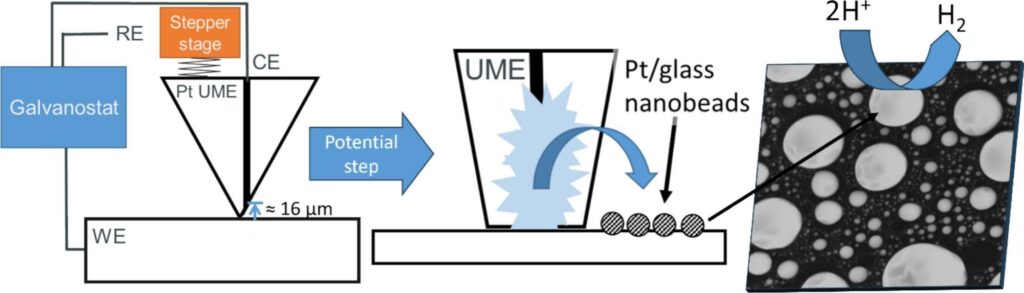
Flexible Pt/Graphene Foil Containing only 6.6 wt % of Pt has a Comparable Hydrogen Evolution Reaction Performance to Platinum Metal

A significant amount of research is currently being undertaken to decrease the overall cost which governs the running of electrolyzer technologies. If the cost associated with electrolyzers was significantly reduced, it would pave a path to the efficient and economical generation of clean molecular hydrogen that could be used as a feedstock to create energy. …

Flexible Pt/Graphene Foil Containing only 6.6 wt % of Pt has a Comparable Hydrogen Evolution Reaction Performance to Platinum Metal Read More »

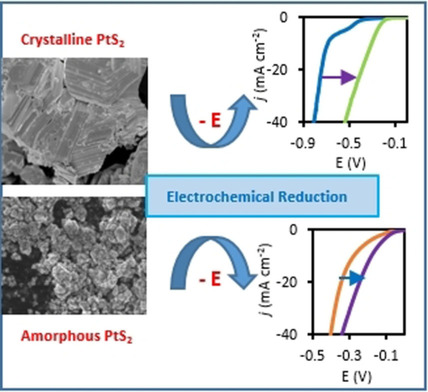
Layered Crystalline and Amorphous Platinum Disulfide (PtS2): Contrasting Electrochemistry

Group 6 transition metal dichalcogenides (TMDs), such as MoS2 and WS2 have been extensively studied for various applications while few studies have delved into other TMDs such as platinum dichalcogenides. In this work, layered crystalline and amorphous platinum disulfide (PtS2) were synthesized, characterised and their fundamental electrochemical properties were investigated. Both materials exhibited inherent oxidation …

Layered Crystalline and Amorphous Platinum Disulfide (PtS2): Contrasting Electrochemistry Read More »

Exfoliated Layered Manganese Trichalcogenide Phosphite (MnPX3, X = S, Se) as Electrocatalytic van der Waals Materials for Hydrogen Evolution

Layered metal trichalcogen phosphites, also entitled as metal phosphorus chalcogenides (MPX3), have regained abundant interest, not only due to their magnetic properties, but also due to promising performances in energy storage and conversion. Herein, two different layered manganese trichalcogen phosphites, MnPX3 (X = S, Se), are synthetized and submitted to shear force exfoliation. Structural and …

Exfoliated Layered Manganese Trichalcogenide Phosphite (MnPX3, X = S, Se) as Electrocatalytic van der Waals Materials for Hydrogen Evolution Read More »

Electrochemical Exfoliation of MoS2 Crystal for Hydrogen Electrogeneration

Transition metal dichalcogenides (TMDs) have recently emerged within the group of 2D materials due to their electrical, catalytic and optical properties significantly enhanced and useful when down-sized to single layer. In particular, MoS2 has attracted much attention due to its semiconducting nature with a useful band gap when present as single layer, the enhanced photoluminescence, …

Electrochemical Exfoliation of MoS2 Crystal for Hydrogen Electrogeneration Read More »

Multimaterial 3D-Printed Water Electrolyzer with Earth-Abundant Electrodeposited Catalysts

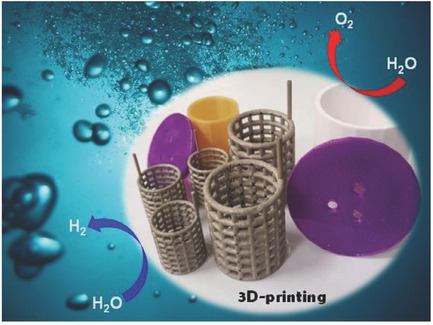
Additive manufacturing (AM) is reaching a stage of development that enables high throughput fabrication of end products/devices. An important contribution to the advancement of this technology is given by the possibility to combine different materials into a single printing process or integrate diverse technologies for the fabrication of different components. Here we show how a …

Multimaterial 3D-Printed Water Electrolyzer with Earth-Abundant Electrodeposited Catalysts Read More »

3D Printed Graphene Electrodes’ Electrochemical Activation

Three-dimensional (3D) printing technologies are emerging as an important tool for the manufacturing of electrodes for various electrochemistry applications. It has been previously shown that metal 3D electrodes, modified with metal oxides, are excellent catalysts for various electrochemical energy and sensing applications. However, the metal 3D printing process, also known as selective laser melting, is …

3D Printed Graphene Electrodes’ Electrochemical Activation Read More »

Self-Contained Polymer/Metal 3D Printed Electrochemical Platform for Tailored Water Splitting

The enormous advancements made recently in additive manufacturing require parallel development of new printable materials with particular focus on so-defined functional materials. Functional materials have specific properties that are useful for the fabrication of active devices such as sensors, electronic components, catalytic reactors, etc. It is shown here that the combination of standard 3D-printing technologies …

Self-Contained Polymer/Metal 3D Printed Electrochemical Platform for Tailored Water Splitting Read More »

MoSe2 Dispersed in Stabilizing Surfactant Media: Effect of the Surfactant Type and Concentration on Electron Transfer and Catalytic Properties

Layered transition metal dichalcogenides (TMDs) have gained attention from the scientific community because of their extended range of applications. Molybdenum diselenide (MoSe2) has been proven to be an efficient catalyst for the hydrogen evolution reaction (HER), having implications in the research of new catalysts for clean energy production. One way to produce large quantities of …

MoSe2 Dispersed in Stabilizing Surfactant Media: Effect of the Surfactant Type and Concentration on Electron Transfer and Catalytic Properties Read More »

MoS2 Nanoparticles as Electrocatalytic Labels in Magneto-Immunoassays

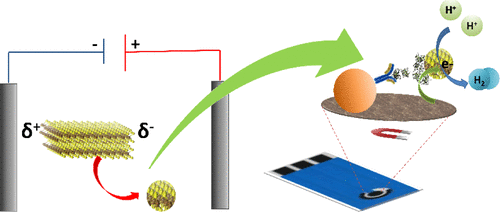
Ability to detect biomolecules with a simple and cost-effective approach has been very demanding in today’s medicine. The nanoparticles and two-dimensional materials have been extensively used within this field in devices with high selectivity and sensitivity. Here, we report the use of MoS2 nanoparticles (MoS2 NPs) as a signal-enhancing label in a standard immunoassay test. …

MoS2 Nanoparticles as Electrocatalytic Labels in Magneto-Immunoassays Read More »

Cation-Controlled Electrocatalytical Activity of Transition-Metal Disulfides

The nanostructured layered transition-metal dichalcogenides are highly promising materials for substitution of platinum metals in electrocatalysis. These layered materials are usually exfoliated with intercalation of Li from organolithium compounds. Alkali metal intercalation leads not only to exfoliation and increased surface area but also, even more importantly, to conversion of naturally occurring 2H (trigonal prismatic) semiconducting …

Cation-Controlled Electrocatalytical Activity of Transition-Metal Disulfides Read More »

Black Phosphorus Synthesis Path Strongly Influences Its Delamination, Chemical Properties and Electrochemical Performance

We show here that synthetic approaches to layered black phosphorus (BP), namely, high-pressure conversion of red phosphorus (RP) and vapor growth of BP from RP in the presence of Sn/SnI4, lead to dramatically different crystallinity of BP which in turn strongly influences its exfoliation, chemical and electrochemical properties. In particular, we demonstrate that black phosphorus …

Black Phosphorus Synthesis Path Strongly Influences Its Delamination, Chemical Properties and Electrochemical Performance Read More »

Composition-Graded MoWSx Hybrids with Tailored Catalytic Activity by Bipolar Electrochemistry

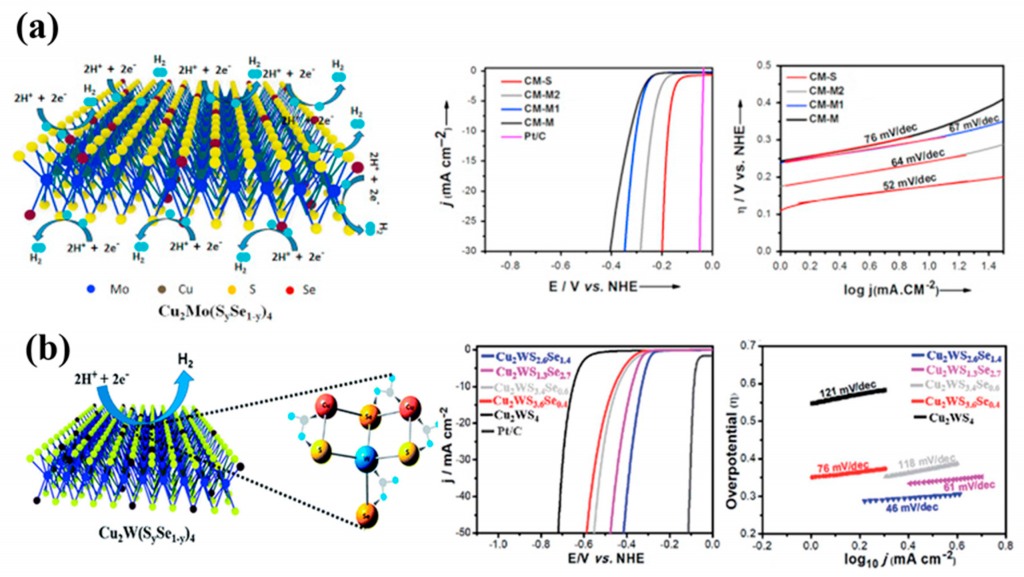
Among transition metal dichalcogenide (TMD)-based composites, TMD/graphene-related material and bichalcogen TMD composites have been widely studied for application toward energy production via the hydrogen evolution reaction (HER). However, scarcely any literature explored the possibility of bimetallic TMD hybrids as HER electrocatalysts. The use of harmful chemicals and harsh preparation conditions in conventional syntheses also detracts …

Composition-Graded MoWSx Hybrids with Tailored Catalytic Activity by Bipolar Electrochemistry Read More »

The Role of the Metal Element in Layered Metal Phosphorus Triselenides upon Their Electrochemical Sensing and Energy Applications

The number of layered materials seems to be ever-growing, from mono-to multielement, with affiliates and applications being tested continuously. Chalcogenophosphites, also designated as metal phosphorus chalcogenides (MPX), have attracted great interest because of not only their magnetic properties but also promising capabilities in energy applications. Herein, bulk crystals of different layered metal triselenophosphites, with a …

The Role of the Metal Element in Layered Metal Phosphorus Triselenides upon Their Electrochemical Sensing and Energy Applications Read More »

Pnictogen (As, Sb, Bi) Nanosheets for Electrochemical Applications Are Produced by Shear Exfoliation Using Kitchen Blenders

Layered materials are of high importance because of their anisotropy and as a source of 2D materials. Whilst there is a plethora of multi-elemental 2D materials, the number mono-elemental 2D materials is rather limited. Herein, we demonstrate that aqueous shear exfoliation can be used to obtain As, Sb, and Bi exfoliated nanosheets. Morphological and chemical …

Pnictogen (As, Sb, Bi) Nanosheets for Electrochemical Applications Are Produced by Shear Exfoliation Using Kitchen Blenders Read More »

Layered Metal Thiophosphite Materials: Magnetic, Electrochemical, and Electronic Properties

Beyond graphene, transitional metal dichalcogenides, and black phosphorus, there are other layered materials called metal thiophosphites (MPSx), which are recently attracting the attention of scientists. Here we present the synthesis, structural and morphological characterization, magnetic properties, electrochemical performance, and the calculated density of states of different layered metal thiophosphite materials with a general formula MPSx …

Layered Metal Thiophosphite Materials: Magnetic, Electrochemical, and Electronic Properties Read More »

The Origin of MoS2 Significantly Influences Its Performance for the Hydrogen Evolution Reaction due to Differences in Phase Purity

Molybdenum disulfide (MoS2) is at the forefront of materials research. It shows great promise for electrochemical applications, especially for hydrogen evolution reaction (HER) catalysis. There is a significant discrepancy in the literature on the reported catalytic activity for HER catalysis on MoS2. Here we test the electrochemical performance of MoS2 obtained from seven sources and …

The Origin of MoS2 Significantly Influences Its Performance for the Hydrogen Evolution Reaction due to Differences in Phase Purity Read More »

Layered Post-Transition-Metal Dichalcogenides (X-M-M-X) and Their Properties

A(III)B(VI) chalcogenides are an interesting group of layered semiconductors with several attractive properties, such as tunable band gaps and the formation of solid solutions. Unlike the typically sandwiched structure of transitionmetal dichalcogenides, A(III)B(VI) layered chalcogenides with hexagonal symmetry are stacked through the X-M-M-X motif, in which M is gallium and indium, and X is sulfur, …

Layered Post-Transition-Metal Dichalcogenides (X-M-M-X) and Their Properties Read More »

Exfoliation of Layered Topological Insulators Bi2Se3 and Bi2Te3 via Electrochemistry

Among layered materials, topological insulators such as Bi2Se3 and Bi2Te3 are lately attracting much attention due to particular electronic properties and, especially with Bi2Te3, excellent thermoelectric properties. Methods of preparation of few-layered nanosheets of Bi2Se3 and Bi2Te3 range from the bottom-up chemical vapor deposition or hydrothermal synthesis from oxide precursors to the top-down mechanical exfoliation …

Exfoliation of Layered Topological Insulators Bi2Se3 and Bi2Te3 via Electrochemistry Read More »

Negative Electrocatalytic Effects of p-Doping Niobium and Tantalum on MoS2 and WS2 for the Hydrogen Evolution Reaction and Oxygen Reduction Reaction

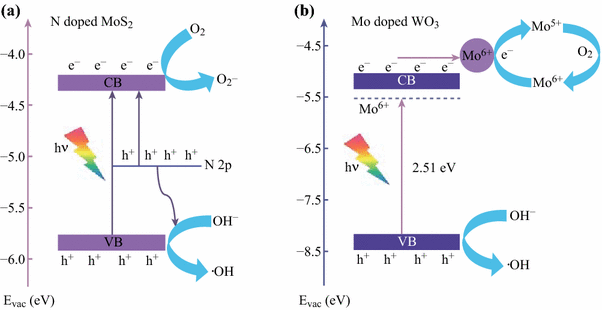
Transition-metal dichalcogenides (TMDs) are at the forefront of research for their promising catalytic abilities and unique materials properties. With great interest in the study of mono- or few-layered TMDs, we seek to fundamentally explore the effects of doping on bulk TMDs, particularly MoS2 and WS2 for the hydrogen evolution reaction (HER) and oxygen reduction reaction …

Negative Electrocatalytic Effects of p-Doping Niobium and Tantalum on MoS2 and WS2 for the Hydrogen Evolution Reaction and Oxygen Reduction Reaction Read More »

Templated Electrochemical Fabrication of Hollow Molybdenum Sulfide Microstructures and Nanostructures with Catalytic Properties for Hydrogen Production

MoS2 is known to possess promising catalytic properties toward the hydrogen evolution reaction (HER). However, current synthetic procedures of nanostructured MoS2-based materials with high-density active edge sites are tedious and require high temperatures, costly instrumentation, and often rather toxic solvents. The electrochemical deposition (ED) of molybdenum sulfide films from solution-based precursors represents a more-viable approach, …

Templated Electrochemical Fabrication of Hollow Molybdenum Sulfide Microstructures and Nanostructures with Catalytic Properties for Hydrogen Production Read More »

Electrochemistry of Layered Graphitic Carbon Nitride Synthesised from Various Precursors: Searching for Catalytic Effects

Graphitic carbon nitride (g-C3N4), synthesised by pyrolysis of different precursors (dicyandiamide, melamine and urea) under varying reaction conditions (air and nitrogen gas) is subjected to electrochemical studies for the elucidation of the inherent catalytic efficiency of the pristine material. Contrary to popular belief, pristine g-C3N4 shows negligible, if any, enhancement in its electrochemical behaviour in …

Electrochemistry of Layered Graphitic Carbon Nitride Synthesised from Various Precursors: Searching for Catalytic Effects Read More »

Susceptibility of FeS2 hydrogen evolution performance to sulfide poisoning

The imminent depletion of fossil fuels raises concern over the need for next-generation clean energy. Of numerous alternatives, electrochemical water splitting is a promising method to store energy in the form of hydrogen. In order to benefit from this system, technological advancement in the development of affordable and efficient electrocatalysts for hydrogen evolution reaction is …

Susceptibility of FeS2 hydrogen evolution performance to sulfide poisoning Read More »

Enhancement of electrochemical and catalytic properties of MoS2 through ball-milling

MoS2 nanosheets of one to few layer thickness present novel electronic and enhanced catalytic properties with respect to the bulk material. Here we show that a simple and highly scalable ball-milling procedure can lead to significant improvements of the electrochemical and catalytic properties of the bulk natural MoS2. We characterized the material before And after …

Enhancement of electrochemical and catalytic properties of MoS2 through ball-milling Read More »

Lithium Intercalation Compound Dramatically Influences the Electrochemical Properties of Exfoliated MoS2

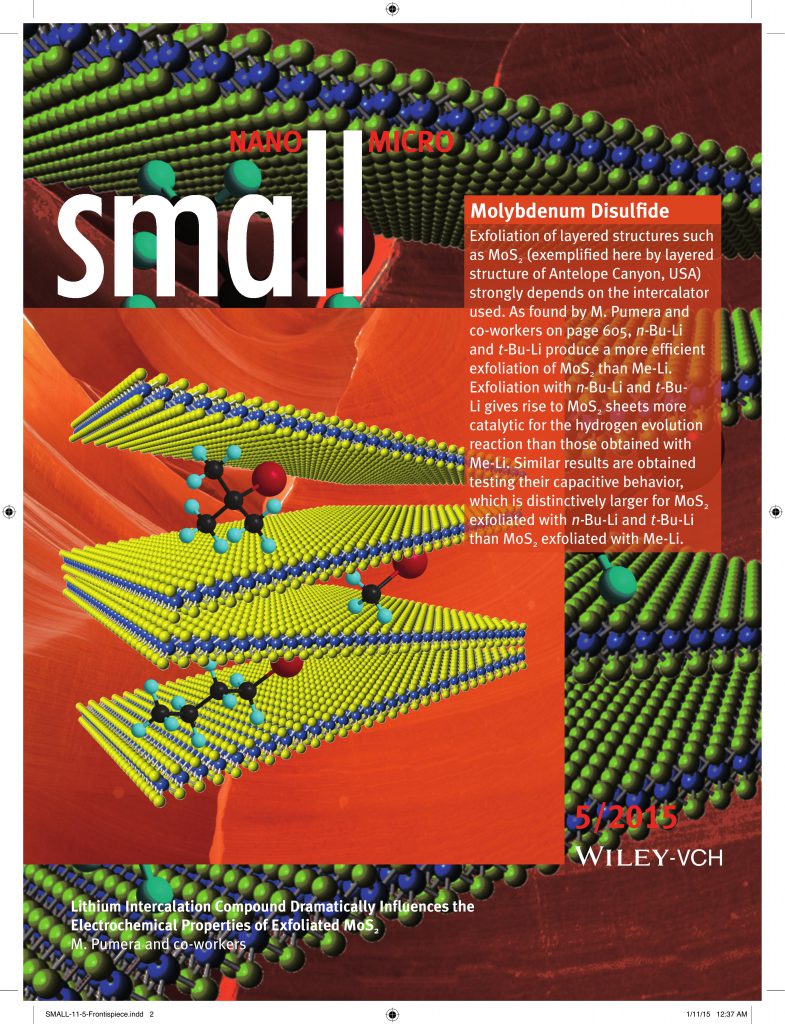
MoS2 and other transition metal dichalcogenides (TMDs) have recently gained a renewed interest due to the interesting electronic, catalytic, and mechanical properties which they possess when down-sized to single or few layer sheets. Exfoliation of the bulk multilayer structure can be achieved by a preliminary chemical Li intercalation followed by the exfoliation due to the …

Lithium Intercalation Compound Dramatically Influences the Electrochemical Properties of Exfoliated MoS2 Read More »

Precise Tuning of the Charge Transfer Kinetics and Catalytic Properties of MoS2 Materials via Electrochemical Methods

MoS2 has become particularly popular for its catalytic properties towards the hydrogen evolution reaction (HER). It has been shown that the metallic 1T phase of MoS2, obtained by chemical exfoliation after lithium intercalation, possesses enhanced catalytic activity over the semiconducting 2H phase due to the improved conductivity properties which facilitate charge-transfer kinetics. Here we demonstrate …

Precise Tuning of the Charge Transfer Kinetics and Catalytic Properties of MoS2 Materials via Electrochemical Methods Read More »