Keyword Author: Biosensor

Coke-derived graphene quantum dots as fluorescence nanoquencher in DNA detection

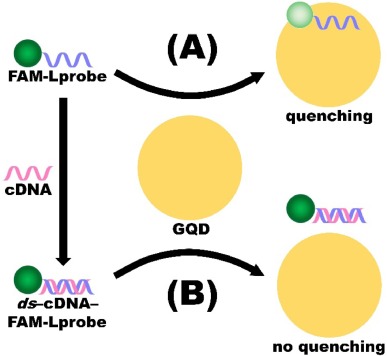
The recent emergence of coal and related fossil fuel products as an abundant and affordable source of graphene quantum dots (GQDs) highlights the potential of the carbon precursor in the development of simple and cost-effective DNA nanobiosensors. A coke-derived precursor- calcined petroleum coke- was utilized for the facile one-step synthesis of GQDs. Thereafter, DNA detection …

Coke-derived graphene quantum dots as fluorescence nanoquencher in DNA detection Read More »

Carboxylic Carbon Quantum Dots as a Fluorescent Sensing Platform for DNA Detection

The demand for simple, sensitive, affordable, and selective DNA biosensors is ubiquitous, due to the important role that DNA detection performs in the areas of disease diagnostics, environment monitoring, and food safety. A novel application of carboxylic carbon quantum dots (cCQD) is highlighted in this study. Herein, cCQD function as a nanoquencher in the detection …

Carboxylic Carbon Quantum Dots as a Fluorescent Sensing Platform for DNA Detection Read More »

Oxidation of DNA Bases Influenced by the Presence of Other Bases

Electrochemical detection of DNA is a highly important topic. Here we show that the electrochemical responses of one DNA base (guanine, adenine, cytosine or thymine), in terms of oxidation potential, current intensity, peak width and resolution can be highly influenced by the presence of other DNA bases at electrochemically reduced graphene oxide (ER-GO) as well …

Oxidation of DNA Bases Influenced by the Presence of Other Bases Read More »

Graphene for electrochemical sensing and biosensing

Graphene has proved to be an excellent nanomaterial for applications in electrochemistry. We review progress in constructing high-performance electrochemical sensors and biosensors. We also discuss: different routes for graphene fabrication; graphene-modified electrodes and graphene-composite electrodes for sensing, including those based on ionic liquids; incorporation of biorecognition elements into graphene-based electrodes; and, graphene-supported electrocatalytic nanoparticle-based electrochemical …

Graphene for electrochemical sensing and biosensing Read More »

Redox protein noncovalent functionalization of double-wall carbon nanotubes: Electrochemical binder-less glucose biosensor

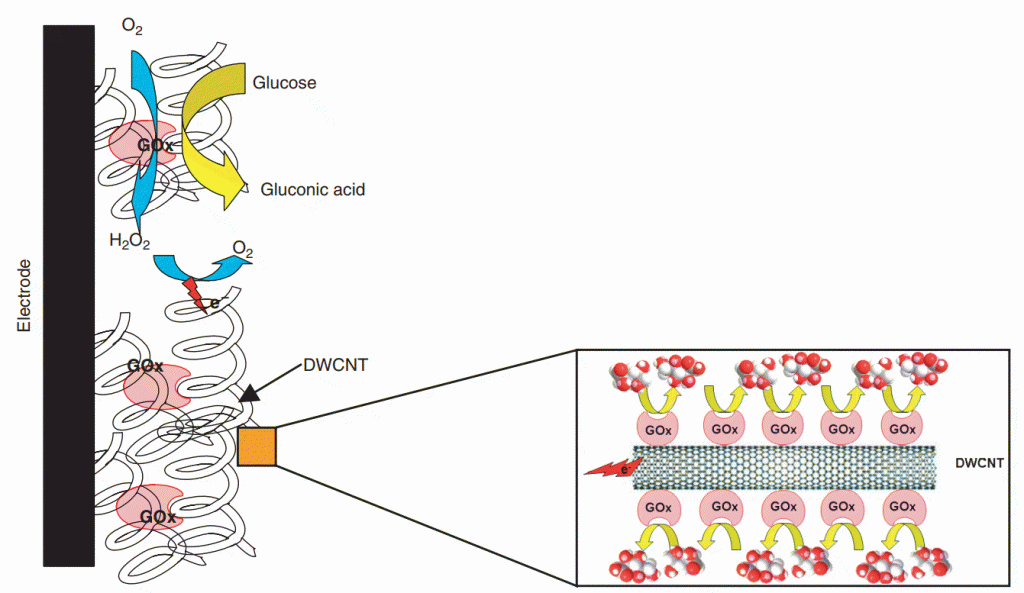
Double wall carbon nanotubes are noncovalently functionalized with redox protein and such assembly is used for construction of electrochemical binder-less glucose biosensor. Redox protein glucose oxidase performs as biorecognition element and double wall carbon nanotubes act both as immobilization platform for redox enzyme and as signal transducer. The double carbon nanotubes are characterized by cyclic …

Redox protein noncovalent functionalization of double-wall carbon nanotubes: Electrochemical binder-less glucose biosensor Read More »