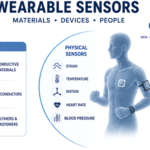
Advances and Challenges in Wearable Sensors for Health Monitoring

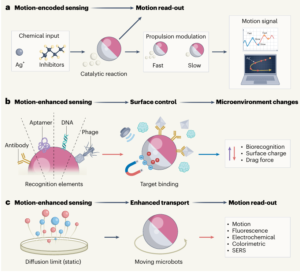
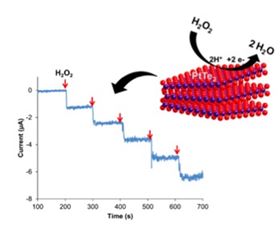
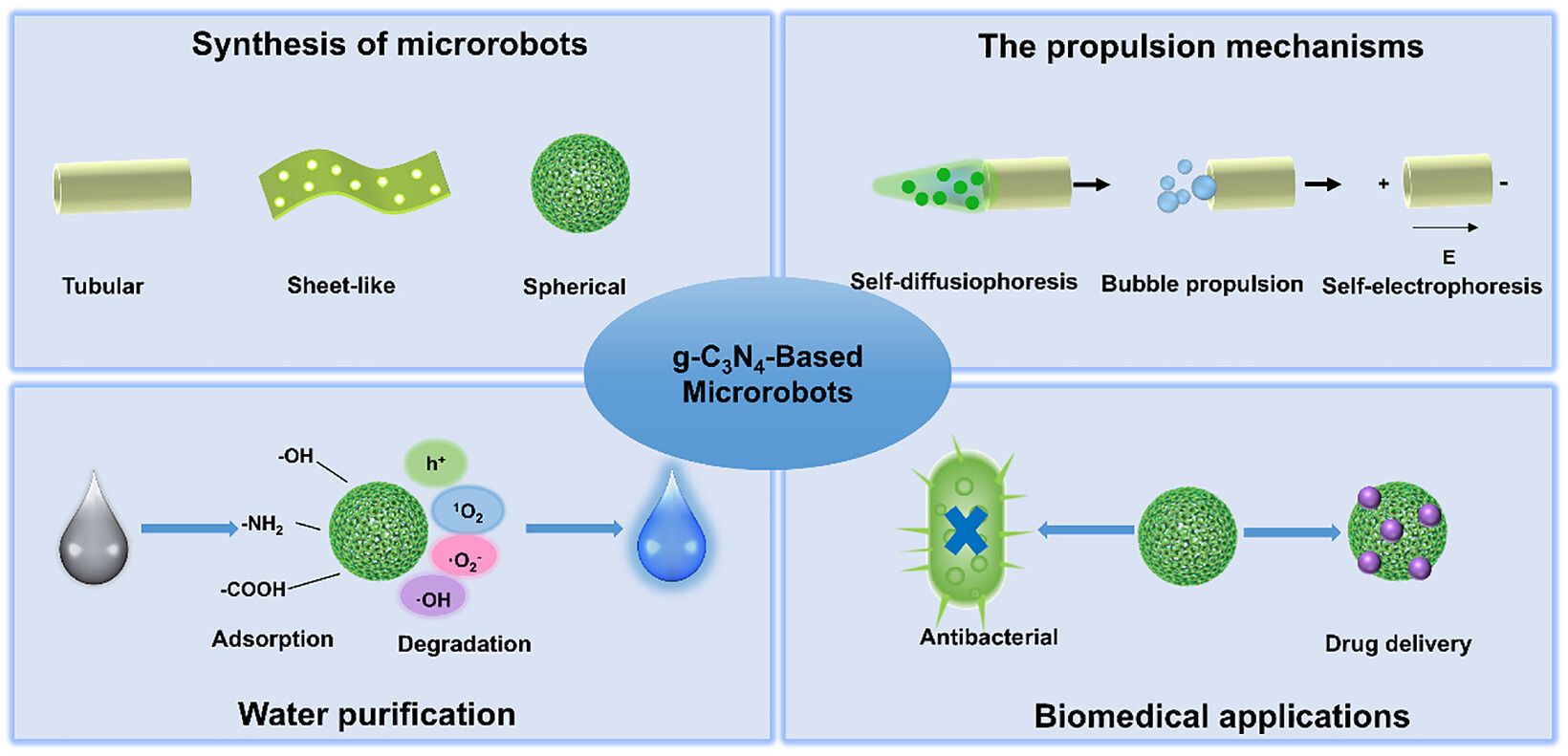
Mobile micro- and nanoscale sensors are emerging as an alternative to conventional static sensing platforms by actively interrogating complex environments instead of passively sampling them. By integrating controlled motion with chemical and biological recognition and analytical read-outs, these systems address long-standing limitations in mass transport, spatial accessibility and assay speed. Here we examine the concept of on-the-fly sensing, in which controlled motion is an integral component of analyte recognition and signal transduction, fundamentally reshaping sensing strategies. We highlight how autonomous propulsion, responsive surface chemistries and motion-encoded signals enable active sampling, unconventional signal transduction and sensing in confined or heterogeneous environments. Recent advances in microrobotics have moved these capabilities beyond proof-of-concept studies towards practical applications in biomedical diagnostics, environmental monitoring, security and food safety. Continued progress in materials, control and system integration will be critical for translating on-the-fly sensing into robust, reproducible and application-driven sensing technologies. Mobile micro- and nanoscale sensors enable on-the-fly sensing by actively interrogating complex environments rather than relying on diffusion-limited, static detection platforms. Continuous motion enhances mass transport, accelerates recognition kinetics and assay times and enables sensing in confined, heterogeneous or poorly accessible environments. Motion-derived parameters, such as changes in speed, distance or trajectory, act as unconventional transduction signals that directly encode chemical and biological information. Advances in propulsion, responsive materials and surface chemistry have expanded mobile sensing capabilities beyond early proof-of-concept demonstrations. On-the-fly sensing enables the integrated capture, transport, isolation and detection of targets, reducing sample volumes and simplifying analytical workflows. Future progress depends on improving power strategies, robustness, calibration and system integration to enable reliable, application-driven sensing technologies.
Advances and Challenges in Wearable Sensors for Health Monitoring

SoK: Hospital at Home Model of Care – Toward Appropriate Use Cases and Other Challenges

Al2O3/Covalent Organic Framework on 3D-Printed Nanocarbon Electrodes for Enhanced Biomarker Detection