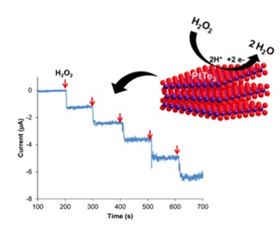
Fully metallic copper 3D-printed electrodes via sintering for electrocatalytic biosensing

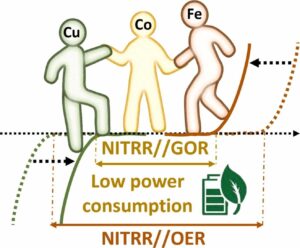
Multimetallic site engineering is emerging as a powerful strategy to regulate electronic structure and reaction pathways in complex multielectron electrocatalytic systems, such as electrocatalytic nitrate reduction. Here, we report the rational design of transition metal-doped CoWO4 (M-CoWO4, M = Cu, Fe, Ni) integrated into 3D-printed octet lattice electrodes for the electrochemical conversion of nitrate to ammonia (NO3⁻-to-NH3) coupled glycerol oxidation (GOR). Systematic experiments, in situ Raman analysis and density functional theory calculations reveal that metal doping modulates the electronic environment around active sites through charge redistribution, thereby tuning intermediate adsorption and catalytic performance. Cu doping enhances NOₓ⁻ adsorption and lowers the energy barrier for sequential protonation steps, accounting for the superior ammonia production rate (∼2 mmol cm−2 h−1) and high Faradaic efficiency (95 %). By contrast, Fe doping preferentially enhances oxidative catalysis, including OER and GOR. In a full-cell configuration, GOR-coupled nitrate reduction decreases power consumption by ∼22 % and boosts NH3 yield rate by 2.5-fold relative to the conventional NITRR||OER system. This study reveals that strategic metal doping in CoWO4 tunes its electronic structure to promote energy-efficient NO3⁻-to-NH3 conversion coupled with glycerol oxidation, offering a sustainable pathway toward green ammonia production.
Fully metallic copper 3D-printed electrodes via sintering for electrocatalytic biosensing

Green activation using reducing agents of carbon-based 3D printed electrodes: Turning good electrodes to great
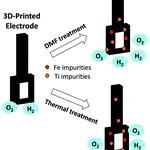
Inherent impurities in 3D-printed electrodes are responsible for catalysis towards water splitting