Keyword Author: Water splitting

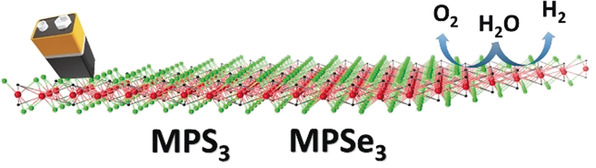
Metal Phosphorous Trichalcogenides (MPCh(3)): From Synthesis to Contemporary Energy Challenges

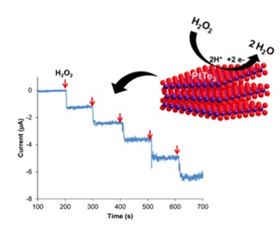
Owing to their unique physical and chemical properties, layered two-dimensional (2D) materials have been established as the most significant topic in materials science for the current decade. This includes layers comprising mono-element (graphene, phosphorene), di-element (metal dichalcogenides), and even multi-element. A distinctive class of 2D layered materials is the metal phosphorous trichalcogenides (MPCh(3), Ch=S, Se), …
Metal Phosphorous Trichalcogenides (MPCh(3)): From Synthesis to Contemporary Energy Challenges Read More »

Multimaterial 3D-Printed Water Electrolyzer with Earth-Abundant Electrodeposited Catalysts

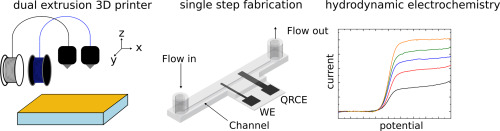
Additive manufacturing (AM) is reaching a stage of development that enables high throughput fabrication of end products/devices. An important contribution to the advancement of this technology is given by the possibility to combine different materials into a single printing process or integrate diverse technologies for the fabrication of different components. Here we show how a …

Multimaterial 3D-Printed Water Electrolyzer with Earth-Abundant Electrodeposited Catalysts Read More »

Self-Contained Polymer/Metal 3D Printed Electrochemical Platform for Tailored Water Splitting

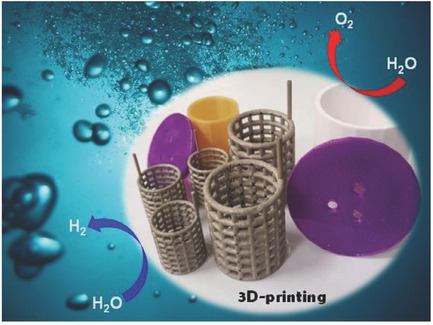
The enormous advancements made recently in additive manufacturing require parallel development of new printable materials with particular focus on so-defined functional materials. Functional materials have specific properties that are useful for the fabrication of active devices such as sensors, electronic components, catalytic reactors, etc. It is shown here that the combination of standard 3D-printing technologies …

Self-Contained Polymer/Metal 3D Printed Electrochemical Platform for Tailored Water Splitting Read More »

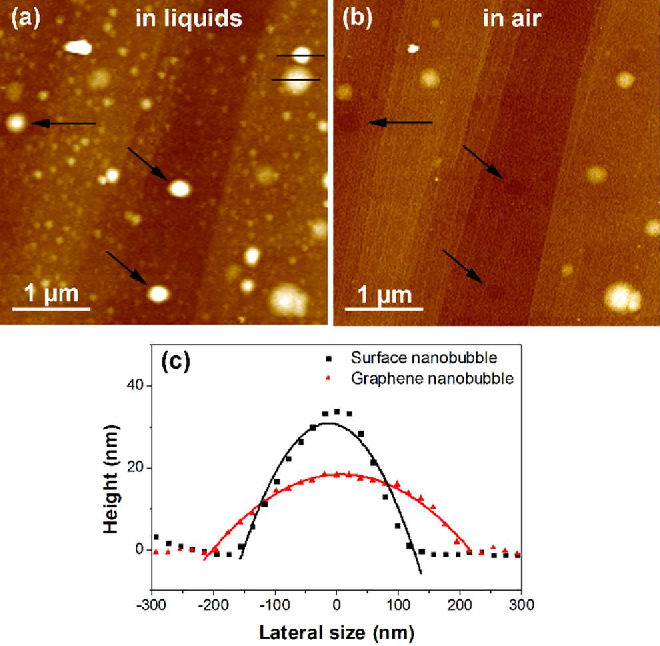
Graphene Nanobubbles Produced by Water Splitting

Graphene nanobubbles are of significant interest due to their ability to trap mesoscopic volumes of gas for various applications in nanoscale engineering. However; conventional protocols to produce such bubbles are relatively elaborate and require specialized equipment to subject graphite samples to high temperatures or pressures. Here, we demonstrate, the formation of graphene nanobubbles between layers …

Graphene Nanobubbles Produced by Water Splitting Read More »