Keyword Author: two-dimensional materials

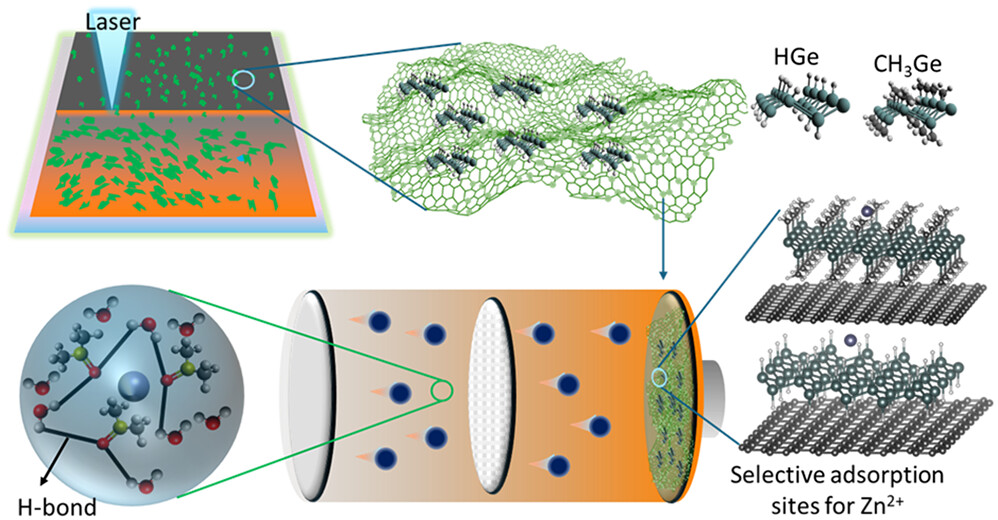
Laser-Processed 2D Germanane on Graphene for Organohydrogel-Based Zinc-Ion Hybrid Capacitors

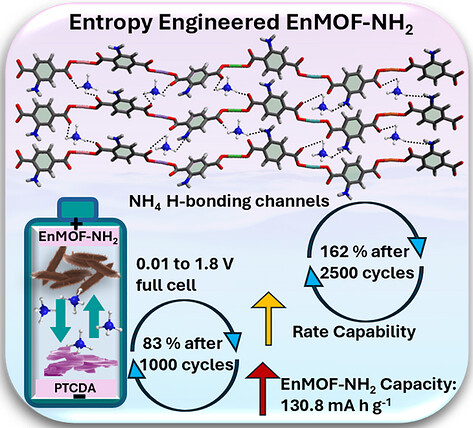
Group 14 monoelemental two-dimensional (2D) materials beyond graphene, such as silicene and germanene, have gained significant attention in the scientific community. Covalent functionalization of germanene with hydrogen and methyl leads to germanane (hydrogen/methyl-terminated germanene; HGe/MGe). While the optical and electronic properties of HGe and MGe were explored previously, there is no report on their zinc …
Laser-Processed 2D Germanane on Graphene for Organohydrogel-Based Zinc-Ion Hybrid Capacitors Read More »

Layered Metal Thiophosphite Materials: Magnetic, Electrochemical, and Electronic Properties

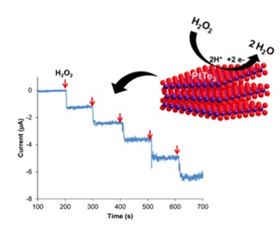
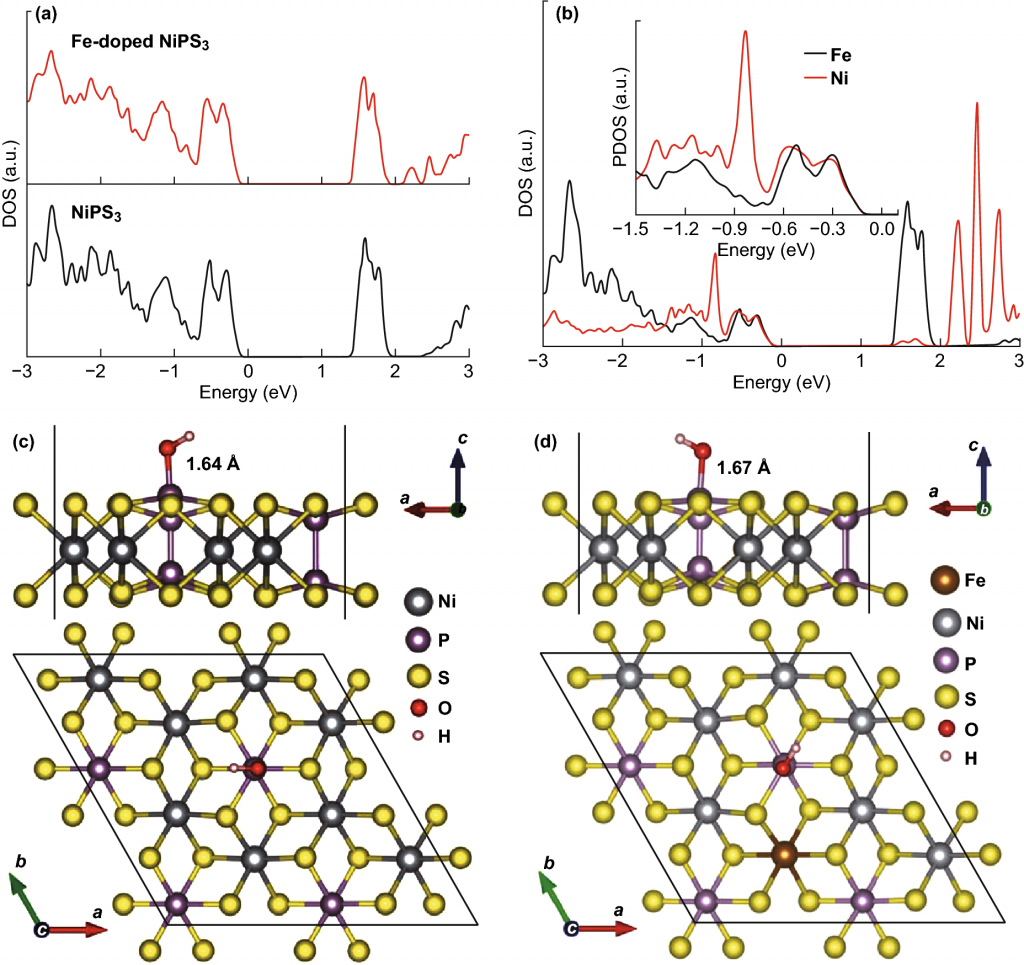
Beyond graphene, transitional metal dichalcogenides, and black phosphorus, there are other layered materials called metal thiophosphites (MPSx), which are recently attracting the attention of scientists. Here we present the synthesis, structural and morphological characterization, magnetic properties, electrochemical performance, and the calculated density of states of different layered metal thiophosphite materials with a general formula MPSx …

Layered Metal Thiophosphite Materials: Magnetic, Electrochemical, and Electronic Properties Read More »

Anti-MoS2 Nanostructures: Tl2S and Its Electrochemical and Electronic Properties

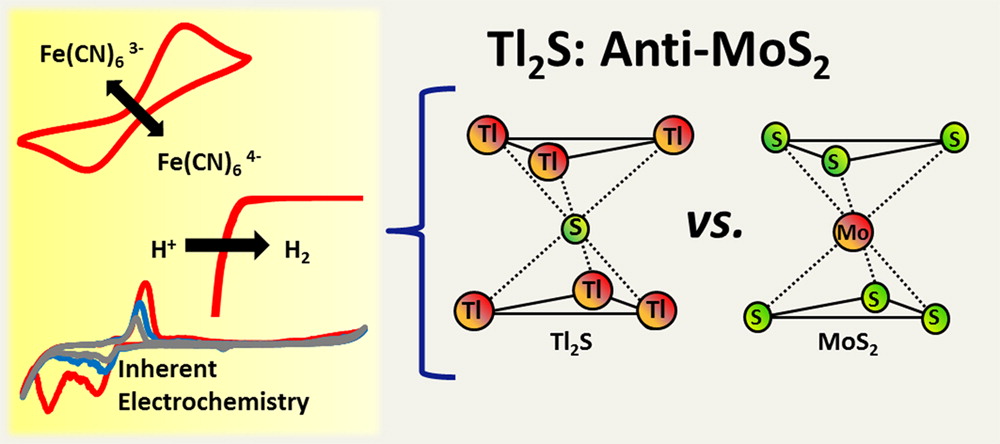
Layered transition metal dichalcogenides are catalytically important compounds. Unlike the mounting interest in transition metal dichalcogenides such as MoS2 and WS2 for electrochemical applications, other metal chalcogenides with layered structure but different chemical composition have received little attention among the scientific community. One such example is represented by thallium(I) sulfide (Tl2S), a Group 13 chalcogenide, …

Anti-MoS2 Nanostructures: Tl2S and Its Electrochemical and Electronic Properties Read More »

Electrochemistry of Transition Metal Dichalcogenides: Strong Dependence on the Metal-to-Chalcogen Composition and Exfoliation Method

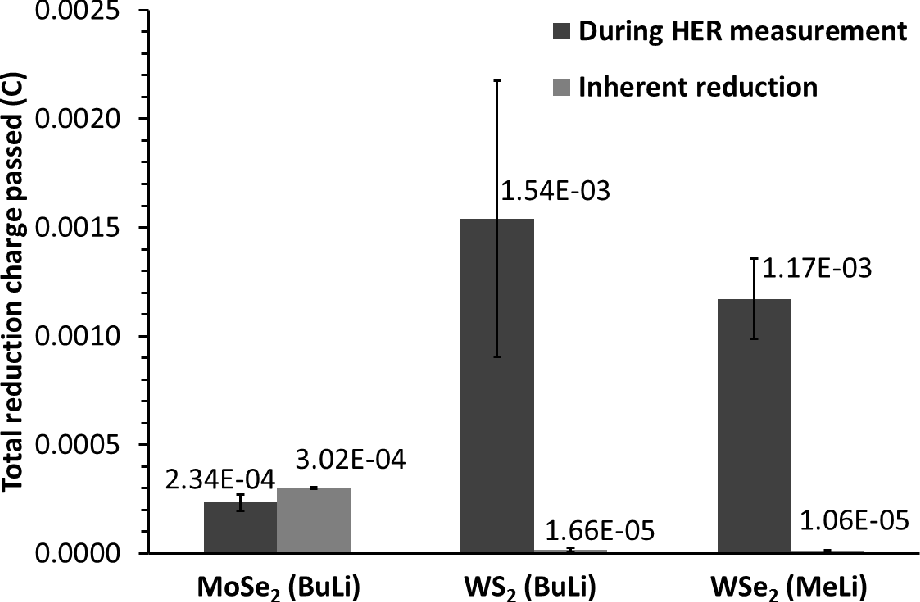
Beyond MoS2 as the first transition metal dichalcogenide (TMD) to have gained recognition as an efficient catalyst for the hydrogen evolution reaction (HER), interest in other TMD nanomaterials is steadily beginning to proliferate. This is particularly true in the field of electrochemistry, with a myriad of emerging applications ranging from catalysis to supercapacitors and solar …

Electrochemistry of Transition Metal Dichalcogenides: Strong Dependence on the Metal-to-Chalcogen Composition and Exfoliation Method Read More »