Keyword Author: transition metal dichalcogenides

Integrated free-standing WS2 3D-printed carbon supercapacitor with solid state electrolyte

There is a huge need for energy storage devices due to the depletion of natural gas and the increasing requirement for portable electronic gadgets. Fused deposition modeling (FDM) 3D-printing has drawn tremendous interest for the fabrication of batteries and supercapacitors (SCs) due to its tabletop manufacturing technique, bespoke design, fast prototyping and user-friendly process. However, …

Integrated free-standing WS2 3D-printed carbon supercapacitor with solid state electrolyte Read More »

Transition metal dichalcogenide-based materials for rechargeable aluminum-ion batteries: A mini-review

Rechargeable aluminum-ion batteries (AIBs) have emerged as a promising candidate for energy storage applications and have been extensively investigated over the past few years. Due to their high theoretical capacity, nature of abundance, and high safety, AIBs can be considered an alternative to lithium-ion batteries. However, the electrochemical performance of AIBs for large-scale applications is …

Transition metal dichalcogenide-based materials for rechargeable aluminum-ion batteries: A mini-review Read More »

Vanadium Dopants: A Boon or a Bane for Molybdenum Dichalcogenides-Based Electrocatalysis Applications

The ever-rising concerns with regards to energy shortages and climate change have made the search for clean and renewable energy sources a pressing priority for the sustainable development of societies. Although, conventional precious metal-based catalysts such as platinum, iridium, and ruthenium are able to efficiently catalyze the conversion of chemical to electrical energy, they are …

Vanadium Dopants: A Boon or a Bane for Molybdenum Dichalcogenides-Based Electrocatalysis Applications Read More »

1T-Phase Tungsten Chalcogenides (WS2, WSe2, WTe2) Decorated with TiO2 Nanoplatelets with Enhanced Electron Transfer Activity for Biosensing Applications

Layered transition metal dichalcogenides (TMDs) have received a great deal of attention due to fact that they have varied band gap, depending on their metal/chalcogen composition and on the crystal structure. Furthermore, these materials demonstrate great potential application in a myriad of electrochemical technologies. Heterogeneous electron transfer (HET) abilities of TMD materials toward redox-active molecules …

1T-Phase Tungsten Chalcogenides (WS2, WSe2, WTe2) Decorated with TiO2 Nanoplatelets with Enhanced Electron Transfer Activity for Biosensing Applications Read More »

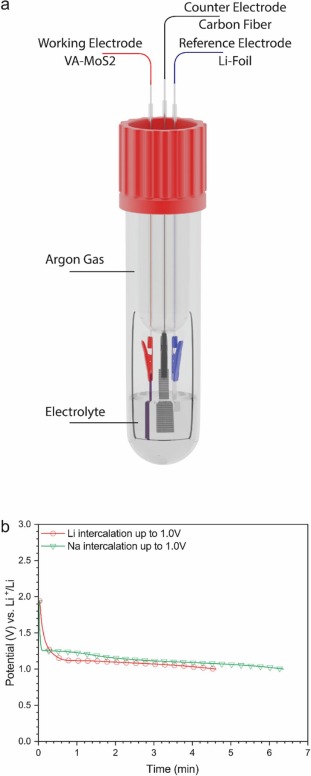
Cation-Controlled Electrocatalytical Activity of Transition-Metal Disulfides

The nanostructured layered transition-metal dichalcogenides are highly promising materials for substitution of platinum metals in electrocatalysis. These layered materials are usually exfoliated with intercalation of Li from organolithium compounds. Alkali metal intercalation leads not only to exfoliation and increased surface area but also, even more importantly, to conversion of naturally occurring 2H (trigonal prismatic) semiconducting …

Cation-Controlled Electrocatalytical Activity of Transition-Metal Disulfides Read More »

Cytotoxicity of Group 5 Transition Metal Ditellurides (MTe2; M=V, Nb, Ta)

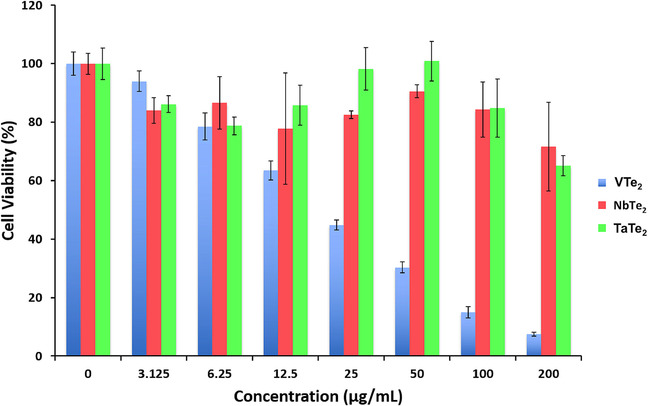
Much research effort has been put in to study layered compounds with transition metal dichalcogenides (TMDs) being one of the most studied compounds. Due to their extraordinary properties such as excellent electrochemical properties, tuneable band gaps, and low shear resistance due to weak van der Waals interactions between layers, TMDs have been found to have …

Cytotoxicity of Group 5 Transition Metal Ditellurides (MTe2; M=V, Nb, Ta) Read More »

Composition-Graded MoWSx Hybrids with Tailored Catalytic Activity by Bipolar Electrochemistry

Among transition metal dichalcogenide (TMD)-based composites, TMD/graphene-related material and bichalcogen TMD composites have been widely studied for application toward energy production via the hydrogen evolution reaction (HER). However, scarcely any literature explored the possibility of bimetallic TMD hybrids as HER electrocatalysts. The use of harmful chemicals and harsh preparation conditions in conventional syntheses also detracts …

Composition-Graded MoWSx Hybrids with Tailored Catalytic Activity by Bipolar Electrochemistry Read More »

Unconventionally Layered CoTe2 and NiTe2 as Electrocatalysts for Hydrogen Evolution

Two members of the transition metal ditelluride family, CoTe2 and NiTe2, exist in multiple structures encompassing marcasite-, pyrite- and CdI2 related structures. The allotrope modification is influenced by weak changes in stoichiometry and synthesis. It is crucial to emphasize that the CdI2 structure type is manifested by NiTe2 while the CoTe2 adopts a related structure …

Unconventionally Layered CoTe2 and NiTe2 as Electrocatalysts for Hydrogen Evolution Read More »

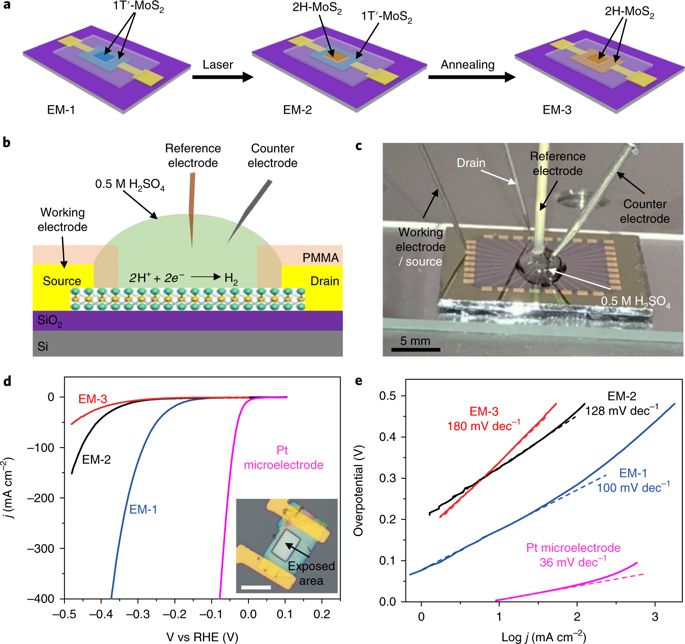
2H -> 1T Phase Change in Direct Synthesis of WS2 Nanosheets via Solution-Based Electrochemical Exfoliation and Their Catalytic Properties

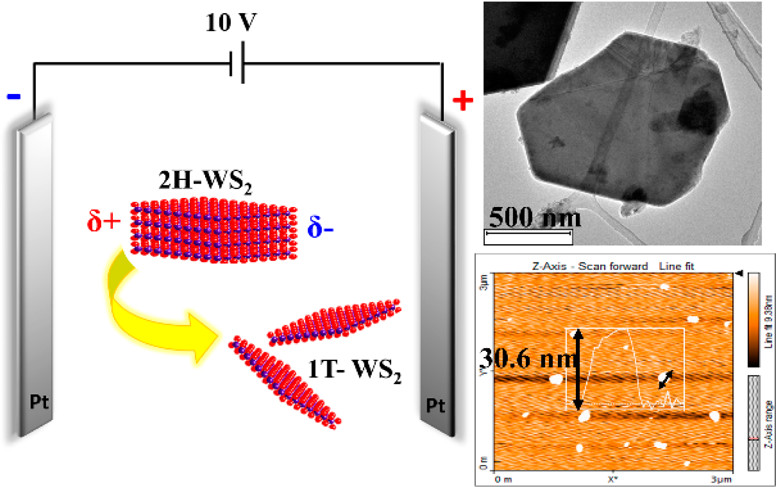
Metallic IT-WS2 has various interesting properties such as increased density of catalytically active sites on both the basal planes and edges as well as metallic conductivity which allows it to be used in applications such as biosensing and energy devices. Hence, it is highly beneficial to develop a simple, efficient, and low-cost synthesis method of …

2H -> 1T Phase Change in Direct Synthesis of WS2 Nanosheets via Solution-Based Electrochemical Exfoliation and Their Catalytic Properties Read More »

Universal Method for Large-Scale Synthesis of Layered Transition Metal Dichalcogenides

The layered transition metal dichalcogenides are currently amongst the most intensively investigated materials. These compounds constitute a broad family of materials, with characteristic layered structures, covering both semiconductors and metallic materials. The great attention arises from the possibility to exfoliate these materials down to single layers with many unique properties, such as thickness dependent band-gap …

Universal Method for Large-Scale Synthesis of Layered Transition Metal Dichalcogenides Read More »

Two-Dimensional 1T-Phase Transition Metal Dichalcogenides as Nanocarriers To Enhance and Stabilize Enzyme Activity for Electrochemical Pesticide Detection

Single or few layers lithium-exfoliated transition metal dichalcogenides (TMDs) are found to exist predominantly in the conducting metallic 1T-polymorph, which makes it desirable for numerous applications due to its large surface area, good electrical conductivity, and enhanced electrocatalytic capabilities. We demonstrated the use of tert-butyllithium exfoliated TMDs (MoS2, MoSe2, WS2, WSe2) as a platform for …

Two-Dimensional 1T-Phase Transition Metal Dichalcogenides as Nanocarriers To Enhance and Stabilize Enzyme Activity for Electrochemical Pesticide Detection Read More »

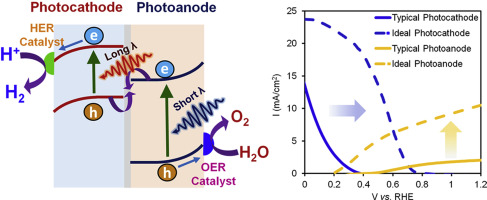
The Origin of MoS2 Significantly Influences Its Performance for the Hydrogen Evolution Reaction due to Differences in Phase Purity

Molybdenum disulfide (MoS2) is at the forefront of materials research. It shows great promise for electrochemical applications, especially for hydrogen evolution reaction (HER) catalysis. There is a significant discrepancy in the literature on the reported catalytic activity for HER catalysis on MoS2. Here we test the electrochemical performance of MoS2 obtained from seven sources and …

The Origin of MoS2 Significantly Influences Its Performance for the Hydrogen Evolution Reaction due to Differences in Phase Purity Read More »

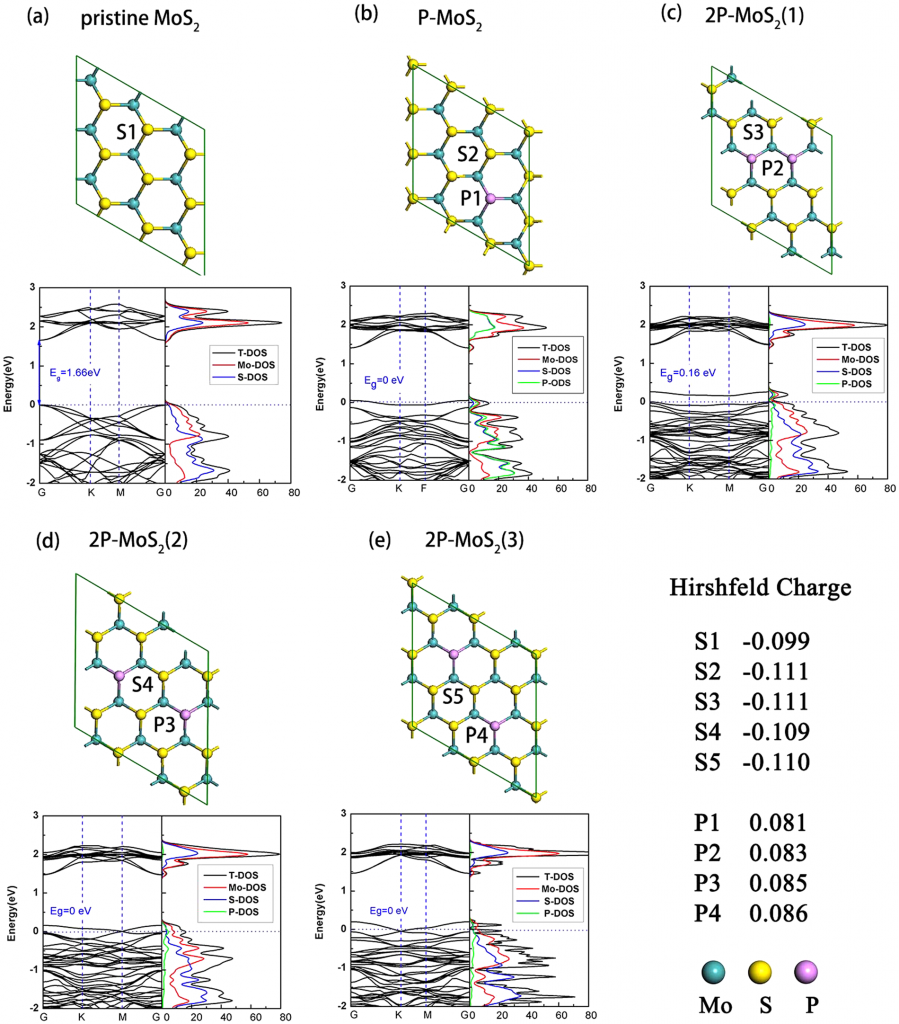
Negative Electrocatalytic Effects of p-Doping Niobium and Tantalum on MoS2 and WS2 for the Hydrogen Evolution Reaction and Oxygen Reduction Reaction

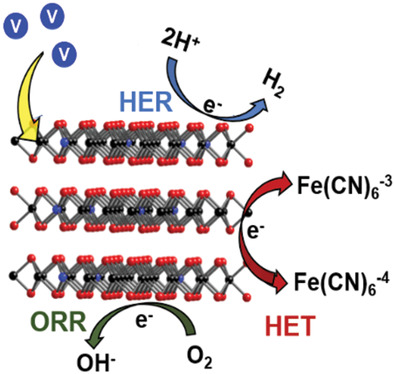
Transition-metal dichalcogenides (TMDs) are at the forefront of research for their promising catalytic abilities and unique materials properties. With great interest in the study of mono- or few-layered TMDs, we seek to fundamentally explore the effects of doping on bulk TMDs, particularly MoS2 and WS2 for the hydrogen evolution reaction (HER) and oxygen reduction reaction …

Negative Electrocatalytic Effects of p-Doping Niobium and Tantalum on MoS2 and WS2 for the Hydrogen Evolution Reaction and Oxygen Reduction Reaction Read More »

Aromatic-Exfoliated Transition Metal Dichalcogenides: Implications for Inherent Electrochemistry and Hydrogen Evolution

In the face of rising energy demand and depleting energy resources, energy sustainability has proven to be a formidable environmental and economic challenge, and the search for environmentally friendly energy sources is exigent. To this end, much research has been focused on improving the efficiency of the hydrogen evolution reaction (HER), which generates hydrogen gas, …

Aromatic-Exfoliated Transition Metal Dichalcogenides: Implications for Inherent Electrochemistry and Hydrogen Evolution Read More »

Bottom-up Electrosynthesis of Highly Active Tungsten Sulfide (WS3-x) Films for Hydrogen Evolution

Transition metal dichalcogenides have been I extensively studied as promising earth-abundant electrocatalysts for hydrogen evolution reaction (HER). However, despite the intention to achieve sustainable energy generation, conventional syntheses typically use environmentally damaging reagents and energy-demanding preparation conditions. Hence, we present electrochemical synthesis as a green and versatile alternative to traditional methods. In this fundamental study, …

Bottom-up Electrosynthesis of Highly Active Tungsten Sulfide (WS3-x) Films for Hydrogen Evolution Read More »

Layered rhenium sulfide on free-standing three-dimensional electrodes is highly catalytic for the hydrogen evolution reaction: Experimental and theoretical study

Hydrogen evolution reaction is the key for clean energy utilization. Recently, molybdenum disulfide (MoS2) was suggested as a replacement for the most efficient catalyst to date for such reaction, which is platinum. We show here that electrodes based on layered rhenium sulfide (ReS2) catalyst show dramatic improvement when compared to MoS2. We have shown by …

Layered rhenium sulfide on free-standing three-dimensional electrodes is highly catalytic for the hydrogen evolution reaction: Experimental and theoretical study Read More »

Transitional Metal/Chalcogen Dependant Interactions of Hairpin DNA with Transition Metal Dichalcogenides, MX2

Owing to the attractive properties that transition metal dichalcogenides (TMDs) display, they have found recent application in the fabrication of biosensing devices. These devices involve the immobilization of a recognition element such as DNA onto the surface of TMDs. Therefore, it is imperative to examine the interactions between TMDs and DNA. Herein, we explore the …

Transitional Metal/Chalcogen Dependant Interactions of Hairpin DNA with Transition Metal Dichalcogenides, MX2 Read More »

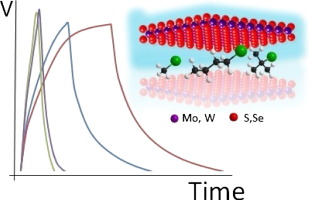
Transition metal dichalcogenides (MoS2, MoSe2, WS2 and WSe2) exfoliation technique has strong influence upon their capacitance

Transition metal dichacogenides (TMD) represent an important class of layered compounds which are gaining lately an enormous interest in electrochemistry. Exfoliation of TMD materials to obtain single to few layer sheets is generally obtained through the intercalation of organolithium compounds. Here we investigated and compared the capacitive behavior of four representative TMD materials, i.e. MoS2, …

Transition metal dichalcogenides (MoS2, MoSe2, WS2 and WSe2) exfoliation technique has strong influence upon their capacitance Read More »

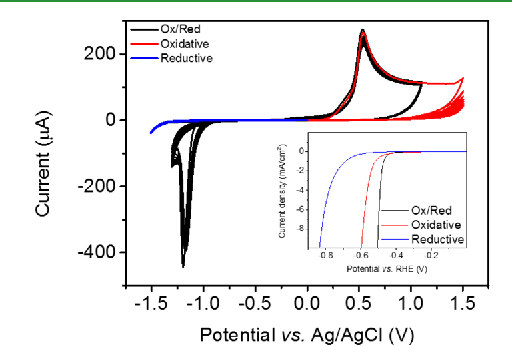
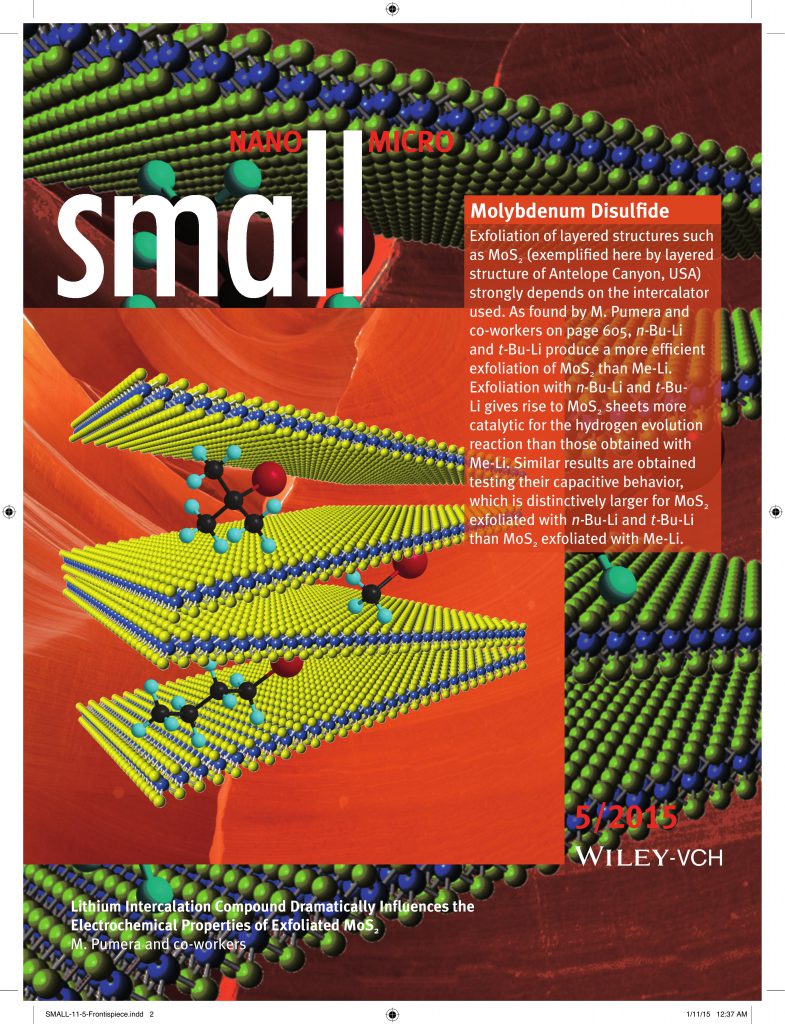
Lithium Intercalation Compound Dramatically Influences the Electrochemical Properties of Exfoliated MoS2

MoS2 and other transition metal dichalcogenides (TMDs) have recently gained a renewed interest due to the interesting electronic, catalytic, and mechanical properties which they possess when down-sized to single or few layer sheets. Exfoliation of the bulk multilayer structure can be achieved by a preliminary chemical Li intercalation followed by the exfoliation due to the …

Lithium Intercalation Compound Dramatically Influences the Electrochemical Properties of Exfoliated MoS2 Read More »

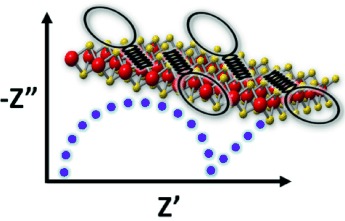
Exfoliated transition metal dichalcogenides (MoS2, MoSe2, WS2, WSe2): An electrochemical impedance spectroscopic investigation

Owing to the enthralling properties which transition metal dichalcogenides present, they are facing immense scientific interest from researchers. Till date, these two-dimensional materials have been assessed for a wide array of different applications and there are various synthetic methods of attaining them in their respective bulk and exfoliated forms. Herein, we explore the effects of …

Exfoliated transition metal dichalcogenides (MoS2, MoSe2, WS2, WSe2): An electrochemical impedance spectroscopic investigation Read More »