Keyword Author: Sensing

Selenium covalently modified graphene: towards gas sensing

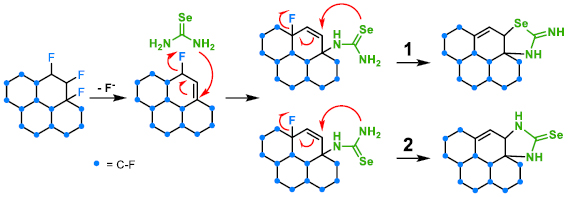
The research in the area of graphene derivatives containing chalcogen elements is currently an exclusive domain of oxygen- and sulfur-containing functional groups. Here we report an effective introduction of selenium-based organic functional groups and propose a mechanism of their attachment to graphene and graphene-related materials. Fluorographene can be effectively functionalized by selenium-containing group, forming C-Se …

Selenium covalently modified graphene: towards gas sensing Read More »
Monoelemental 2D materials-based field effect transistors for sensing and biosensing: Phosphorene, antimonene, arsenene, silicene, and germanene go beyond graphene

Graphene has been of immense interest for its interesting electronic properties, such as being a zeroband gap semiconductor. However, to be able to usefully employ graphene for electronics and electronic-transduction system sensors and biosensors, one needs to open this band gap. This proofs to be challenging on reproducible, scalable way. There are other 2D monoelemental …

Monoelemental 2D materials-based field effect transistors for sensing and biosensing: Phosphorene, antimonene, arsenene, silicene, and germanene go beyond graphene Read More »

Layered transition-metal dichalcogenides (MoS2 and WS2) for sensing and biosensing

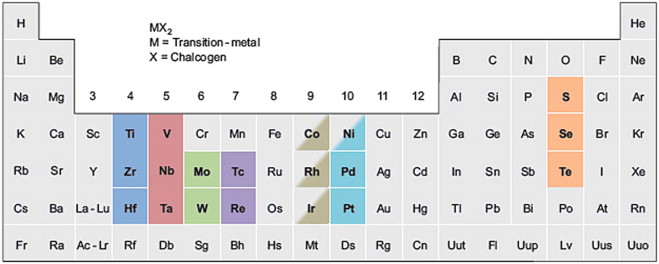
Layered transition-metal dichalcogenides comprise a category of two-dimensional materials that offer exciting properties, including metallic and semi-conducting electrical capabilities, fluorescence and fast heterogeneous electron transfer. To date, these materials have mostly been employed in energy-storage and generation devices. However, in very recent times, there was a significant emerging trend in their utilization in analytical chemistry. …

Layered transition-metal dichalcogenides (MoS2 and WS2) for sensing and biosensing Read More »

Nanorobots: The Ultimate Wireless Self-Propelled Sensing and Actuating Devices

Natural motor proteins, “bionanorobots,” have inspired researchers to develop artificial nanomachines (nanorobots) able to move autonomously by the conversion of chemical to mechanical energy. Such artificial nanorobots are self-propelled by the electrochemical decomposition of the fuel (up to now, hydrogen peroxide). Several approaches have been developed to provide nanorobots with some functionality, such as for …

Nanorobots: The Ultimate Wireless Self-Propelled Sensing and Actuating Devices Read More »

The Electrochemistry of Carbon Nanotubes: Fundamentals and Applications

Carbon nanotubes (CNTs) are in the forefront of electrochemical research. It has become clear that an understanding of the fundamental reasons for the electrochemical activity of CNTs is essential for further progress in the field. This review provides a critical discussion of the fundamental reasons behind the electrochemical and “electrocatalytic” activity of CNTs as well …

The Electrochemistry of Carbon Nanotubes: Fundamentals and Applications Read More »