Keyword Author: self-propulsion

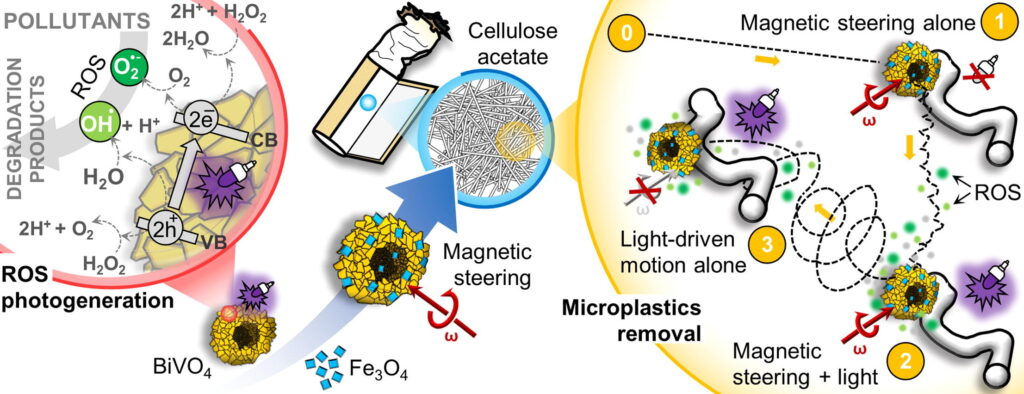
Photocatalysis dramatically influences motion of magnetic microrobots: Application to removal of microplastics and dyes

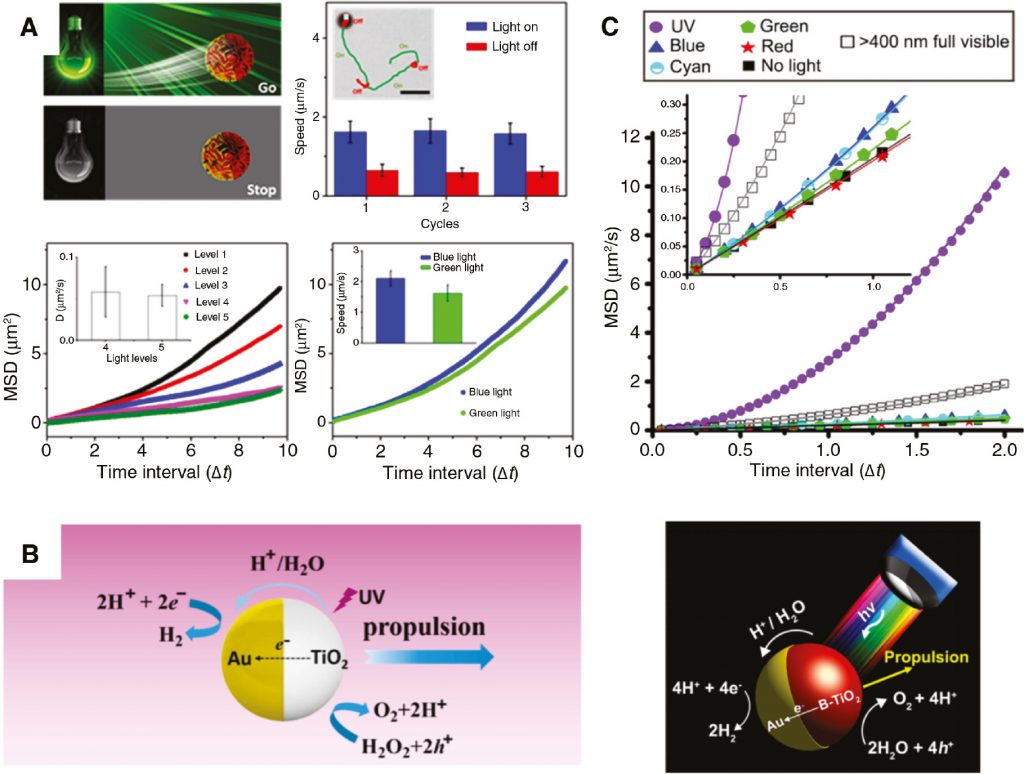
Micromachines gain momentum in the applications for environmental remediation. Magnetic components have been used to functionalize light–responsive micromachines to achieve efficient magnetic microrobots with photodegradation activity for decomposition of environmental pollutants. However, the influence of photocatalyst itself on the trajectory of micromotors in conjunction with magnetic motion was never considered. In this work, light-powered catalysis …
Photocatalysis dramatically influences motion of magnetic microrobots: Application to removal of microplastics and dyes Read More »

Micro/Nanomotors for Water Purification

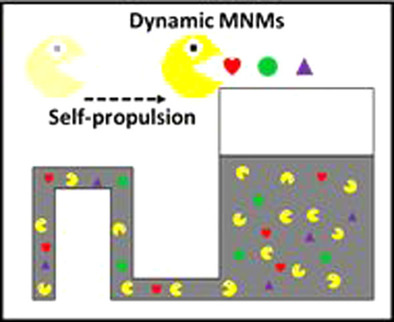
Self-propelled micro/nanomotors are synthetic machines that can convert different sources of energy into motion; at the same time, they are able to serve innovative environmental applications, for example, water purification. The self-propelled micro and nanomachines can rapidly zoom through the solution, carrying catalytic surface or chemical to remove or degrade pollutants in a much faster …

Micro/Nanomotors for Water Purification Read More »

Bjerknes Forces in Motion: Long-Range Translational Motion and Chiral Directionality Switching in Bubble-Propelled Micromotors via an Ultrasonic Pathway

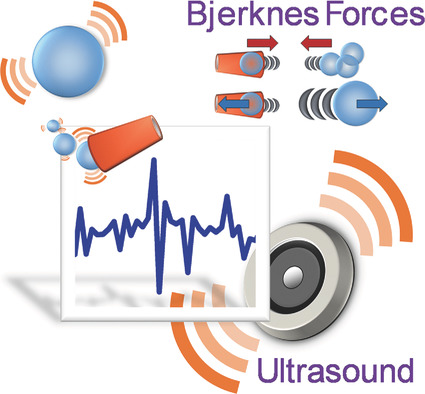
Manipulation of a micromotor’s locomotion has been the ultimate aim of scientists and engineers alike. While numerous roadmaps have been cast, the interswitching of the locomotion and directionality of these miniaturized machines remains elusive. In this report, ultrasound is utilized to produce stop/go motion on bubble-propelled micromotors via Bjerknes forces. An intricate study using high-speed …

Bjerknes Forces in Motion: Long-Range Translational Motion and Chiral Directionality Switching in Bubble-Propelled Micromotors via an Ultrasonic Pathway Read More »

Self-Propelled Micromotors Monitored by Particle-Electrode Impact Voltammetry

Self-propelled micromotors, as the next frontier of smart miniaturized machines, are able to carry out a plethora of tasks and operations. To date, the evaluation of their capabilities and behavior has been carried out by optical microscopy coupled with computationally intensive imaging software. The use of particle-electrode impact voltammetry serves as an alternative means of …

Self-Propelled Micromotors Monitored by Particle-Electrode Impact Voltammetry Read More »

Photochromic Spatiotemporal Control of Bubble-Propelled Micromotors by a Spiropyran Molecular Switch

Controlling the environment in which bubble-propelled micromotors operate represents an attractive strategy to influence their motion, especially when the trigger is as simple as light. We demonstrate that spiropyrans, which isomerize to amphiphilic merocyanines under UV irradiation, can act as molecular switches that drastically affect the locomotion of the micrometer-sized engines. The phototrigger could be …

Photochromic Spatiotemporal Control of Bubble-Propelled Micromotors by a Spiropyran Molecular Switch Read More »

Chemical Energy Powered Nano/Micro/Macromotors and the Environment

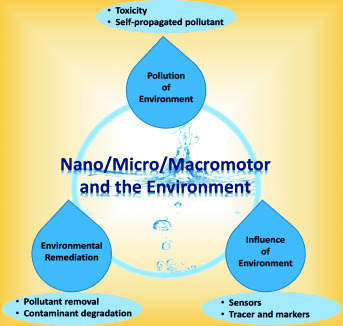
The rise of miniaturized artificial self-powered devices, demonstrating autonomous motion, has brought in new considerations from the environmental perspective. This review addresses the interplay between these nano/micro/macromotors and the environment, recent advances, and their applications in pollution management. Such self-propelled devices are able to actuate chemical energy into mechanical motion in situ, adding another powerful …

Chemical Energy Powered Nano/Micro/Macromotors and the Environment Read More »

External-Energy-Independent Polymer Capsule Motors and Their Cooperative Behaviors

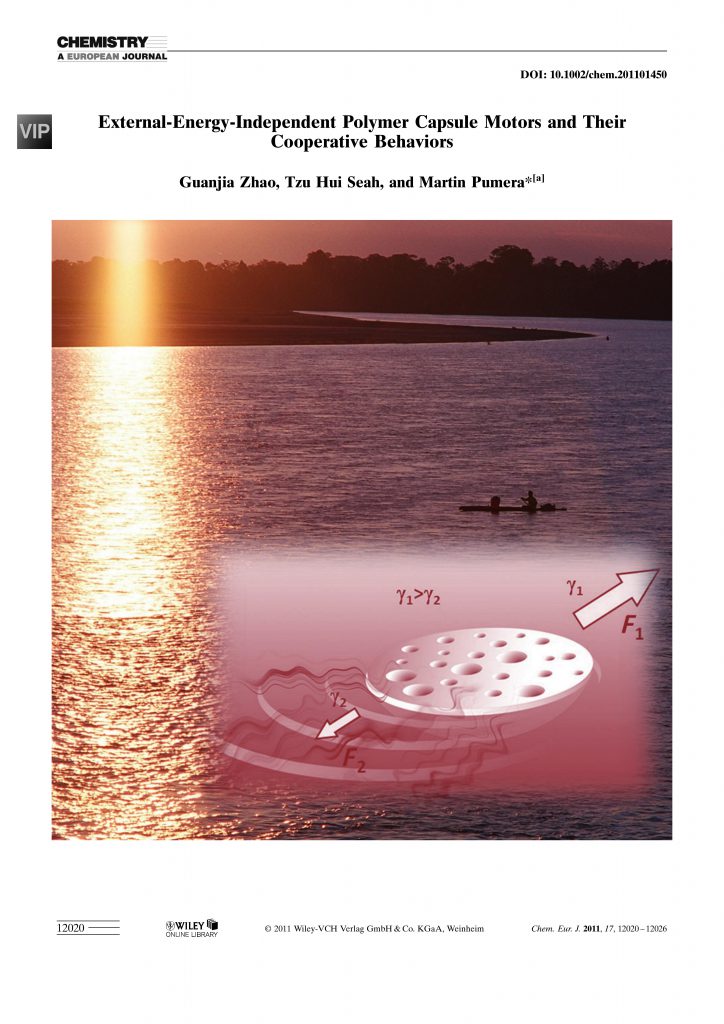
The design and development of mobile nano-, micro-, and millimeter-scale autonomous systems have been perused over several decades. Here, we introduce a millimeter-sized polymer capsule motor with specific features and functionalities. It runs without any external energy sources or the consumption of external fuels such as H2O2 or glucose. The occurrence of motion is due …

External-Energy-Independent Polymer Capsule Motors and Their Cooperative Behaviors Read More »

Nanorobots: The Ultimate Wireless Self-Propelled Sensing and Actuating Devices

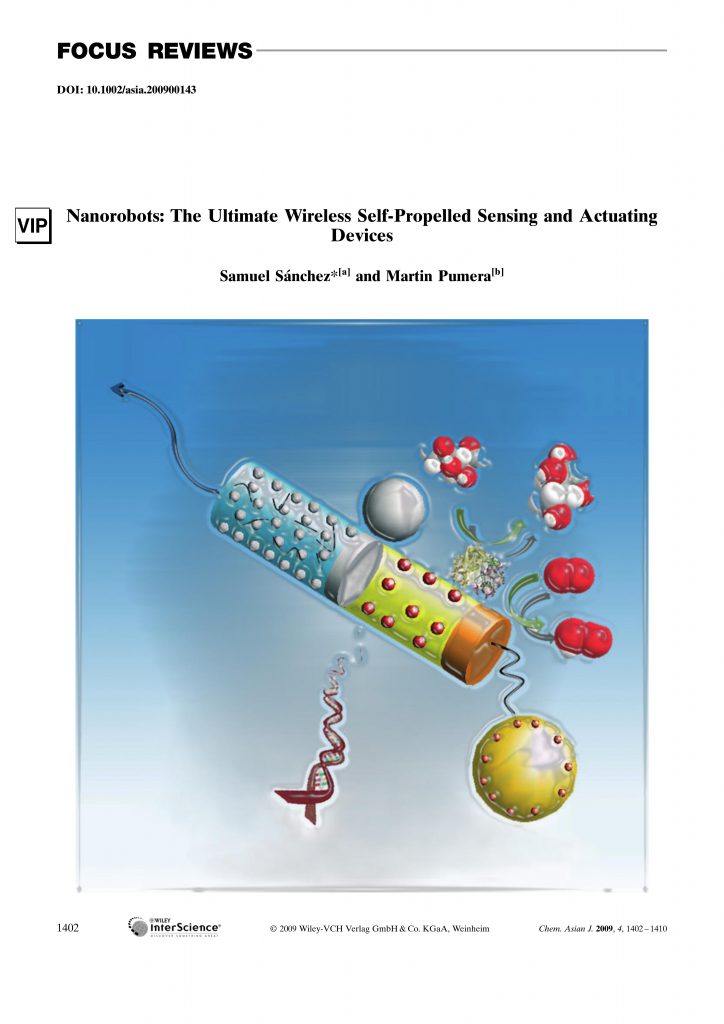
Natural motor proteins, “bionanorobots,” have inspired researchers to develop artificial nanomachines (nanorobots) able to move autonomously by the conversion of chemical to mechanical energy. Such artificial nanorobots are self-propelled by the electrochemical decomposition of the fuel (up to now, hydrogen peroxide). Several approaches have been developed to provide nanorobots with some functionality, such as for …

Nanorobots: The Ultimate Wireless Self-Propelled Sensing and Actuating Devices Read More »