Keyword Author: phosphorene

Cytotoxicity of Shear Exfoliated Pnictogen (As, Sb, Bi) Nanosheets

The experimental achievement of phosphorene, which exhibits superior electronic, physical, and optical properties has spurred recent interest in other Group 15 elemental 2D nanomaterials such as arsenene, antimonene, and bismuthene. These unique and superior properties of the pnictogen nanosheets have spurred intensive research efforts and led to the discovery of their diversified potential applications; for …

Cytotoxicity of Shear Exfoliated Pnictogen (As, Sb, Bi) Nanosheets Read More »

Pnictogen-Based Enzymatic Phenol Biosensors: Phosphorene, Arsenene, Antimonene, and Bismuthene

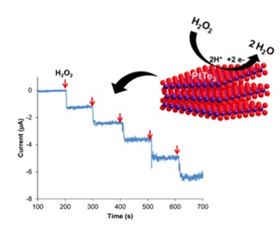
Two-dimensional materials have allowed for great advances in the biosensors field and to obtain sophisticated, smart, and miniaturized devices. In this work, we optimized a highly sensitive and selective phenol biosensor using 2D pnictogens (phosphorene, arsenene, antimonene, and bismuthene) as sensing platforms. Exfoliated pnictogen were obtained by the shear-force method, undergoing delamination and downsizing to …

Pnictogen-Based Enzymatic Phenol Biosensors: Phosphorene, Arsenene, Antimonene, and Bismuthene Read More »

Products of Degradation of Black Phosphorus in Protic Solvents

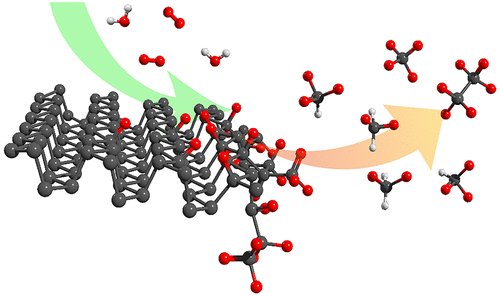
Deterioration of the surface of black phosphorus (BP) caused by ambient atmosphere is an undesired process, limiting broader use of BP in many areas. The mechanism of BP degradation was explained theoretically, and the oxidized materials were thoroughly characterized experimentally. However, the surface analysis techniques introduce only a limited insight into the real state of …

Products of Degradation of Black Phosphorus in Protic Solvents Read More »

Monoelemental 2D materials-based field effect transistors for sensing and biosensing: Phosphorene, antimonene, arsenene, silicene, and germanene go beyond graphene

Graphene has been of immense interest for its interesting electronic properties, such as being a zeroband gap semiconductor. However, to be able to usefully employ graphene for electronics and electronic-transduction system sensors and biosensors, one needs to open this band gap. This proofs to be challenging on reproducible, scalable way. There are other 2D monoelemental …

Monoelemental 2D materials-based field effect transistors for sensing and biosensing: Phosphorene, antimonene, arsenene, silicene, and germanene go beyond graphene Read More »

Electrochemical Exfoliation of Layered Black Phosphorus into Phosphorene

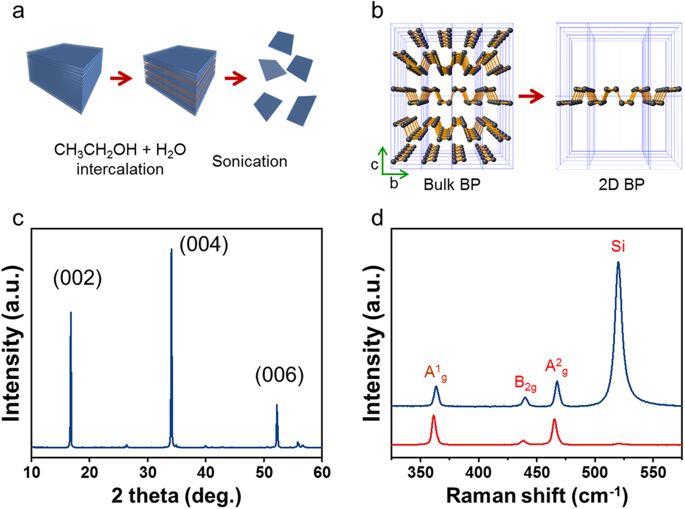
Among 2D materials that recently have attracted enormous interest, black phosphorus (BP) is gaining a rising popularity due to its tunable band-gap structure, which is strongly correlated to the thickness and can enable its use in optoelectronic and electronic applications. It is therefore important to provide a facile and scalable methodology to prepare single or …

Electrochemical Exfoliation of Layered Black Phosphorus into Phosphorene Read More »

Voltammetry of Layered Black Phosphorus: Electrochemistry of Multilayer Phosphorene

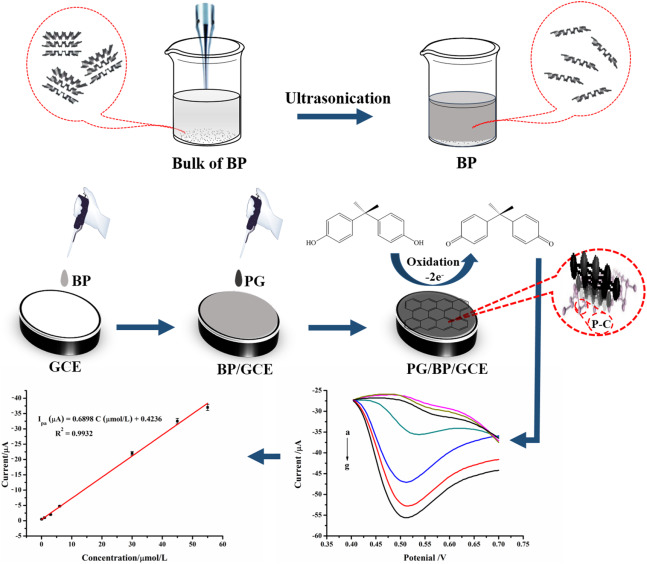
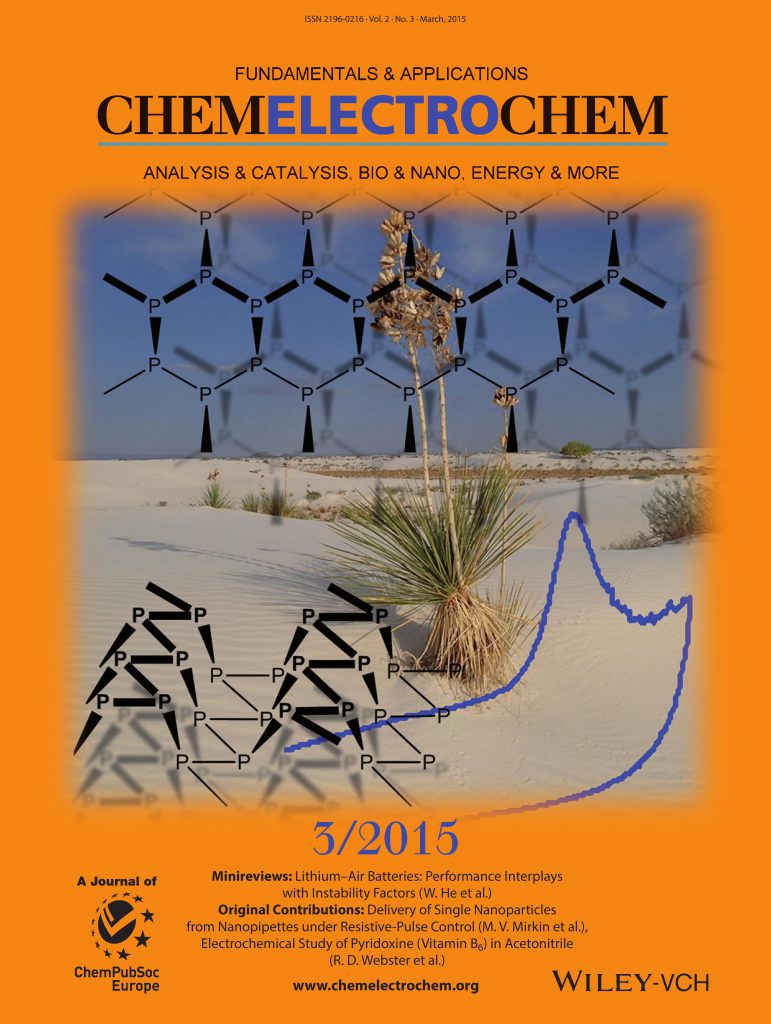
Layered black phosphorus crystals were prepared by the chemical vapor transport method. It is characterized by scanning electron microscopy, energy-dispersive X-ray spectroscopy, X-ray photoelectron spectroscopy and X-ray diffraction. Black phosphorus exhibits inherent electrochemistry in the sense that it is oxidizable similar to 560 mV (vs Ag/AgCl). This study is a first step in the utilization …

Voltammetry of Layered Black Phosphorus: Electrochemistry of Multilayer Phosphorene Read More »