Keyword Author: molybdenum disulfide

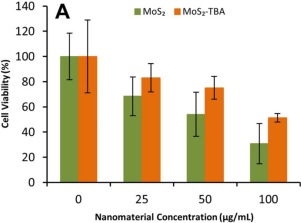
In vitro cytotoxicity of covalently protected layered molybdenum disulfide

Layered molybdenum disulfide (MoS2) is in forefront of materials research. MoS2 has been reported to display various unique electronic, catalytic and sensing properties. Functionalization of MoS2 is common as it can improve biocompatibility, electrochemical behaviour, catalytic performance, and sensing abilities. In this study, a cytotoxicity study of MoS2 functionalized with an organic molecule, thiobarbituric acid …

In vitro cytotoxicity of covalently protected layered molybdenum disulfide Read More »
Tunable Pt-MoSx Hybrid Catalysts for Hydrogen Evolution

Platinum (Pt)-based materials are inevitably among the best-performing electrocatalysts for hydrogen evolution reaction (HER). MoS2 was suggested to be a potent HER catalyst to replace Pt in this reaction by theoretical modeling; however, in practice, this dream remains elusive. Here we show a facile one-pot bottom-up synthesis of Pt-MoSx composites using electrochemical reduction in an …

Tunable Pt-MoSx Hybrid Catalysts for Hydrogen Evolution Read More »

Composition-Graded MoWSx Hybrids with Tailored Catalytic Activity by Bipolar Electrochemistry

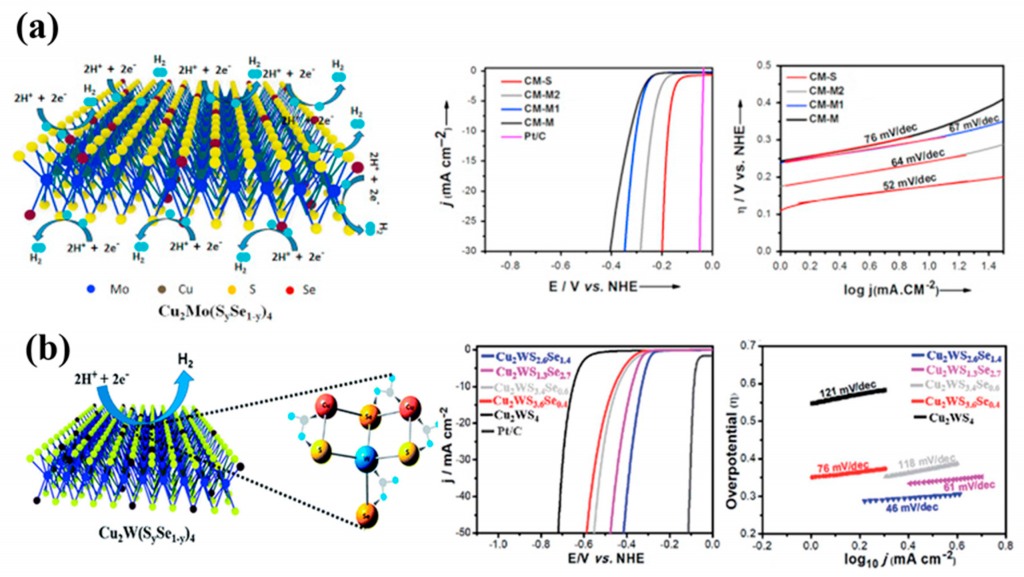
Among transition metal dichalcogenide (TMD)-based composites, TMD/graphene-related material and bichalcogen TMD composites have been widely studied for application toward energy production via the hydrogen evolution reaction (HER). However, scarcely any literature explored the possibility of bimetallic TMD hybrids as HER electrocatalysts. The use of harmful chemicals and harsh preparation conditions in conventional syntheses also detracts …

Composition-Graded MoWSx Hybrids with Tailored Catalytic Activity by Bipolar Electrochemistry Read More »

The Origin of MoS2 Significantly Influences Its Performance for the Hydrogen Evolution Reaction due to Differences in Phase Purity

Molybdenum disulfide (MoS2) is at the forefront of materials research. It shows great promise for electrochemical applications, especially for hydrogen evolution reaction (HER) catalysis. There is a significant discrepancy in the literature on the reported catalytic activity for HER catalysis on MoS2. Here we test the electrochemical performance of MoS2 obtained from seven sources and …

The Origin of MoS2 Significantly Influences Its Performance for the Hydrogen Evolution Reaction due to Differences in Phase Purity Read More »

Lithium Intercalation Compound Dramatically Influences the Electrochemical Properties of Exfoliated MoS2

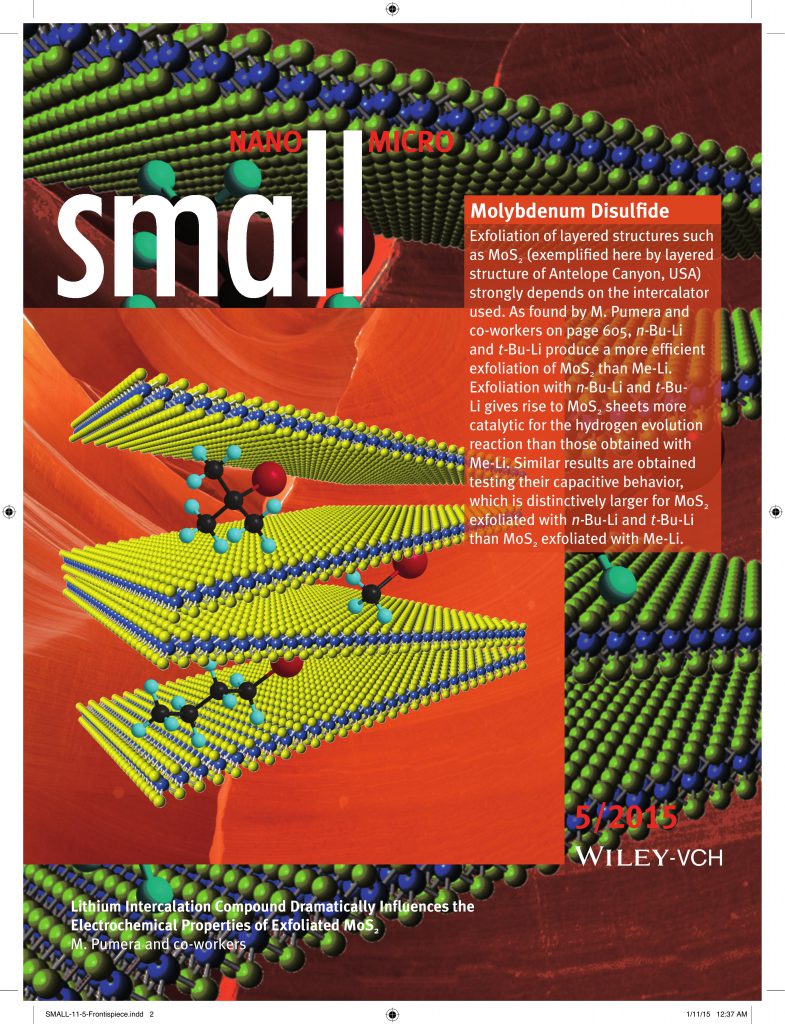
MoS2 and other transition metal dichalcogenides (TMDs) have recently gained a renewed interest due to the interesting electronic, catalytic, and mechanical properties which they possess when down-sized to single or few layer sheets. Exfoliation of the bulk multilayer structure can be achieved by a preliminary chemical Li intercalation followed by the exfoliation due to the …

Lithium Intercalation Compound Dramatically Influences the Electrochemical Properties of Exfoliated MoS2 Read More »

Precise Tuning of the Charge Transfer Kinetics and Catalytic Properties of MoS2 Materials via Electrochemical Methods

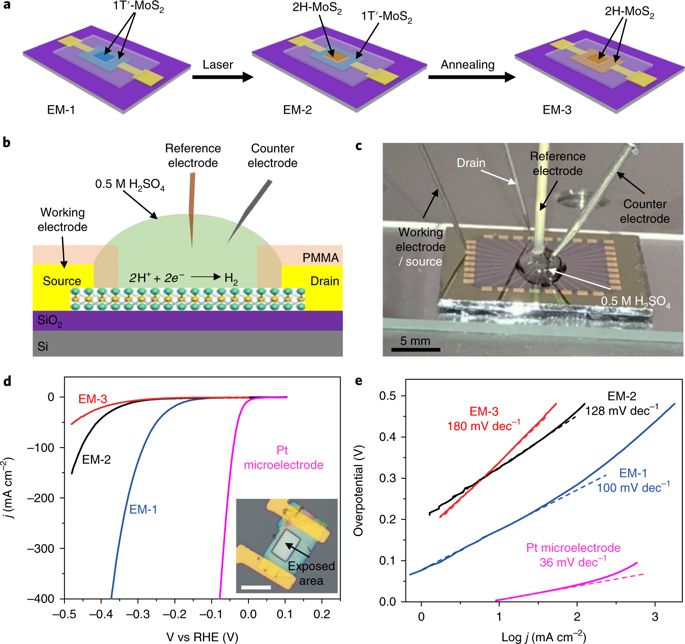
MoS2 has become particularly popular for its catalytic properties towards the hydrogen evolution reaction (HER). It has been shown that the metallic 1T phase of MoS2, obtained by chemical exfoliation after lithium intercalation, possesses enhanced catalytic activity over the semiconducting 2H phase due to the improved conductivity properties which facilitate charge-transfer kinetics. Here we demonstrate …

Precise Tuning of the Charge Transfer Kinetics and Catalytic Properties of MoS2 Materials via Electrochemical Methods Read More »