Keyword Author: microrobots

Microrobots for Antibiotic-Resistant Staphylococcus aureus Skin Colony Eradication

Self-propelled nano- and micromachines have immense potential as autonomous seek-and-act devices in biomedical applications. In this study, we present microrobots constructed with inherently biocompatible materials and propulsion systems tailored to skin-related applications. Addressing the significant treatment challenge posed by methicillin-resistant Staphylococcus aureus (MRSA) skin infections, we demonstrate that photocatalytic titanium dioxide microrobots decorated with silver …

Microrobots for Antibiotic-Resistant Staphylococcus aureus Skin Colony Eradication Read More »
Active Microrobots for Dual Removal of Biofilms via Chemical and Physical Mechanisms

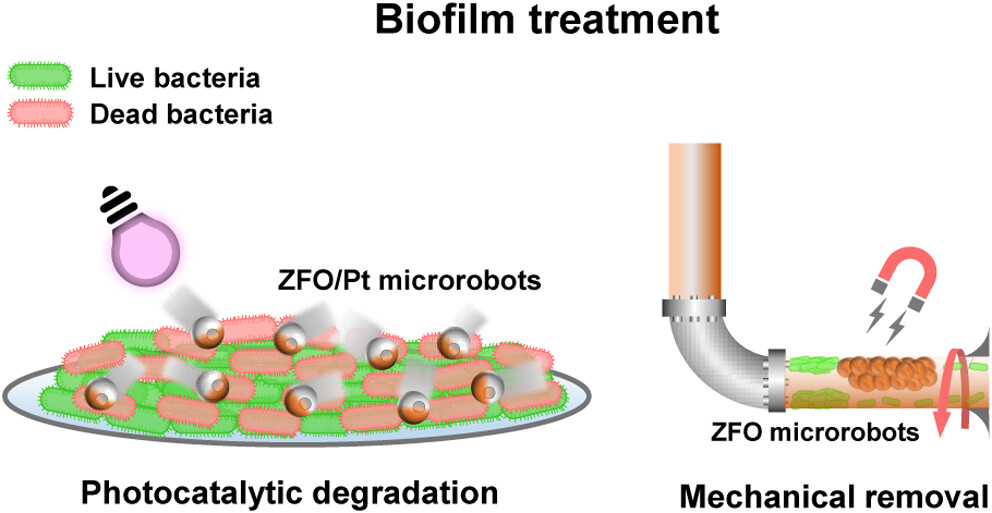
Bacterial biofilms are complex multicellular communities that adhere firmly to solid surfaces. They are widely recognized as major threats to human health, contributing to issues such as persistent infections on medical implants and severe contamination in drinking water systems. As a potential treatment for biofilms, this work proposes two strategies: (i) light-driven ZnFe2O4 (ZFO)/Pt microrobots …

Active Microrobots for Dual Removal of Biofilms via Chemical and Physical Mechanisms Read More »

Active Quantum Biomaterials-Enhanced Microrobots for Food Safety

Timely disruptive tools for the detection of pathogens in foods are needed to face global health and economic challenges. Herein, the utilization of quantum biomaterials-enhanced microrobots (QBEMRs) as autonomous mobile sensors designed for the precise detection of endotoxins originating from Salmonella enterica (S. enterica) as an indicator species for food-borne contamination globally is presented. A …

Active Quantum Biomaterials-Enhanced Microrobots for Food Safety Read More »

Microrobots Enhancing Synthetic Chemistry Reactions in Non-Aqueous Media

Catalysis is a foundational pillar of modern synthetic chemistry, essential for countless industrial processes. Traditional catalysts are often static, either immobilized or dispersed in fluid media. The innovative concept of catalytic microrobots allows the introduction of self-propelled and navigable catalyst particles that are engineered for dynamic and customizable catalysis. Catalytic microrobots are microscale devices with …

Microrobots Enhancing Synthetic Chemistry Reactions in Non-Aqueous Media Read More »

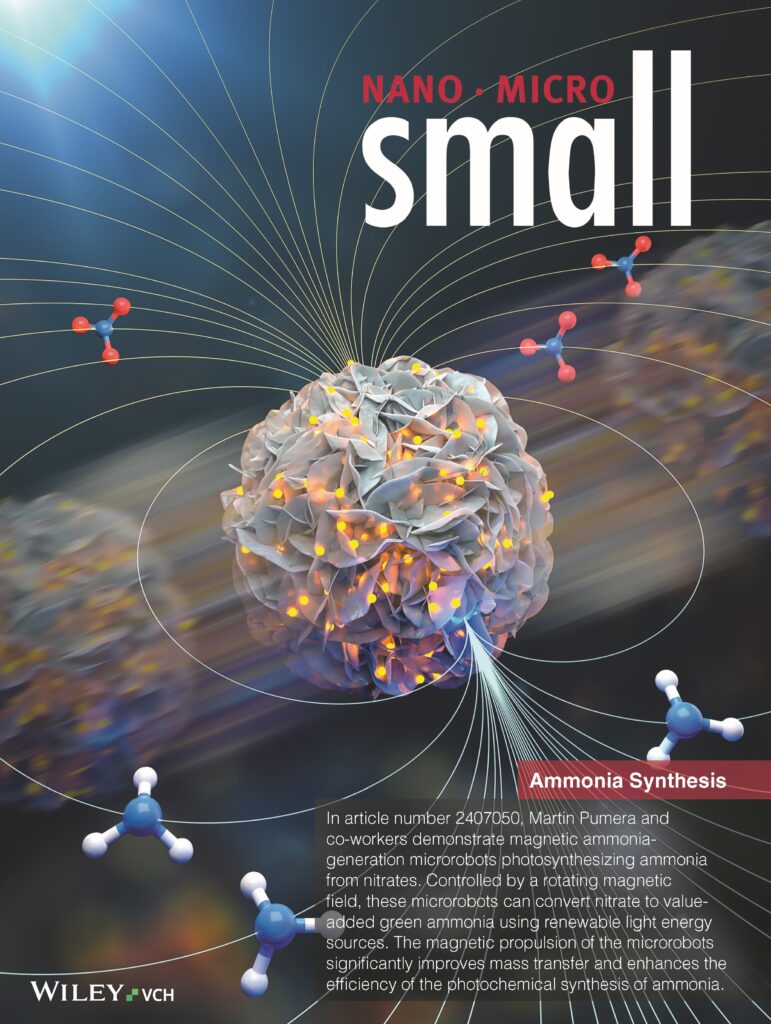
Magnetically Propelled Microrobots toward Photosynthesis of Green Ammonia from Nitrates

Ammonia (NH₃) production is a critical industrial process, as ammonia is a key component in fertilizers, essential for global agriculture and food production. However, the current method of synthesizing ammonia, the Haber-Bosch process, is highly energy-intensive, and relies on fossil fuels, contributing substantially to greenhouse gas emissions. Moreover, the centralized nature of the Haber-Bosch process …

Magnetically Propelled Microrobots toward Photosynthesis of Green Ammonia from Nitrates Read More »

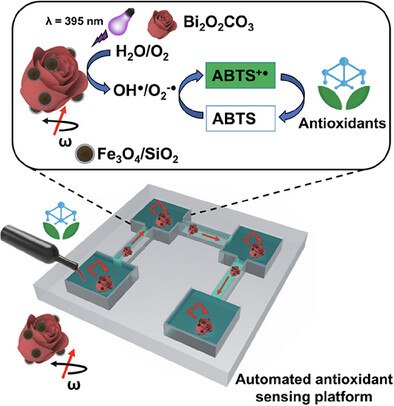
High-throughput Photoactive Magnetic Microrobots for Food Quality Control

Ensuring food quality and safety according to stringent global standards requires analytical procedures that are accurate, cost-effective, and efficient. This present innovative high-throughput microrobots designed for the detection of antioxidants in food samples. These microrobots consist of photocatalytic bismuth subcarbonate anchored on silica-coated magnetite nanoparticles. Upon exposure to UV light, they generate reactive oxygen species …

High-throughput Photoactive Magnetic Microrobots for Food Quality Control Read More »

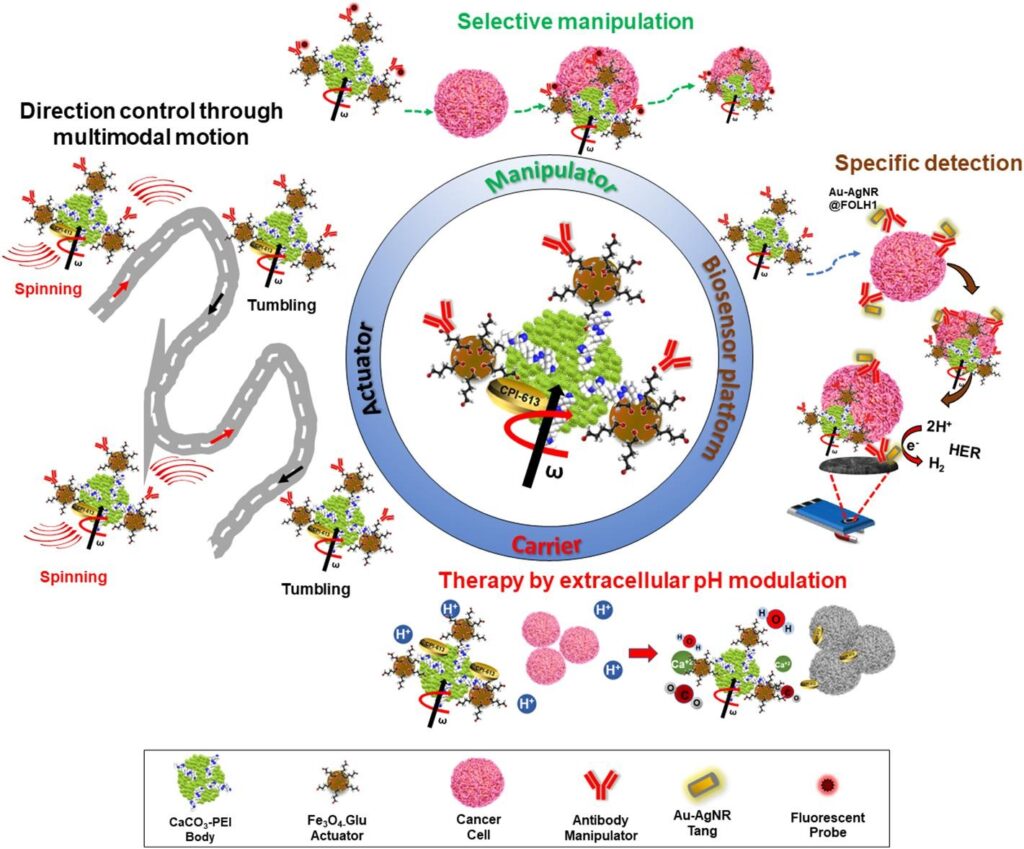
Programming self-assembling magnetic microrobots with multiple physical and chemical intelligence

Medical microrobots represent the cutting-edge of biomedical research, showcasing their potential as versatile tools. They exhibit promise in acting as carriers for cancer cell therapy, effectively delivering drugs, and as manipulators equipped for biosensing, offering mobility and adaptability. Despite these advancements, the intricate challenge of creating a microrobot that seamlessly integrates various physical and chemical …

Programming self-assembling magnetic microrobots with multiple physical and chemical intelligence Read More »

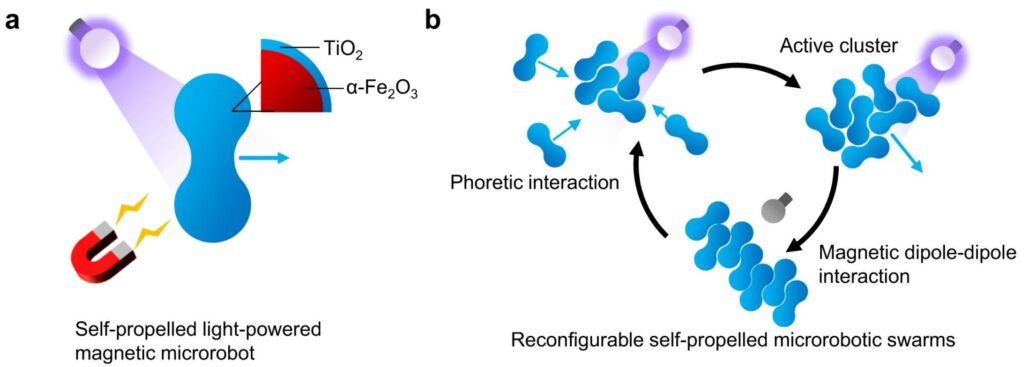
Reconfigurable self-assembly of photocatalytic magnetic microrobots for water purification

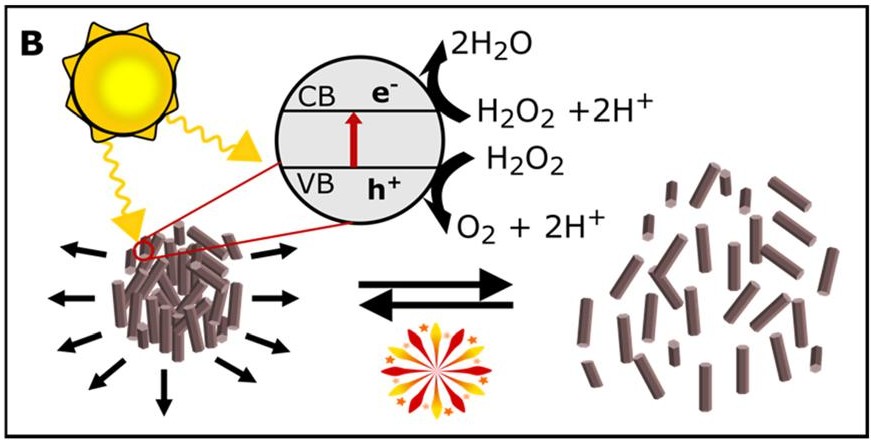
The development of artificial small-scale robotic swarms with nature-mimicking collective behaviors represents the frontier of research in robotics. While microrobot swarming under magnetic manipulation has been extensively explored, light-induced self-organization of micro- and nanorobots is still challenging. This study demonstrates the interaction-controlled, reconfigurable, reversible, and active self-assembly of TiO2/α-Fe2O3 microrobots, consisting of peanut-shaped α-Fe2O3 (hematite) …

Reconfigurable self-assembly of photocatalytic magnetic microrobots for water purification Read More »

Light-powered swarming phoretic antimony chalcogenide-based microrobots with “on-the-fly” photodegradation abilities

Microrobots are at the forefront of research for biomedical and environmental applications. Whereas a single microrobot exhibits quite low performance in the large-scale environment, swarms of microrobots are representing a powerful tool in biomedical and environmental applications. Here, we fabricated phoretic Sb2S3-based microrobots that exhibited swarming behavior under light illumination without any addition of chemical …

Light-powered swarming phoretic antimony chalcogenide-based microrobots with “on-the-fly” photodegradation abilities Read More »

Light-Powered Self-Adaptive Mesostructured Microrobots for Simultaneous Microplastics Trapping and Fragmentation via in situ Surface Morphing

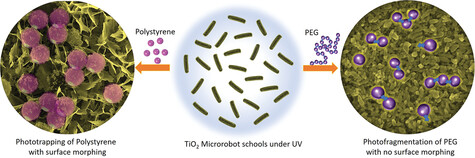
Microplastics, which comprise one of the omnipresent threats to human health, are diverse in shape and composition. Their negative impacts on human and ecosystem health provide ample incentive to design and execute strategies to trap and degrade diversely structured microplastics, especially from water. This work demonstrates the fabrication of single-component TiO2 superstructured microrobots to photo-trap …

Light-Powered Self-Adaptive Mesostructured Microrobots for Simultaneous Microplastics Trapping and Fragmentation via in situ Surface Morphing Read More »

In vivo applications of micro/nanorobots

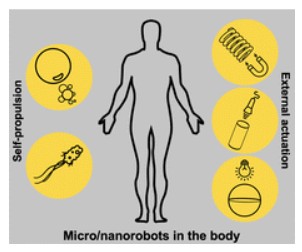
Untethered robots in the size range of micro/nano-scale offer unprecedented access to hard-to-reach areas of the body. In these challenging environments, autonomous task completion capabilities of micro/nanorobots have been the subject of research in recent years. However, most of the studies have presented preliminary in vitro results that can significantly differ under in vivo settings. …

In vivo applications of micro/nanorobots Read More »

Photocatalysis dramatically influences motion of magnetic microrobots: Application to removal of microplastics and dyes

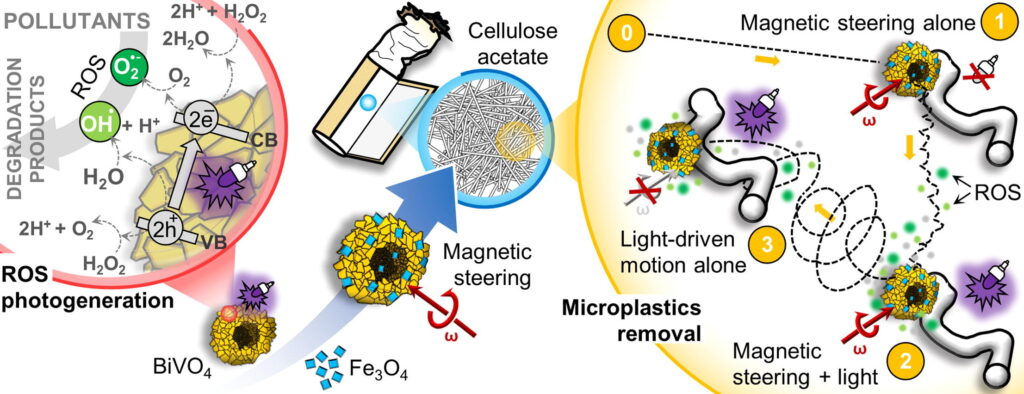
Micromachines gain momentum in the applications for environmental remediation. Magnetic components have been used to functionalize light–responsive micromachines to achieve efficient magnetic microrobots with photodegradation activity for decomposition of environmental pollutants. However, the influence of photocatalyst itself on the trajectory of micromotors in conjunction with magnetic motion was never considered. In this work, light-powered catalysis …

Photocatalysis dramatically influences motion of magnetic microrobots: Application to removal of microplastics and dyes Read More »

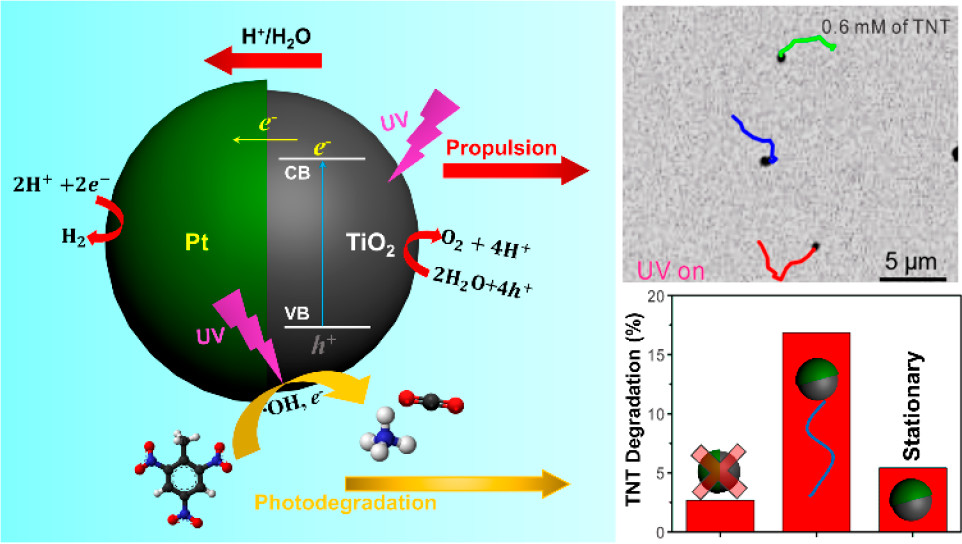
Fuel-Free Light-Powered TiO2/Pt Janus Micromotors for Enhanced Nitroaromatic Explosives Degradation

Nitroaromatic explosives such as 2,4,6-trinitrotoluene (2,4,6-TNT) and 2,4-dinitrotoluene (2,4-DNT) are two common nitroaromatic compounds in ammunition. Their leakage leads to serious environmental pollution and threatens human health. It is important to remove or decompose them rapidly and efficiently. In this work, we present that light-powered TiO2/Pt Janus micromotors have high efficiency for the “on-the-fly” photocatalytic …

Fuel-Free Light-Powered TiO2/Pt Janus Micromotors for Enhanced Nitroaromatic Explosives Degradation Read More »