Keyword Author: metallic impurities

Ultrapure Graphene Is a Poor Electrocatalyst: Definitive Proof of the Key Role of Metallic Impurities in Graphene-Based Electrocatalysis

Graphene and its derivatives have been reported in many articles as “metal-free” carbon electrocatalytic materials. Its synthesis procedures are generally based on the chemical oxidation of graphite and subsequent thermal or chemical reduction. Because graphene oxide has a large surface area and typically contains a variety of oxygen functionalities, metallic ions (impurities) from reaction mixtures …
Ultrapure Graphene Is a Poor Electrocatalyst: Definitive Proof of the Key Role of Metallic Impurities in Graphene-Based Electrocatalysis Read More »

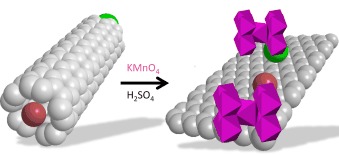
So-Called “Metal-Free” Oxygen Reduction at Graphene Nanoribbons is in fact Metal Driven

The oxygen reduction reaction (ORR) is of key importance in the field of electrochemical energy production. Remarkable catalytic properties of metal-free graphene nanoribbons towards the ORR were suggested in previous reports. Herein, we show that the electrocatalytic properties of an undoped supposedly metal-free graphene nanoribbon towards the ORR is actually caused by metallic impurities within …

So-Called “Metal-Free” Oxygen Reduction at Graphene Nanoribbons is in fact Metal Driven Read More »

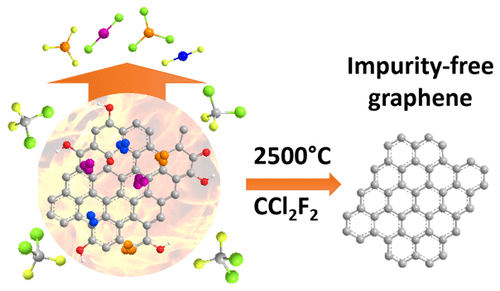
Transition Metal-Depleted Graphenes for Electrochemical Applications via Reduction of CO2 by Lithium

Graphene has immense potential for future applications in the electrochemical field, such as in supercapacitors, fuel cells, batteries, or sensors. Graphene materials for such applications are typically fabricated through a top-down approach towards oxidation of graphite to graphite oxide, with consequent exfoliation/reduction to yield reduced graphenes. Such a method allows the manufacture of graphenes in …

Transition Metal-Depleted Graphenes for Electrochemical Applications via Reduction of CO2 by Lithium Read More »

Regulatory Peptides Are Susceptible to Oxidation by Metallic Impurities within Carbon Nanotubes

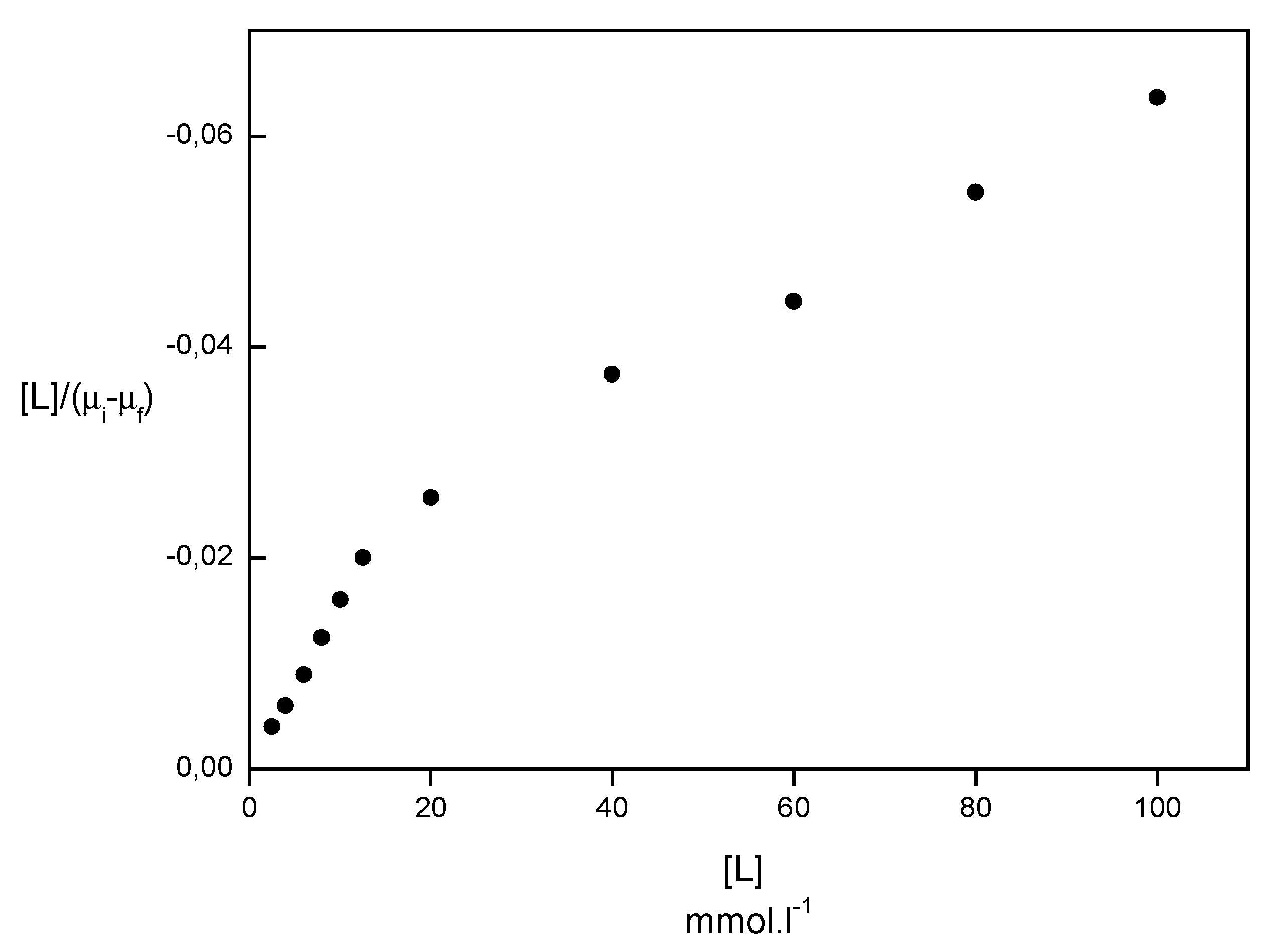
In this article, we show that the redox properties of the regulatory peptide L-glutathione are affected by the presence of nickel oxide impurities within single-walled carbon nanotubes (SWCNTs). Glutathione is a powerful antioxidant that protects cells from oxidative stress by removing free radicals and peroxides. We show that the L-cysteine moiety in L-glutathione is responsible …

Regulatory Peptides Are Susceptible to Oxidation by Metallic Impurities within Carbon Nanotubes Read More »