Keyword Author: Fluorescence

Active Quantum Biomaterials-Enhanced Microrobots for Food Safety

Timely disruptive tools for the detection of pathogens in foods are needed to face global health and economic challenges. Herein, the utilization of quantum biomaterials-enhanced microrobots (QBEMRs) as autonomous mobile sensors designed for the precise detection of endotoxins originating from Salmonella enterica (S. enterica) as an indicator species for food-borne contamination globally is presented. A …

Active Quantum Biomaterials-Enhanced Microrobots for Food Safety Read More »
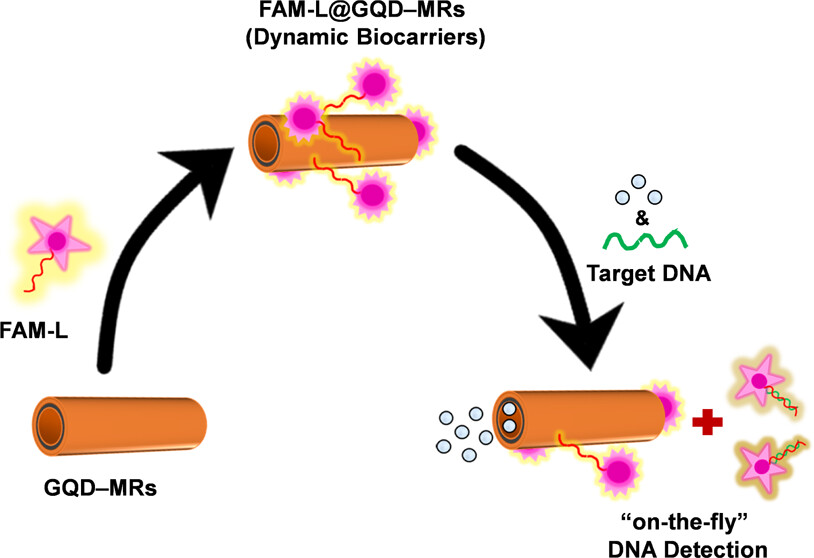
Quantum Material-Based Self-Propelled Microrobots for the Optical “On-the-Fly” Monitoring of DNA

Quantum dot-based materials have been found to be excellent platforms for biosensing and bioimaging applications. Herein, self-propelled microrobots made of graphene quantum dots (GQD–MRs) have been synthesized and explored as unconventional dynamic biocarriers toward the optical “on-the-fly” monitoring of DNA. As a first demonstration of applicability, GQD–MRs have been first biofunctionalized with a DNA biomarker …

Quantum Material-Based Self-Propelled Microrobots for the Optical “On-the-Fly” Monitoring of DNA Read More »

Phosphorene and black phosphorus for sensing and biosensing

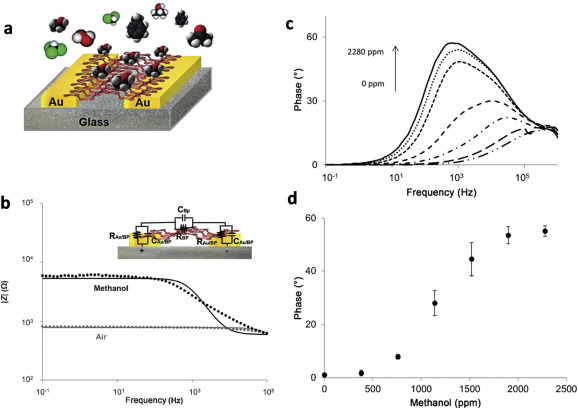
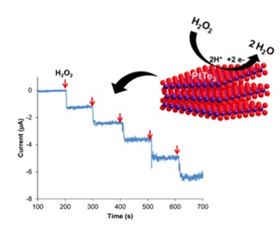
Two dimensional (2D) materials exhibit highly useful materials properties. Graphene, single sheet transition metals dichalcogenides found plethora applications in various fields, including analytical chemistry. Layered black phosphorus and its single sheet variation (phosphorene) became popular material very recently due to its monoelemental composition, biocompatibility, electrochemical properties, tunable bandgap and resulting optical properties. Here we describe …

Phosphorene and black phosphorus for sensing and biosensing Read More »

Synthesis of Carboxylated-Graphenes by the Kolbe-Schmitt Process

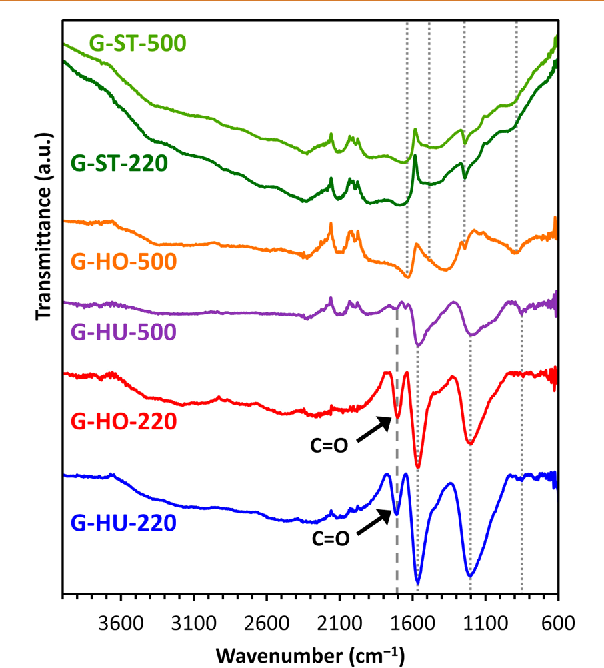
Graphene oxide is an oxidized form of graphene containing a large variety of oxygen groups. Although past models have suggested carboxylic acids to be present in significant amounts, recent evidence has shown otherwise. Toward the production of carboxyl-graphene, a synthetic method is presented herein based on the Kolbe- Schmitt process. A modified procedure of heating …

Synthesis of Carboxylated-Graphenes by the Kolbe-Schmitt Process Read More »

Carboxylic Carbon Quantum Dots as a Fluorescent Sensing Platform for DNA Detection

The demand for simple, sensitive, affordable, and selective DNA biosensors is ubiquitous, due to the important role that DNA detection performs in the areas of disease diagnostics, environment monitoring, and food safety. A novel application of carboxylic carbon quantum dots (cCQD) is highlighted in this study. Herein, cCQD function as a nanoquencher in the detection …

Carboxylic Carbon Quantum Dots as a Fluorescent Sensing Platform for DNA Detection Read More »

Layered transition-metal dichalcogenides (MoS2 and WS2) for sensing and biosensing

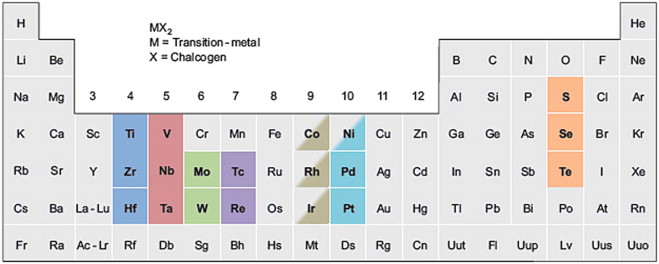
Layered transition-metal dichalcogenides comprise a category of two-dimensional materials that offer exciting properties, including metallic and semi-conducting electrical capabilities, fluorescence and fast heterogeneous electron transfer. To date, these materials have mostly been employed in energy-storage and generation devices. However, in very recent times, there was a significant emerging trend in their utilization in analytical chemistry. …

Layered transition-metal dichalcogenides (MoS2 and WS2) for sensing and biosensing Read More »