Keyword Author: electrodes

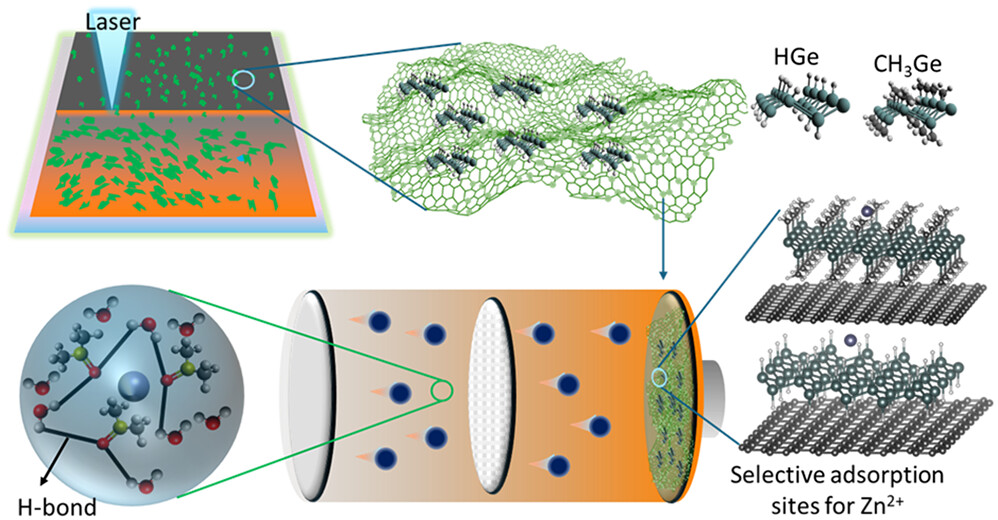
Laser-Processed 2D Germanane on Graphene for Organohydrogel-Based Zinc-Ion Hybrid Capacitors

Group 14 monoelemental two-dimensional (2D) materials beyond graphene, such as silicene and germanene, have gained significant attention in the scientific community. Covalent functionalization of germanene with hydrogen and methyl leads to germanane (hydrogen/methyl-terminated germanene; HGe/MGe). While the optical and electronic properties of HGe and MGe were explored previously, there is no report on their zinc …
Laser-Processed 2D Germanane on Graphene for Organohydrogel-Based Zinc-Ion Hybrid Capacitors Read More »

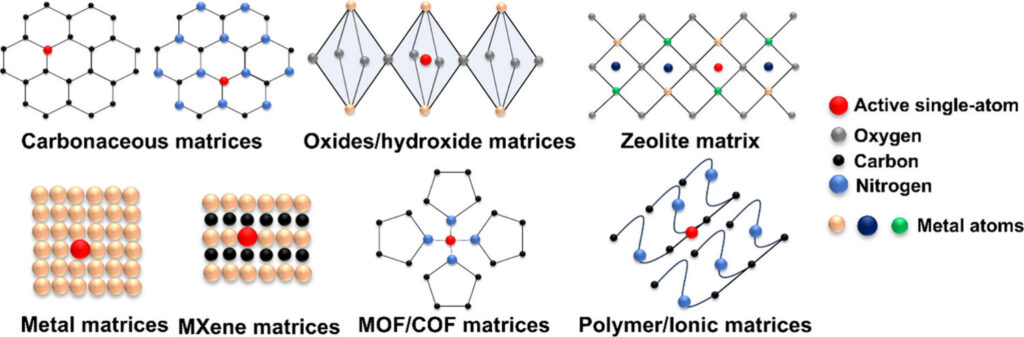
Single-Atom Engineering in Room-Temperature Sodium–Sulfur Batteries

Single-atom engineering stands out as one of the most promising solutions for elevating room-temperature Na−S battery technology to meet industrial demands. Integrating atomic-scale design, electronic structure engineering, and system-level optimization can pave the way for a new generation of high-performance, cost-effective, and durable sodium−sulfur batteries. Continued interdisciplinary collaboration spanning theoretical modeling, advanced materials synthesis, and …

Single-Atom Engineering in Room-Temperature Sodium–Sulfur Batteries Read More »

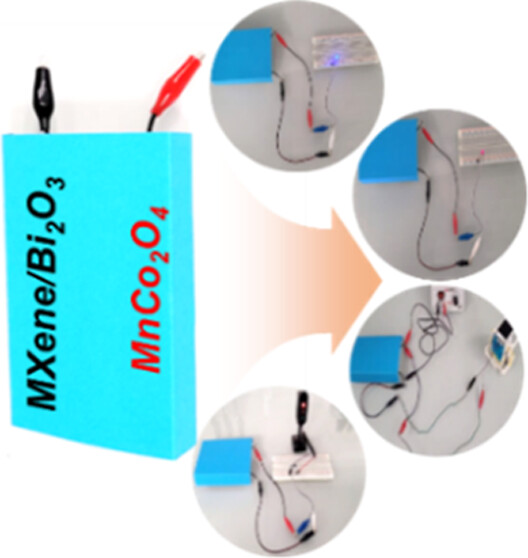
Integrated health monitoring system with flexible asymmetric supercapacitors based on 2D Ti₃C₂ MXene and transitional metal oxides

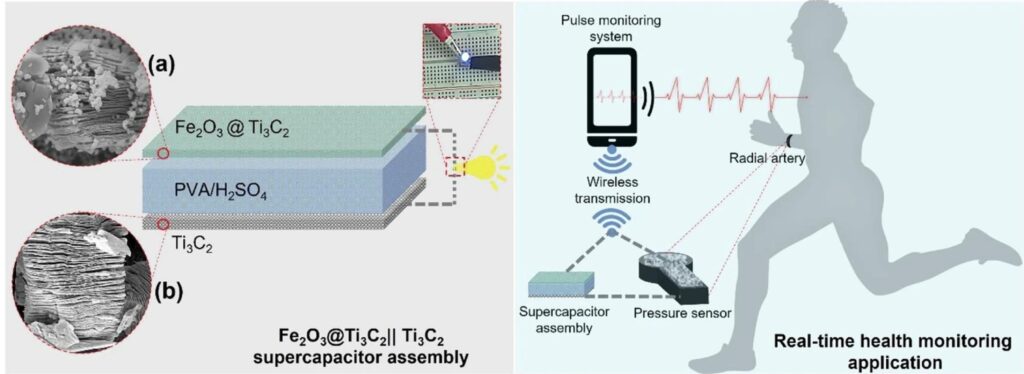
Developing flexible, lightweight, and portable medical devices for continuous health monitoring requires compact and sustainable energy storage solutions. Traditional devices often rely on bulky wired equipment or battery-powered systems requiring frequent recharging, limiting practicality. We developed a flexible and stable asymmetric supercapacitor using MXene and transition metal oxide nanocomposite. In half cells, the electrolyte was …

Integrated health monitoring system with flexible asymmetric supercapacitors based on 2D Ti₃C₂ MXene and transitional metal oxides Read More »

MXene/Bi2O3 Nanocomposites as Supercapacitors for Portable Electronic Devices

2D MXene nanosheets often encounter challenges such as aggregation and restacking, which can significantly decrease their performance in supercapacitor applications. Herein, we prepared the Bi2O3 nanoflowers decorated MXene electrode via the coprecipitation method. The insertion of Bi2O3 nanoflowers over the MXene nanosheet not only effectively resolves the restacking challenge of the MXene nanosheet but also …

MXene/Bi2O3 Nanocomposites as Supercapacitors for Portable Electronic Devices Read More »

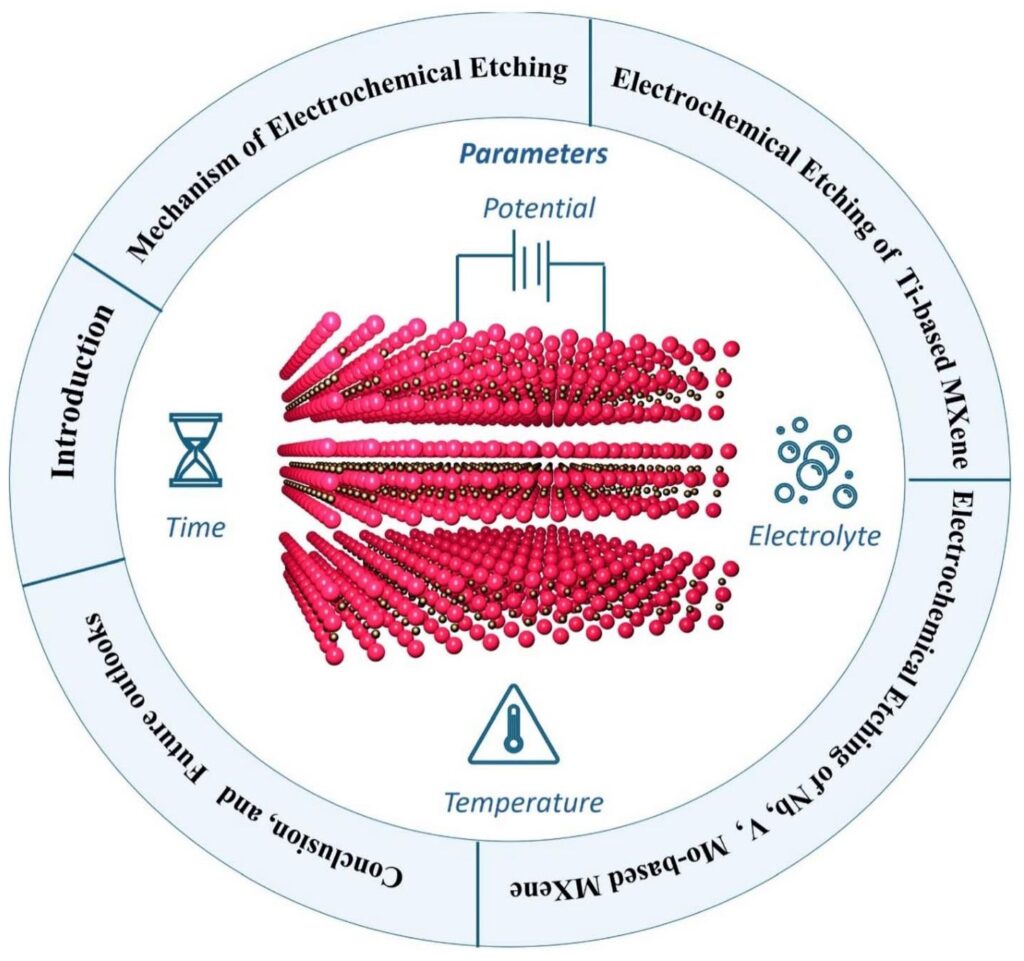
Electrochemical etching of MXenes: mechanism, challenges and future outlooks

Transition metal carbides, nitrides and carbonitrides, commonly known as MXenes, are an astonishing class of two-dimensional materials, offering versatile surface chemistry, high electrical conductivity, tunable band gaps, and a unique layered morphology, which render them highly attractive for multiple applications ranging from energy storage and conversion to biomedical fields. However, recognising the true potential of …

Electrochemical etching of MXenes: mechanism, challenges and future outlooks Read More »