Keyword Author: electrochemical impedance spectroscopy

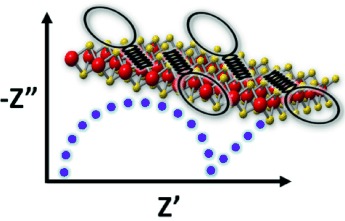
Layered Black Phosphorus: Strongly Anisotropic Magnetic, Electronic, and Electron-Transfer Properties

Layered elemental materials, such as black phosphorus, exhibit unique properties originating from their highly anisotropic layered structure. The results presented herein demonstrate an anomalous anisotropy for the electrical, magnetic, and electrochemical properties of black phosphorus. It is shown that heterogeneous electron transfer from black phosphorus to outer- and inner-sphere molecular probes is highly anisotropic. The …
Layered Black Phosphorus: Strongly Anisotropic Magnetic, Electronic, and Electron-Transfer Properties Read More »

Transitional Metal/Chalcogen Dependant Interactions of Hairpin DNA with Transition Metal Dichalcogenides, MX2

Owing to the attractive properties that transition metal dichalcogenides (TMDs) display, they have found recent application in the fabrication of biosensing devices. These devices involve the immobilization of a recognition element such as DNA onto the surface of TMDs. Therefore, it is imperative to examine the interactions between TMDs and DNA. Herein, we explore the …

Transitional Metal/Chalcogen Dependant Interactions of Hairpin DNA with Transition Metal Dichalcogenides, MX2 Read More »

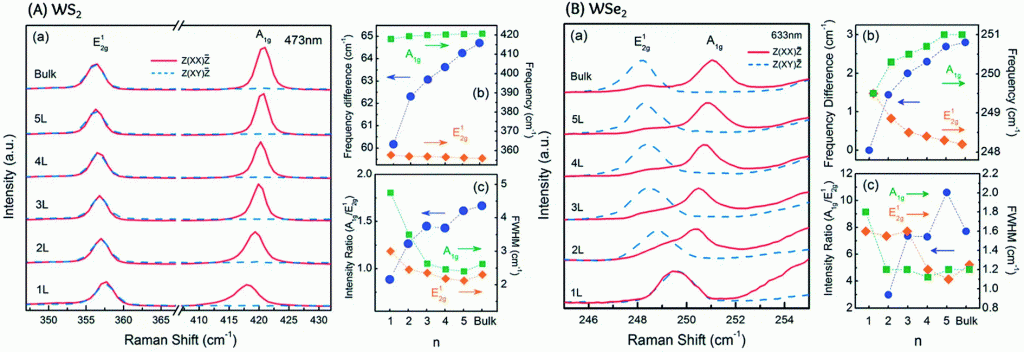
Exfoliated transition metal dichalcogenides (MoS2, MoSe2, WS2, WSe2): An electrochemical impedance spectroscopic investigation

Owing to the enthralling properties which transition metal dichalcogenides present, they are facing immense scientific interest from researchers. Till date, these two-dimensional materials have been assessed for a wide array of different applications and there are various synthetic methods of attaining them in their respective bulk and exfoliated forms. Herein, we explore the effects of …

Exfoliated transition metal dichalcogenides (MoS2, MoSe2, WS2, WSe2): An electrochemical impedance spectroscopic investigation Read More »

Soldering DNA to graphene via 0, 1 and 2-point contacts: Electrochemical impedance spectroscopic investigation

DNA is one of the most programmable molecules available till date and it is immensely important for nanoarchitectonic works. Herein, we investigate the influence of topological constraints of single stranded DNA, which is attached to a graphene sheet, on its ability to hybridize with a complementary strand. These findings are expected to have a profound …

Soldering DNA to graphene via 0, 1 and 2-point contacts: Electrochemical impedance spectroscopic investigation Read More »

Biorecognition on Graphene: Physical, Covalent, and Affinity Immobilization Methods Exhibiting Dramatic Differences

The preparation of biorecognition layers on the surface of a sensing platform is a very crucial step for the development of sensitive and selective biosensors. Different protocols have been used thus far for the immobilization of biomolecules onto various electrode surfaces. In this work, we investigate how the protocol followed for the immobilization of a …

Biorecognition on Graphene: Physical, Covalent, and Affinity Immobilization Methods Exhibiting Dramatic Differences Read More »

Graphane electrochemistry: Electron transfer at hydrogenated graphenes

Graphane, the hydrogenated derivate of graphene is a highly novel material in the field of two dimensional nanocarbon related research. Preparation of hydrogenated graphene is achieved via a high-pressure/high-temperature (up to 150 bar and 500 degrees C) thermal exfoliation procedure of graphite oxide. We investigated the properties of the materials via voltammetry and electrochemical impedance …

Graphane electrochemistry: Electron transfer at hydrogenated graphenes Read More »