Keyword Author: DNA

Rational Design of Carboxyl Groups Perpendicularly Attached to a Graphene Sheet: A Platform for Enhanced Biosensing Applications
Graphene oxide (GO)-based materials offer great potential for biofunctionalization with applications ranging from biosensing to drug delivery. Such biofunctionalization utilizes specific functional groups, typically a carboxyl moiety, as anchoring points for biomolecule. However, due to the fact that the exact chemical structure of GO is still largely unknown and poorly defined (it was postulated to …
Soldering DNA to graphene via 0, 1 and 2-point contacts: Electrochemical impedance spectroscopic investigation
DNA is one of the most programmable molecules available till date and it is immensely important for nanoarchitectonic works. Herein, we investigate the influence of topological constraints of single stranded DNA, which is attached to a graphene sheet, on its ability to hybridize with a complementary strand. These findings are expected to have a profound …
Oxidation of DNA bases is influenced by their position in the DNA strand
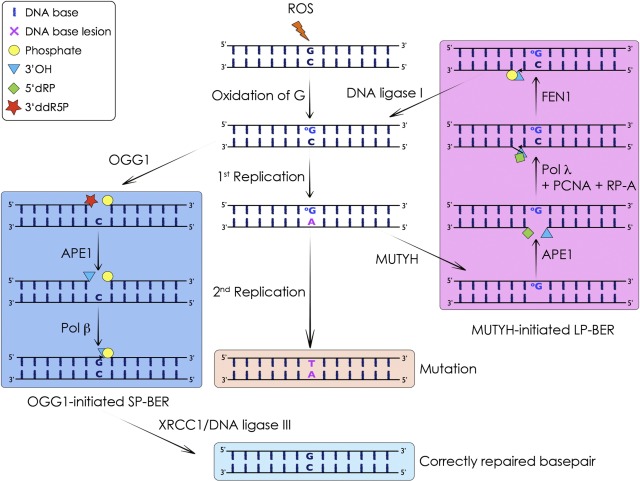
Electrochemical detection of DNA is an important field of research, with strong implications for next generation diagnostics. In this paper, we show that the electrochemical responses of DNA bases (guanine, adenine, thymine, cytosine) in terms of peak potentials and peak current may be influenced by the sequences of an oligomer at standard glassy carbon (GC), …
Oxidation of DNA bases is influenced by their position in the DNA strand Read More »
Oxidation of DNA Bases Influenced by the Presence of Other Bases
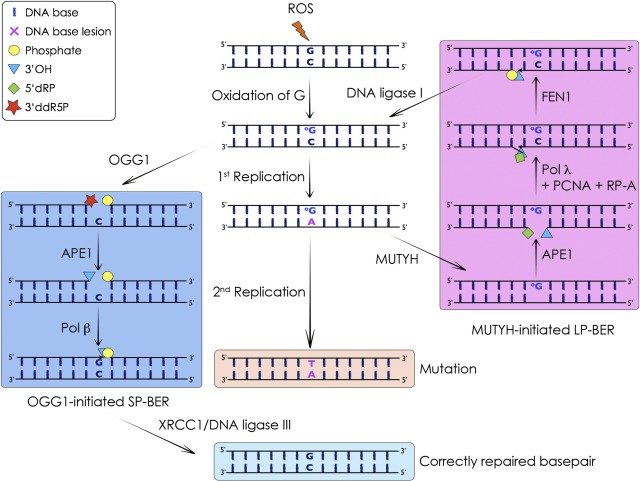
Electrochemical detection of DNA is a highly important topic. Here we show that the electrochemical responses of one DNA base (guanine, adenine, cytosine or thymine), in terms of oxidation potential, current intensity, peak width and resolution can be highly influenced by the presence of other DNA bases at electrochemically reduced graphene oxide (ER-GO) as well …
Oxidation of DNA Bases Influenced by the Presence of Other Bases Read More »
Nucleic Acid Functionalized Graphene for Biosensing
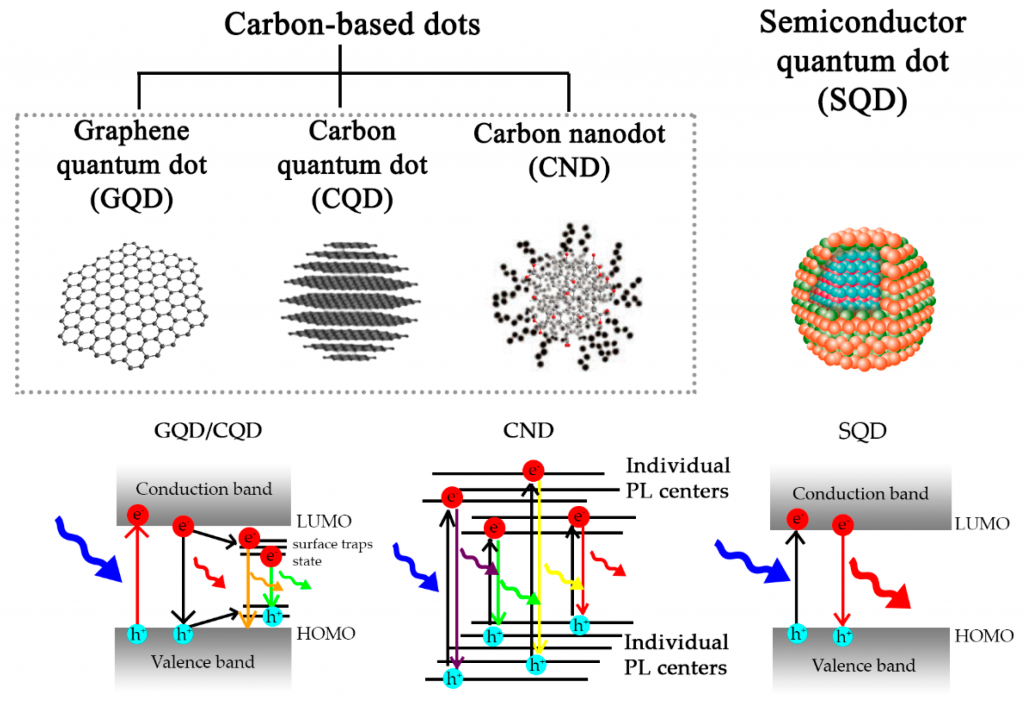
There is immense demand for complex nanoarchitectures based on graphene nanostructures in the fields of biosensing or nanoelectronics. DNA molecules represent the most versatile and programmable recognition element and can provide a unique massive parallel assembly strategy with graphene nanomaterials. Here we demonstrate a facile strategy for covalent linking of single stranded DNA (ssDNA) to …
Nucleic Acid Functionalized Graphene for Biosensing Read More »
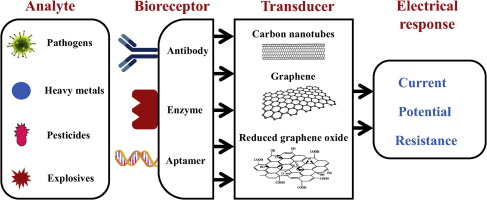
Electrochemical nanobiosensors
This review discusses main techniques and methods which use nanoscale materials for construction of electrochemical biosensors. Described approaches include nanotube and nanoparticle-based electrodes relying on aligned nanotube arrays, direct electron transfer between biomolecule and electrode. novel binding materials and mass production technology; and nanoscale materials as biomolecule tracers, including gold nanoparticles, quantum dots for DNA …
Microchip-based electrochromatography: designs and applications
Different techniques and methods of electrochromatography on “lab on a chip” devices are reviewed. Described approaches include open-channel microchip electrochromatography relying on C-8, C-18 and novel gold nanoparticle (GNP) coating of microchannel wall; packed-channel microchip electrochromatography with new ways of automated loading and unloading of conventional octadecylsilica beads; monolith-based microchip electrochromatography with tailored casting of …
Microchip-based electrochromatography: designs and applications Read More »