Keyword Author: dichalcogenides

Nanohybrids of Two-Dimensional Transition-Metal Dichalcogenides and Titanium Dioxide for Photocatalytic Applications

The ever increasing need for renewable and clean energy resources as well as environmental concerns are considered as two serious challenges of today’s society. Photocatalysis has proved to be a reliable and effective technology to overcome these issues. However, to bring the full potential of this approach into reality, two main hurdles of fast charge …
Nanohybrids of Two-Dimensional Transition-Metal Dichalcogenides and Titanium Dioxide for Photocatalytic Applications Read More »

Ultrapure Molybdenum Disulfide Shows Enhanced Catalysis for Hydrogen Evolution over Impurities-Doped Counterpart

The development of electrocatalysts to meet the requirements of renewable energy applications has seen much attention placed on transition-metal dichalcogenide (TMD) materials owing to their promising properties. In particular, the strategy of atomic doping has garnered some success in tuning the electronic properties and harnessing the vast potential that TMDs can offer in the catalysis …

Ultrapure Molybdenum Disulfide Shows Enhanced Catalysis for Hydrogen Evolution over Impurities-Doped Counterpart Read More »

Effect of Electrolyte pH on the Inherent Electrochemistry of Layered Transition-Metal Dichalcogenides (MoS2, MoSe2, WS2, WSe2)

We set forth to investigate the changes in the inherent oxidative peaks of different transition-metal dichalcogenides (TMDs), namely MoS2, MoSe2, WS2, and WSe2, at different electrolyte pH values. Changing the pH of the electrolyte was found to influence and affect the inherent oxidation of TMDs, more noticeably the peak position. This could be attributed to …

Effect of Electrolyte pH on the Inherent Electrochemistry of Layered Transition-Metal Dichalcogenides (MoS2, MoSe2, WS2, WSe2) Read More »

Pristine Basal-and Edge-Plane-Oriented Molybdenite MoS2 Exhibiting Highly Anisotropic Properties

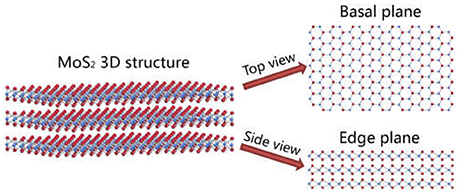
The layered structure of molybdenum disulfide (MoS2) is structurally similar to that of graphite, with individual sheets strongly covalently bonded within but held together through weak van der Waals interactions. This results in two distinct surfaces of MoS2: basal and edge planes. The edge plane was theoretically predicted to be more electroactive than the basal …

Pristine Basal-and Edge-Plane-Oriented Molybdenite MoS2 Exhibiting Highly Anisotropic Properties Read More »

Electrochemistry of Transition Metal Dichalcogenides: Strong Dependence on the Metal-to-Chalcogen Composition and Exfoliation Method

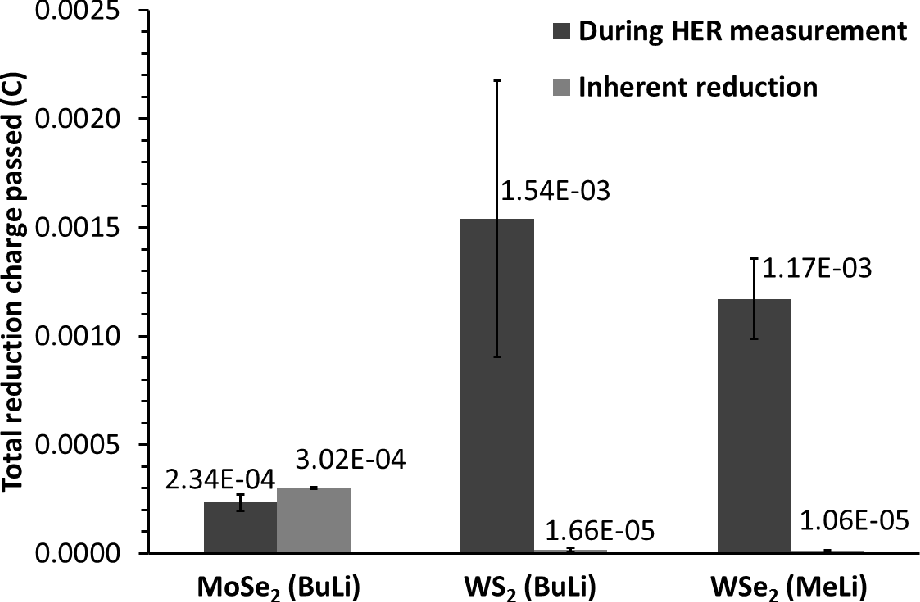
Beyond MoS2 as the first transition metal dichalcogenide (TMD) to have gained recognition as an efficient catalyst for the hydrogen evolution reaction (HER), interest in other TMD nanomaterials is steadily beginning to proliferate. This is particularly true in the field of electrochemistry, with a myriad of emerging applications ranging from catalysis to supercapacitors and solar …

Electrochemistry of Transition Metal Dichalcogenides: Strong Dependence on the Metal-to-Chalcogen Composition and Exfoliation Method Read More »