Keyword Author: capacitance

Graphene/Group 5 Transition Metal Dichalcogenide Composites for Electrochemical Applications

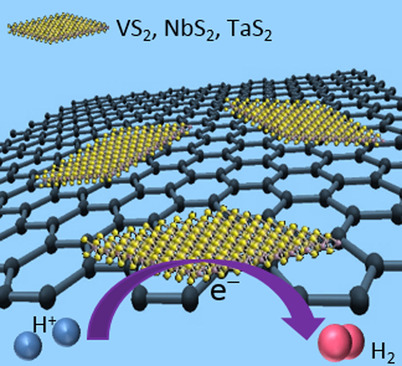
In comparison to the extensive research and great success attained by Group 6 transition metal dichalcogenides (TMDs) as hydrogen evolution reaction (HER) electrocatalysts, there is limited research focused on metallic Group 5 TMDs for use as electrocatalysts for hydrogen evolution. Density functional theory calculations have pointed out that Group 5 TMDs are highly favorable for …

Graphene/Group 5 Transition Metal Dichalcogenide Composites for Electrochemical Applications Read More »

Graphane Nanostripes

Graphane, the hydrogenated counterpart of graphene, was shown to exhibit properties such as tunable band gaps through varied degrees of hydrogenation, fluorescence, or ferromagnetism. Graphane nanostripe properties have also been theoretically predicted. Herein, we show that graphane nanostripes can be prepared by opening carbon nanotubes using Birch reduction in liquid ammonia utilizing potassium as a …

Graphane Nanostripes Read More »

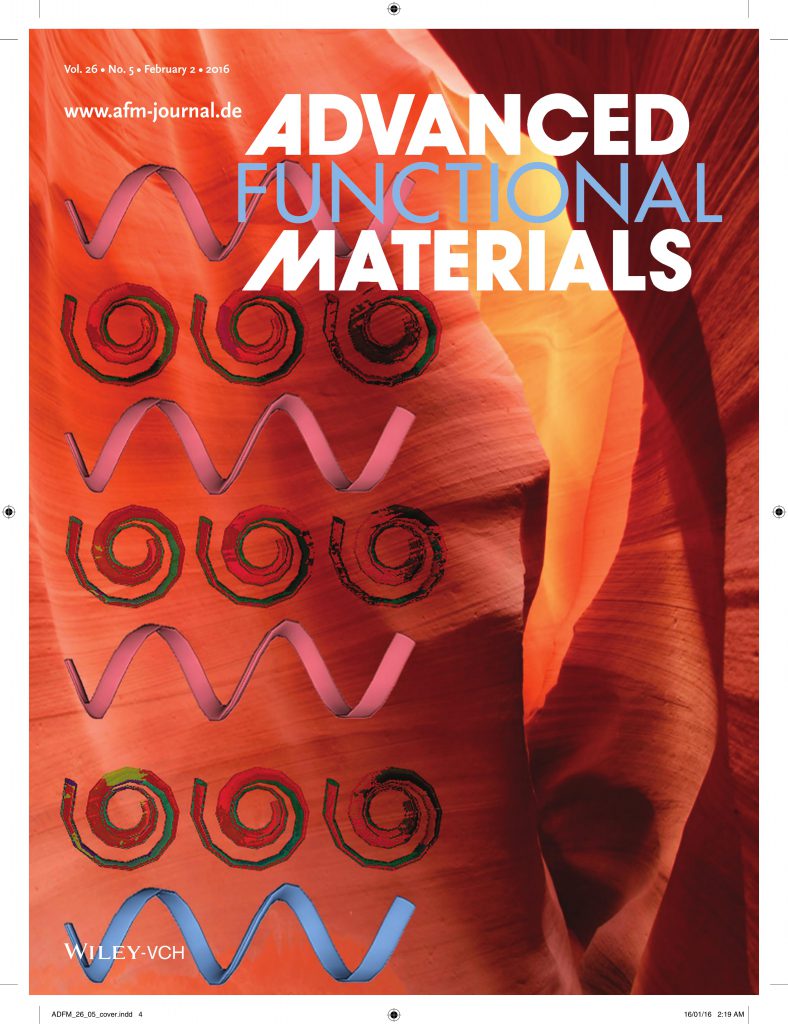
Helical 3D-Printed Metal Electrodes as Custom-Shaped 3D Platform for Electrochemical Devices

3D-printing represents an emerging technology that can revolutionize the way object and functional devices are fabricated. Here the use of metal 3D printing is demonstrated to fabricate bespoke electrochemical stainless steel electrodes that can be used as platform for different electrochemical applications ranging from electrochemical capacitors, oxygen evolution catalyst, and pH sensor by means of …

Helical 3D-Printed Metal Electrodes as Custom-Shaped 3D Platform for Electrochemical Devices Read More »

Transition metal dichalcogenides (MoS2, MoSe2, WS2 and WSe2) exfoliation technique has strong influence upon their capacitance

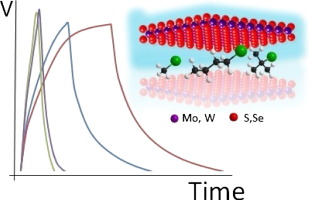
Transition metal dichacogenides (TMD) represent an important class of layered compounds which are gaining lately an enormous interest in electrochemistry. Exfoliation of TMD materials to obtain single to few layer sheets is generally obtained through the intercalation of organolithium compounds. Here we investigated and compared the capacitive behavior of four representative TMD materials, i.e. MoS2, …

Transition metal dichalcogenides (MoS2, MoSe2, WS2 and WSe2) exfoliation technique has strong influence upon their capacitance Read More »

Graphene/carbon nanotube composites not exhibiting synergic effect for supercapacitors: The resulting capacitance being average of capacitance of individual components

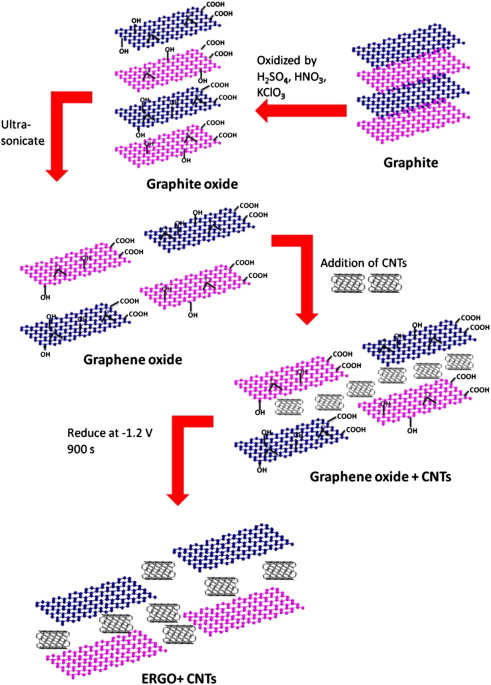
There were many claims of synergic effect of carbon nanotubes and graphene leading to enhanced capacitance of the resulting composite. Here we show that “spacing” of graphene sheets with carbon nanotubes does not yield to any synergic effect of dramatically improved capacitance but in contrary, the resulting capacitance is merely arithmetic average of weight specific …

Graphene/carbon nanotube composites not exhibiting synergic effect for supercapacitors: The resulting capacitance being average of capacitance of individual components Read More »

Gold Nanospacers Greatly Enhance the Capacitance of Electrochemically Reduced Graphene

Graphene has great potential in electrochemical storage applications for supercapacitors owing to its high conductivity, large surface area, and the economical feasibility in producing it. The main issue that faces graphene nanomaterials in this application is that they tend to restack, thus decreasing the accessible surface area and leading to low capacitance. Gold nanoparticles of …

Gold Nanospacers Greatly Enhance the Capacitance of Electrochemically Reduced Graphene Read More »

Graphene materials preparation methods have dramatic influence upon their capacitance

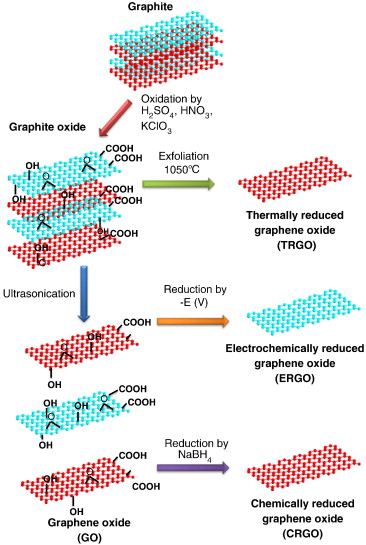
Graphene related materials are widely expected to play a major role as materials for the construction of supercapacitors. We demonstrate here that graphene oxides prepared by various well-established methods exhibit dramatically different capacitances. We exfoliated graphite oxide sonographically to graphene oxide (GO) and we reduced GO by chemical or electrochemical means to chemically reduced graphene …

Graphene materials preparation methods have dramatic influence upon their capacitance Read More »

Multilayer graphene nanoribbons exhibit larger capacitance than their few-layer and single-layer graphene counterparts

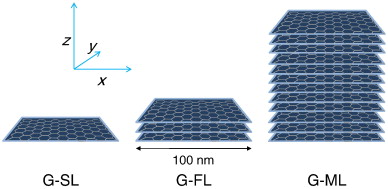
This article demonstrates that it is not always beneficial to exfoliate graphitic structures to single-layer graphene to achieve maximum electrochemical performance. Using electrochemical impedance spectroscopy, we show that multilayer graphene nanoribbons with cross sections of 100 x 100 nm provide larger capacitance (15.6 F/g) than do few-layer graphene nanoribbons (14.9 F/g) and far larger capacitance …

Multilayer graphene nanoribbons exhibit larger capacitance than their few-layer and single-layer graphene counterparts Read More »