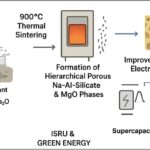
Enhanced Lunar regolith as a key component for supercapacitors and sodium-ion batteries

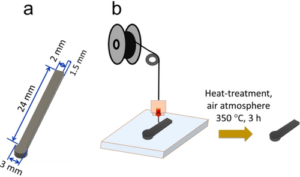
Additive manufacturing or 3D‐printing have become promising fabrication techniques in the field of electrochemical energy storage applications such as supercapacitors, and batteries. Of late, a commercially available graphene/polylactic acid (PLA) filament has been commonly used for Fused Deposition Modeling (FDM) 3D‐printing in the fabrication of electrodes for supercapacitors and Li‐ion batteries. This graphene/PLA filament contains metal‐based impurities such as titanium oxide and iron oxide. In this study, we show a strong influence of inherent impurities in the graphene/PLA filament for supercapacitor applications. A 3D‐printed electrode is prepared and subsequently thermally activated for electrochemical measurement. A deep insight has been taken to look into the pseudocapacitive contribution from the metal‐based impurities which significantly enhanced the overall capacitance of the 3D‐printed graphene/PLA electrode. A systematic approach has been shown to remove the impurities from the printed electrodes. This has a broad implication on the interpretation of the capacitance of 3D‐printed composites.
Enhanced Lunar regolith as a key component for supercapacitors and sodium-ion batteries
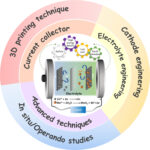
Dual electrode-free Zn-MnO2 battery as a future energy source
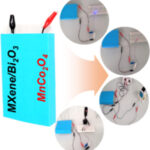
MXene/Bi2O3 Nanocomposites as Supercapacitors for Portable Electronic Devices